How Should B2B Buyers Choose Paper Straws for Beverage Cartons?
Choose the format from the available carton-side space, required drinking reach and attachment method—not from straw diameter alone. Attached formats focus on connected-row feeding, U-shaped formats reduce packed height through a bend, and telescopic formats provide longer reach from a shorter two-section pack. Confirm the decision with the actual carton, wrapper and sample.
A beverage-carton straw is part of a small handling system. The straw, individual wrapper, carton panel, opening position, attachment area and any application equipment have to work together. A format that looks suitable in a product photo may still be unsuitable if its packed geometry conflicts with a carton seam, the wrapper does not fit the available zone or the final drinking reach is insufficient.
For that reason, the most useful first supplier conversation is based on a carton drawing or physical carton, not a generic request for a paper straw catalogue.
1. Information to collect from the carton
2. Differences between the three product formats
3. Wrapper and attachment considerations
4. Sample-approval checks
5. Repeat-order controls
What Information Should You Collect from the Carton Drawing?
Start with the usable side-panel area, opening position, proposed straw position and required reach. These inputs define the space the packed unit can occupy and the distance the straw must serve after opening.
Record the following information before selecting a format:
- Carton capacity and external dimensions
- Usable side panel and any restricted areas
- Position of the drinking opening
- Proposed straw attachment position and orientation
- Maximum packed envelope for the wrapped straw
- Distance from the attachment position to the opening
- Required drinking reach after the product is opened or extended
- Attachment method or available applicator information
- Beverage and intended use conditions
- Destination market and applicable document requirements
The maximum packed envelope should describe both height and width. It should also account for wrapper seal areas, not only the visible straw. If a drawing is not yet available, provide clear front, side and top photographs with a scale reference, then confirm the final decision against the controlled drawing before approval.
How Do Attached, U-Shaped and Telescopic Formats Solve Different Constraints?
The three formats address different packing and handling problems. Prefer the option that fits the carton and approval process with the fewest unresolved variables.
| Decision point | Attached paper straw | U-shaped paper straw | Telescopic paper straw |
|---|---|---|---|
| Main reason to consider | Row feeding and attachment to beverage cartons | Reduced packed height with a one-piece drinking path | Longer drinking reach from a shorter packed unit |
| Geometry to confirm | Row pitch, wrapper width, wrapper length and reference edge | Packed height, bend geometry and straightened drinking length | Packed length, extended length and tube engagement |
| Handling point | Feeding direction, separation and applicator compatibility | Opening, straightening and bend recovery | Extension force, retention and pull-out resistance |
| Evidence needed | Row sample, wrapper sample and carton/application review | Wrapped sample and carton-use review | Wrapped sample, extension review and carton-use review |
When is an attached format the logical starting point?
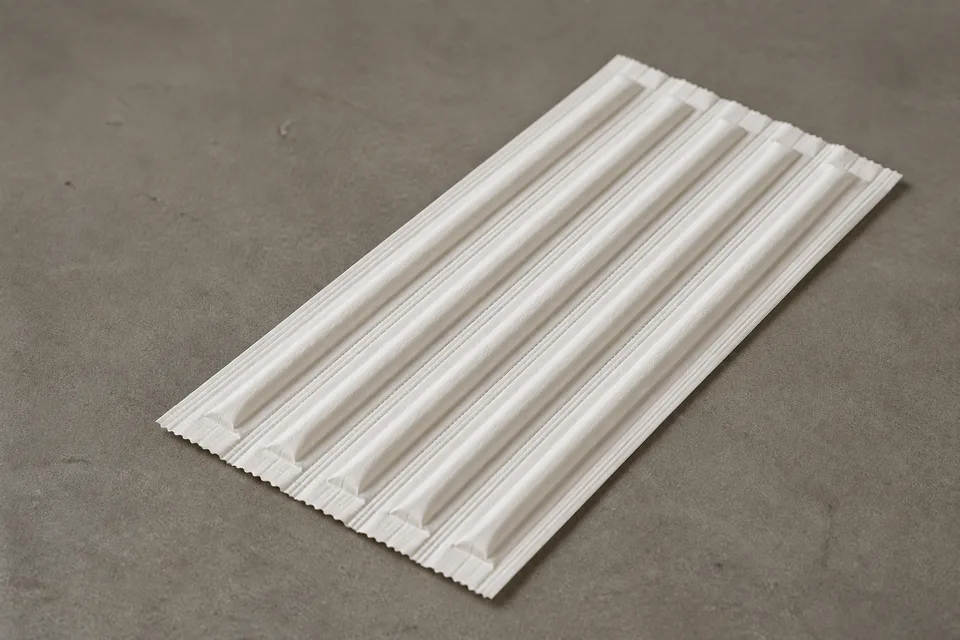
An attached format is a logical starting point when the packing or application process expects individually wrapped units in a connected row. Buyers should not treat “attached” as a statement of universal machine compatibility. Row pitch, reference edge, feeding direction, wrapper connection and separation behavior all need review against the intended handling method.
When is a U-shaped format the logical starting point?
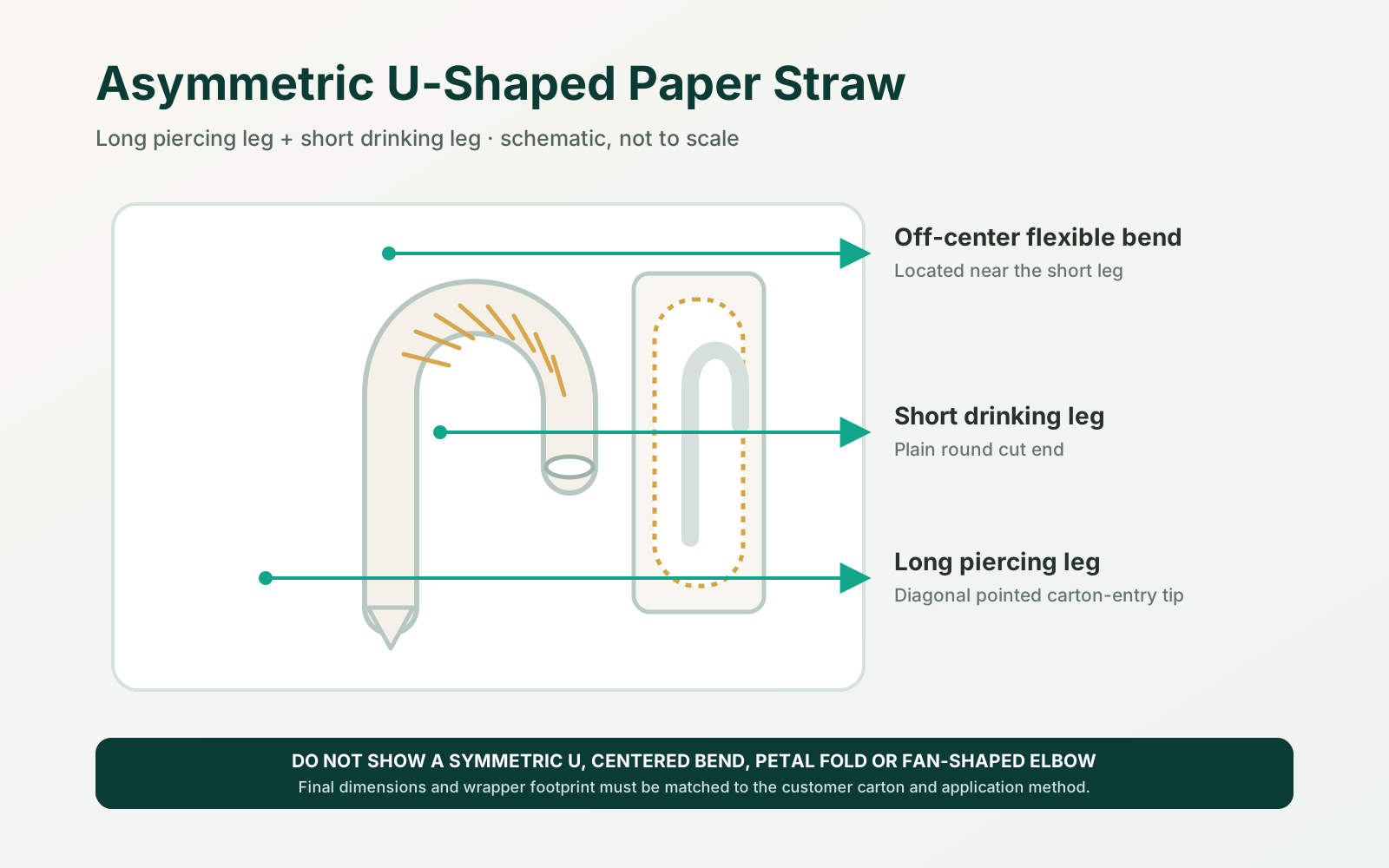
A U-shaped format is useful when a one-piece straw needs a more compact packed height. The buyer should compare the packed bend with the available panel space and confirm that the opened straw provides the required drinking reach. The wrapper must protect the bend without forcing an unsuitable geometry.
When is a telescopic format the logical starting point?
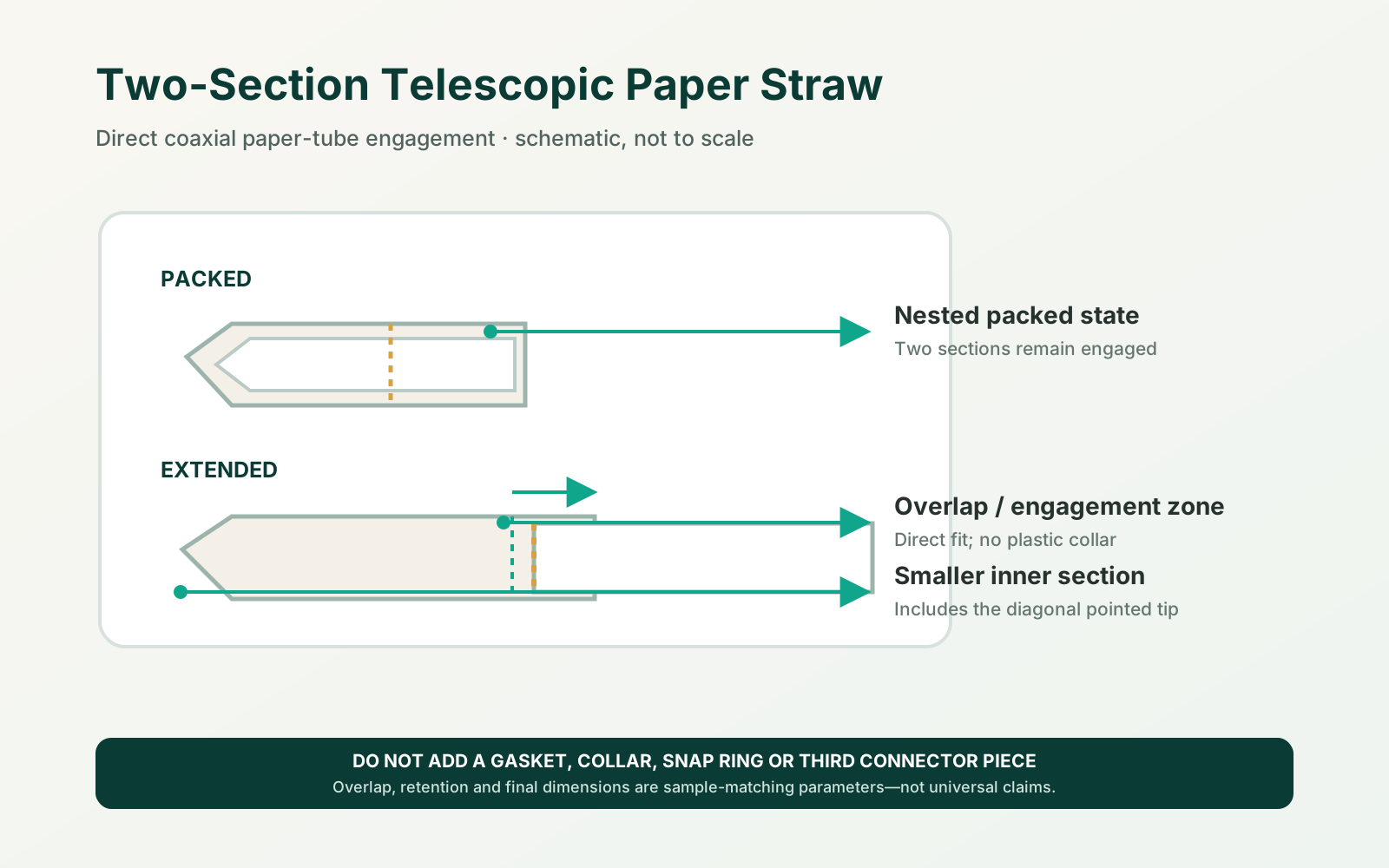
A telescopic format is useful when the final drinking reach is longer than the permitted packed length. The two tube sections introduce additional approval points: fit between the sections, engagement, extension force, pull-out resistance and retention during the applicable use check.
Which Wrapper Details Affect Carton Fit and Handling?
Wrapper width, length, seal area, orientation and opening behavior can change both carton fit and line handling. Approve the wrapped unit, not an unwrapped straw in isolation.
A wrapper is not only a printed surface. It controls the packed envelope and protects the product through handling and shipment. Ask the supplier to show the proposed wrapper dimensions together with the straw dimensions.
The review should cover:
- Wrapper material selected for the project
- Overall wrapper width and length
- Longitudinal and end seal areas
- Product orientation inside the wrapper
- Opening direction or tear behavior where relevant
- Printed artwork direction and repeat
- Unprinted zones required for seals or inspection
- Connection between units for an attached row
- Visible condition after representative handling
If the wrapper carries buyer-supplied regulatory or brand text, assign responsibility for the final content and approval version. Retain the approved artwork file and proof with the product specification.
How Should Attachment or Applicator Compatibility Be Discussed?
Describe the exact application method and provide available equipment information. A supplier can review relevant dimensions and samples, but compatibility should be confirmed on the intended setup rather than promised from a photograph.
For manual attachment, clarify the position, orientation and acceptable visual placement. For automated handling, provide equipment or applicator details permitted for review, including any known feeding direction, pitch, reference edge and wrapper constraints.
Use careful commercial language:
- Appropriate: “Sample and row geometry can be reviewed against the supplied applicator information.”
- Appropriate: “Final compatibility is confirmed through the applicable buyer or equipment trial.”
- Avoid: “Fits all carton machines.”
- Avoid: “Guaranteed to run on any line.”
This distinction protects both parties from turning an early dimensional review into an unsupported performance guarantee.
What Should a Sample Approval Check Include?
Sample approval should compare the exact wrapped format with the carton, opening, attachment method and intended use. Record the result so the approved configuration can be identified later.
Use a structured review rather than a visual preference alone.
| Review area | What to check | Approval reference |
|---|---|---|
| Dimensions | Packed length, drinking length and format-specific geometry | Controlled drawing or agreed specification |
| Wrapper | Size, seal area, orientation, print and visible integrity | Approved wrapper proof and sample |
| Carton fit | Clearance, attachment position and access to the opening | Actual carton or controlled drawing |
| Format behavior | Row separation, bend recovery or telescopic engagement as applicable | Agreed evaluation method |
| Beverage use | Liquid exposure, odor, taste, softening and intended handling | Selected beverage and agreed conditions |
| Packing | Unit arrangement, labels and order identification | Packing requirement |
| Documents | Current files applicable to the chosen materials and market | Project document list |
The sample should be identified with enough detail to prevent a later mix-up. If the wrapper, print, straw dimensions or materials change after approval, record the change and decide whether a new approval is required.
Which Details Should Be Locked for a Repeat Order?
Keep the approved sample, specification, wrapper artwork, packing requirement and inspection points together. Repeatability depends on controlling the version, not simply repeating a product name.
The repeat-order file should contain:
- Buyer and supplier project references
- Product format and approved dimensions
- Tip and format-specific geometry
- Wrapper material, size, seal and orientation
- Approved print artwork and proof version
- Attachment or applicator reference information
- Packing, labels and order identification
- Applicable material or market documents
- Inspection points and approved physical sample
- Change-approval responsibility
Commercial terms such as quantity, production timing and shipment method should be confirmed for the current order rather than copied from an old quotation without review.
Featured Carton Paper Straw Formats
Matched Formats for Beverage Cartons
Attached Paper Straws
Connected continuous strip for high-speed automatic carton applicators.
View Product Specs →
U-Shaped Paper Straws
Folded 180° format maximizing drinking reach on compact beverage cartons.
View Product Specs →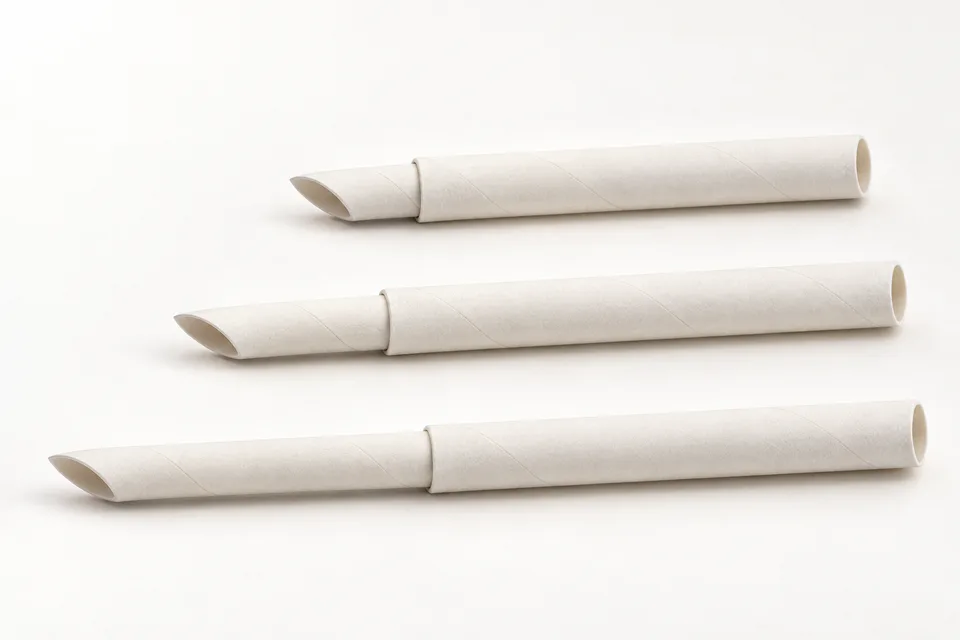
Telescopic Paper Straws
Two-section extendable design offering maximum reach from minimum packed length.
View Product Specs →Frequently Asked Questions
Can a supplier choose a format from carton capacity alone?
No. Carton capacity does not show the usable panel, opening position, packed envelope or required drinking reach. A drawing or physical carton is more useful.
Is the longest straw automatically the best option?
No. The selected straw must fit the packed area and provide suitable final reach without introducing unnecessary handling or approval complexity.
Should buyers test the unwrapped straw or the wrapped unit?
Both may be reviewed, but the wrapped unit is essential for carton fit, attachment and handling decisions.
Can one sample prove compatibility with every production line?
No. Compatibility is tied to the intended carton, application method and equipment conditions. Confirm it through the applicable trial.
What should we send to start?
Send the carton drawing, opening and attachment positions, target format if known, required reach, wrapper or printing requirements, beverage, destination market and expected order volume.