Which Paper Straw Specifications Should Milk-Carton Buyers Prepare?
A useful milk-carton straw brief includes the carton capacity and panel, straw and opening positions, preferred format, diameter, packed and drinking length, wrapper, attachment method, beverage, destination market and expected order volume. Missing values can be identified during sample matching, but the carton drawing should come first.
A request such as “paper straw for a 200 ml milk carton” is a starting point, not a complete specification. Cartons with the same nominal capacity can have different panel proportions, openings, straw positions and packing constraints. The product must also be reviewed in its wrapper and intended attachment position.
Use this guide as a preparation checklist for supplier discussions. It does not prescribe a universal dimension or material for every milk carton.
Which Carton Details Affect the Straw Specification?
The usable panel, restricted zones, drinking opening and attachment position determine the packed space and required reach. Carton capacity alone does not define those relationships.
Provide a controlled carton drawing whenever possible. Mark or identify:
- External carton dimensions
- Usable side-panel width and height
- Top and bottom seams or restricted areas
- Drinking opening type and position
- Intended straw position and orientation
- Maximum wrapped-straw envelope
- Distance from the attachment point to the opening
- Any artwork or regulatory zones that must remain visible
- Attachment method and relevant equipment reference
If the project uses more than one carton size, identify each variant. Do not assume that one wrapped straw can be transferred between variants without reviewing panel fit and reach.
How Should Buyers Select the Straw Format?
Select attached, U-shaped or telescopic from the packaging and handling requirement. Then confirm that the chosen format provides suitable final reach and behavior on the actual carton.
An attached-row product may suit an application process designed to handle connected individually wrapped units. A U-shaped product may suit a compact side-panel area when the opened one-piece straw provides adequate reach. A telescopic product may suit a project requiring a longer final reach from a shorter packed configuration.
At an early stage, it is reasonable to compare two formats. However, the final request should identify one controlled configuration or clearly separate the alternatives. Combining dimensions from different samples in one quotation request creates ambiguity.
Which Dimensions Should Be Recorded?
Record the product in both its packed and usable states. Add the format-specific geometry required to manufacture and inspect the selected design.
| Specification field | Why it matters | Applies to |
|---|---|---|
| Packed length or height | Determines whether the wrapped product fits the panel | All formats |
| Drinking or usable length | Confirms final reach | All formats |
| Wrapper width and length | Defines the complete packed envelope | All formats |
| Row pitch and reference edge | Supports row handling and application review | Attached |
| Bend geometry | Defines the packed U-shaped configuration | U-shaped |
| Inner/outer tube fit and engagement | Defines extension and retention behavior | Telescopic |
| Tip configuration | Relates to the selected opening and intended use | As applicable |
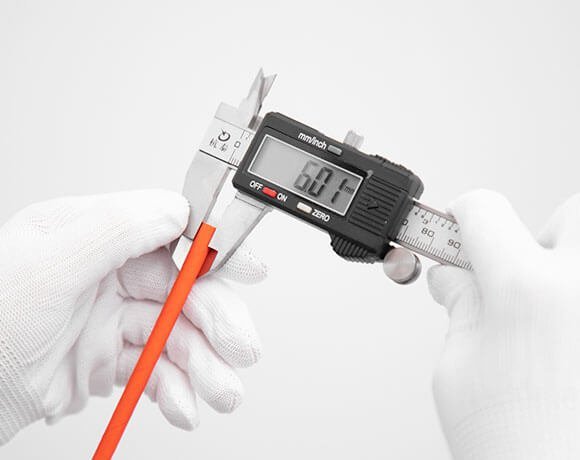
Units, tolerances and measurement methods should be stated in the approved specification. Do not copy an isolated measurement from an image. An identified drawing and physical sample provide a clearer reference.
What Wrapper and Attachment Details Are Needed?
Specify wrapper material, dimensions, seals, orientation, artwork and opening behavior together with the attachment area and method. These details determine how the product is protected, presented and handled.
Prepare the following wrapper information:
- Required wrapper material or performance brief
- Overall dimensions and seal zones
- Product orientation inside the wrapper
- Opening direction or user interaction
- Printed or unprinted requirement
- Artwork file, language and version
- Color reference and approval method
- Markings for order or product identification where required
For attachment, state whether the unit is applied manually or through equipment. Provide permitted application information and the intended carton position. For an attached row, include feeding direction, pitch and reference-edge information where available.
Compatibility should be confirmed through the appropriate carton or line trial. Neither a website claim nor a visual mockup can prove every application condition.
Which Beverage and Use Checks Belong in Sample Approval?
Use the selected milk product and intended conditions to define the relevant sample observations. Review appearance, odor, taste, liquid exposure and user handling through an agreed method.
Possible checkpoints include:
- Visual condition before use
- Wrapper condition and opening
- Product removal, straightening or extension
- Interaction with the selected carton opening
- Liquid exposure under agreed conditions
- Odor and taste observations using the selected beverage
- Softening or deformation observations
- Format-specific behavior during intended handling
These are categories for an approval plan, not published results. If the site later displays numeric performance statements, each statement should identify the exact product configuration, method and supporting record.
For milk and other beverages, destination-market requirements may affect the material or document review. Request the current documentation that applies to the selected paper, adhesive, ink, wrapper and final configuration. Do not infer coverage from a general certificate logo.
What Quality Evidence Should a Buyer Request?
Request evidence connected to the selected project: original process or inspection photographs, an identified sample, applicable documents and the inspection points used for approval.
Useful evidence can include:
- Original photographs of representative dimensional and visual checks
- Original photographs of wrapping and packing activities
- Current product and wrapper samples
- Product drawing or dimensional specification
- Applicable material and destination-market documents
- Wrapper artwork proof and approval version
- Packing and label specification
- Project-specific inspection or approval records when agreed
Enhanced photographs can improve brightness or crop, but they should not alter machines, measurement displays, quantities, people, labels or product details. Generated product scenes should be labelled as visualizations and must not be presented as factory evidence.
What Commercial Information Helps the Supplier Respond?
Provide realistic volume, target timing, packing destination and sample needs, while asking the supplier to confirm current commercial terms for the approved configuration.
Include:
- Trial or sample quantity requirement
- Expected order quantity or annual-volume range
- Desired delivery location and trade terms if known
- Target sample and production dates
- Packing or pallet requirements
- Required documents and approval responsibilities
Avoid forcing a supplier to confirm MOQ, lead time or pricing before the configuration is understood. Those terms can vary with product dimensions, materials, wrapper printing, quantity, packing and current production conditions.
What Should Be Kept for Repeat Orders?
Create a controlled approval file containing the approved sample, drawing, artwork, packing and inspection references. A product nickname or prior invoice is not enough to control all details.
Retain:
- Final carton drawing or version reference
- Approved product and wrapper sample
- Product dimensions and tolerances
- Wrapper material, seal and orientation
- Approved print artwork and proof
- Attachment or applicator reference
- Beverage-use approval notes
- Packing and label requirement
- Applicable document list
- Change approval and record ownership
Before each repeat order, confirm whether the carton, opening, artwork, market, material requirements or production method have changed. A change in one component may require a focused reapproval.
Milk-Carton Straw Brief Checklist
Use the following fields in the website form and downloadable checklist. Mark unknown items as “to be reviewed” rather than guessing.
| Field | Buyer input |
|---|---|
| Carton capacity | |
| Carton dimensions or drawing | |
| Usable panel area | |
| Straw position | |
| Drinking opening position and type | |
| Beverage | |
| Destination market | |
| Preferred format | Attached / U-shaped / Telescopic / Undecided |
| Diameter | |
| Maximum packed length or height | |
| Required drinking length | |
| Wrapper material and size | |
| Printing and artwork | |
| Attachment method or applicator | |
| Expected volume | |
| Packing requirements | |
| Required documents | |
| Sample approval notes |
Featured Carton Paper Straw Formats
Matched Formats for Beverage Cartons
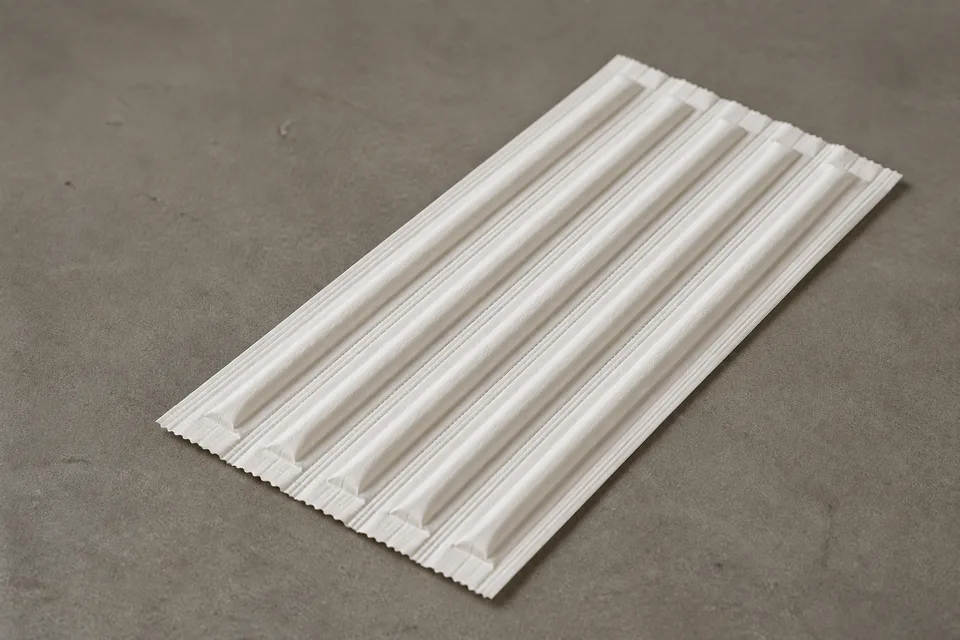
Attached Paper Straws
Connected continuous strip for high-speed automatic carton applicators.
View Product Specs →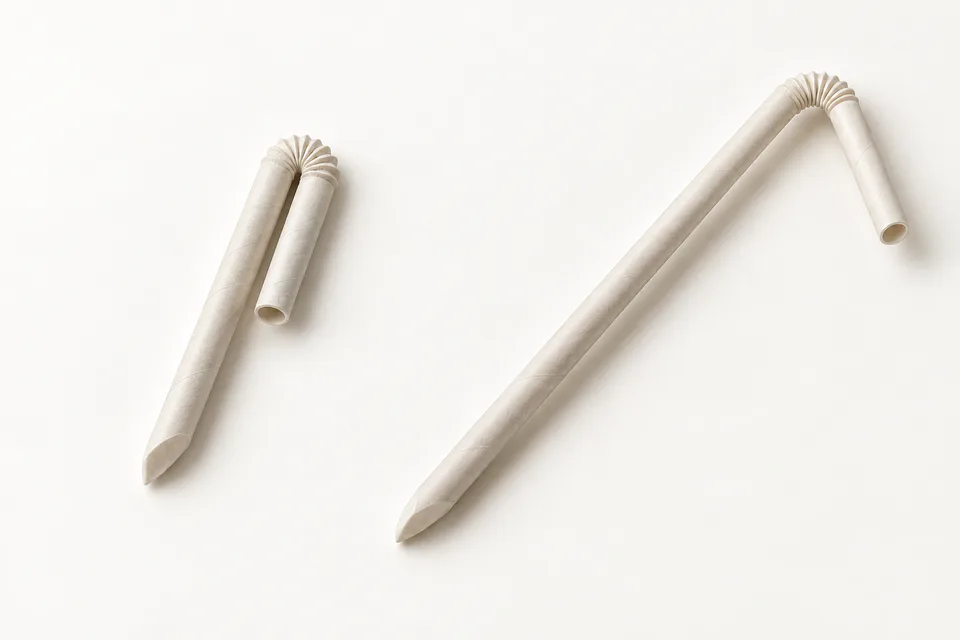
U-Shaped Paper Straws
Folded 180° format maximizing drinking reach on compact beverage cartons.
View Product Specs →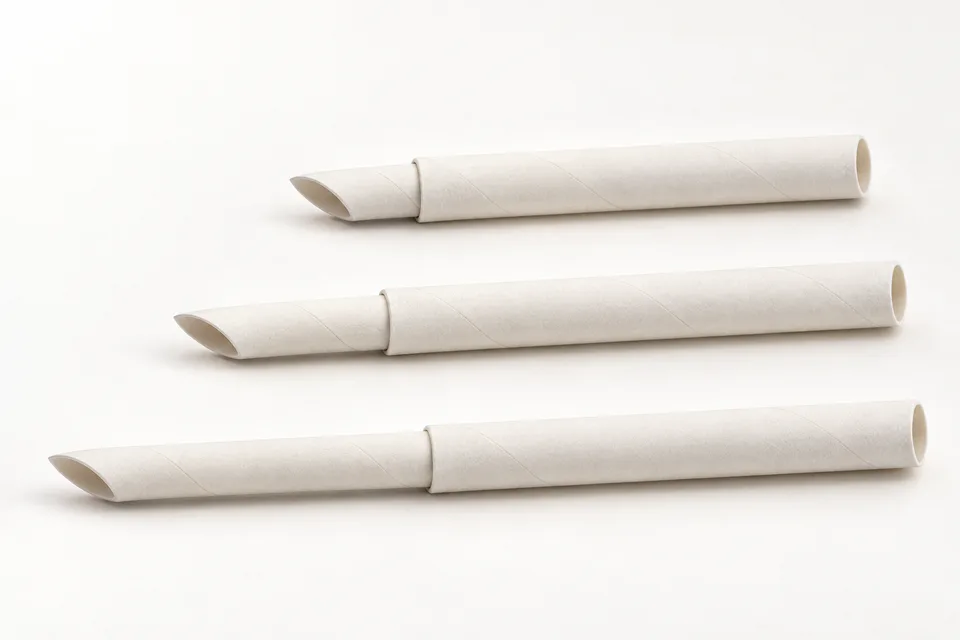
Telescopic Paper Straws
Two-section extendable design offering maximum reach from minimum packed length.
View Product Specs →Frequently Asked Questions
Is carton capacity enough to match a straw?
No. The supplier also needs panel dimensions, opening and attachment positions, packed-space limits and required reach.
Must every field be known before requesting a sample?
No. Unknown fields can be listed for review, but the carton drawing and main application constraints should be supplied as early as possible.
Can the same specification be used for milk and juice?
Do not assume so. Review the selected beverage, intended use conditions and destination-market requirements for each project.
Should artwork be approved separately from the product?
Artwork needs its own controlled proof, but the final wrapper should also be reviewed on the actual packed product.
What is the safest way to describe compatibility?
State that dimensions and samples are reviewed against supplied carton or equipment information, with final compatibility confirmed through the applicable trial.