In This Guide
Sourcing the right telescopic paper straws for your beverage cartons can feel like navigating a maze of technical specifications. You’re worried about them being too difficult for a child to open, or so flimsy they fall apart before use. Getting this wrong can lead to frustrated customers and a tarnished brand image. The key is understanding how to translate technical data into real-world performance.
When evaluating telescopic paper straws, success comes from balancing three interconnected factors: extension force (how hard it is to pull open), tube engagement (the overlap between sections), and pull-out resistance (the force needed to separate them). The goal is not to find a universal "best" value, but to define a specific performance range that suits your target user and ensures a smooth, reliable function every time.
These three parameters are not independent checklist items; they work together to create the total user experience. Focusing on one while ignoring the others can lead you to approve a straw that looks good on paper but fails in a consumer's hands. Let's break down each element so you can ask smarter questions and write better product specifications.
What is the "Correct" Extension Force for Telescopic Paper Straws?
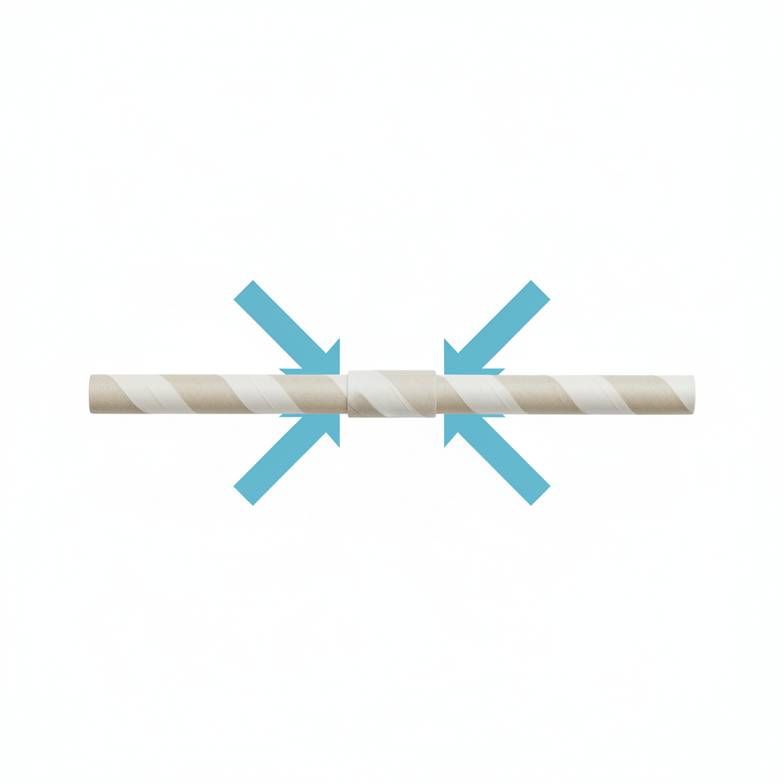
You need a straw that extends smoothly and locks into place, ready for use. But if the force required to extend it is too high, a child might struggle to open their juice box. If it's too low, the straw can feel cheap, flimsy, and may not stay extended. The solution isn't to find a single perfect number, but to define an acceptable force range for your specific application.
The correct extension force for telescopic paper straws is a balanced range, not a fixed value. It represents a trade-off between being easy enough for your intended user (like a young child) to operate and firm enough to feel secure and lock into its fully extended position without collapsing.
Dive Deeper: The User Experience Trade-Off
Think about your end-user. For an adult beverage, a slightly higher extension force might convey a sense of quality and sturdiness. For a children's juice carton, that same force could lead to frustration, spills, and unhappy parents. Conversely, a very low extension force might make the straw feel wobbly or poorly made, even if it's perfectly functional.
A common question I get from beverage brands is, "What is your standard extension force?" My answer is always another question: "Who is this for, and what experience do you want them to have?" This shifts the conversation from a generic spec to a user-centric goal. The ideal force is one that matches the strength and expectations of your target consumer.
Manufacturing Consistency is the Real Goal
From a manufacturing perspective, the true challenge isn't hitting a specific force number on a single straw. The challenge is maintaining that force consistently across a production run of millions of units. Minor variations in materials and assembly can cause force values to drift.
Here are the primary factors that influence extension force:
- Tube Dimensions: The microscopic gap between the inner and outer tubes is critical. Too tight, and the force skyrockets. Too loose, and it feels sloppy.
- Adhesive: The type and precise application of the food-grade adhesive used to bind the paper layers together affects the final tube diameter and surface friction.
- Paper Properties: The thickness, stiffness, and surface texture of the kraft paper itself play a significant role.
- Environment: Paper is a natural material that can react to high humidity, which can soften fibers and alter friction.
As a buyer, your focus should be on consistency. Instead of just asking for a number, ask potential suppliers: "How do you define your acceptable force range, and what is your quality control process for ensuring consistency from the first straw to the last?" This tells you far more about their capability as a partner.
Why is Tube Engagement More Critical Than You Think for Telescopic Paper Straws?
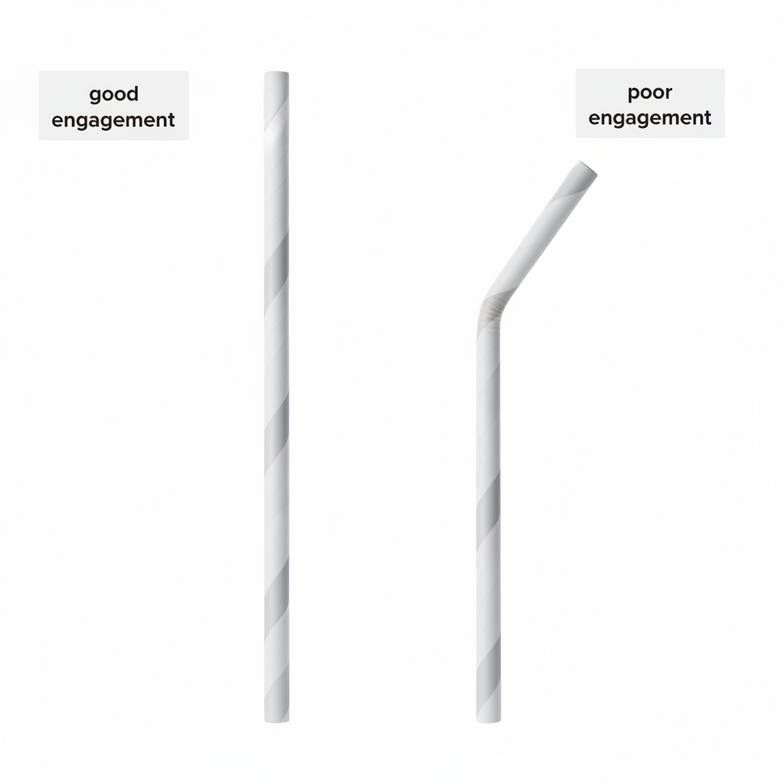
Many procurement managers focus intensely on the force needed to pull the straw open or pull it apart. But in doing so, they often overlook a subtle factor that is directly responsible for how stable and high-quality the straw feels during use. The secret to a straw that doesn't bend or wobble lies in its tube engagement.
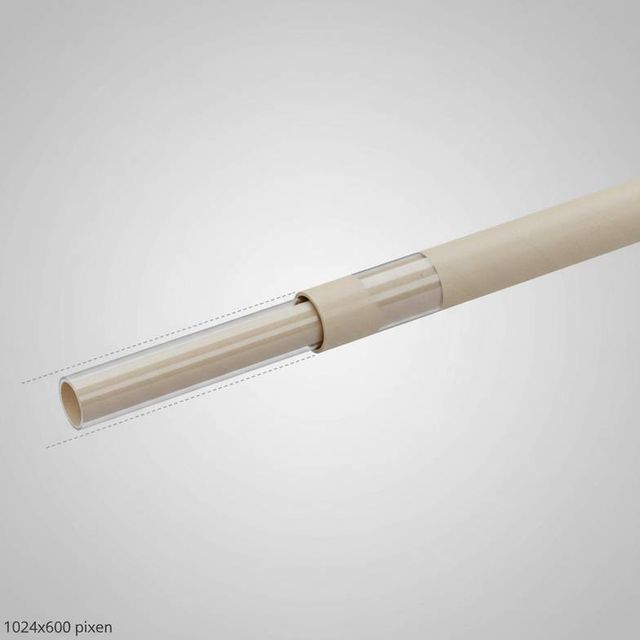
Tube engagement—the length of overlap between the inner and outer tubes when the straw is fully extended—is a critical factor for the stability and perceived quality of telescopic paper straws. A sufficient and consistent engagement length prevents the straw from wobbling, reduces the risk of it bending when piercing a carton, and provides a much smoother extension motion.
Dive Deeper: From a Smooth Slide to a Sturdy Structure
The concept is simple. Imagine trying to connect two pipes. If they only overlap by a few millimeters, the joint will be weak and wobbly. If they overlap by several centimeters, the connection becomes rigid and strong. The same principle applies to telescopic paper straws.
I've reviewed many technical specifications that detail extension force down to the hundredth of a Newton but completely omit any mention of tube engagement length. This is a huge missed opportunity. A straw can have the "perfect" extension force, but if the engagement is too short, it will feel unstable and cheap. When a customer tries to pierce their drink pouch, a short engagement creates a weak point where the straw is likely to bend and fail.
This is not just about feel; it's about function. A longer engagement distributes the stress along the length of the straw, making it more resilient.
Finding the Sweet Spot for Engagement
Like extension force, tube engagement is a balancing act. You want enough overlap for stability, but not so much that it compromises the straw's total extended length or adds unnecessary material and cost.
| Engagement Length | User Experience | Business Risk |
|---|---|---|
| Short | Wobbly, feels flimsy, bends easily when piercing. | High risk of product failure, customer complaints, and poor brand perception. |
| Optimal | Smooth extension motion, feels stable and rigid when locked. | Low risk. Provides a reliable, high-quality user experience. |
| Excessive | May not extend to its full intended length, adds unnecessary cost. | Increased material cost, potential for function failure if the sections don't separate enough. |
When you're sourcing telescopic paper straws, make sure to include a minimum engagement length in your product specifications. More importantly, request samples from potential suppliers. Extend them, feel them, and try piercing a carton with them. You'll quickly feel the difference between a straw with proper engagement and one without. Ask your supplier how they measure and control this critical dimension during production.
How Should You Approach Pull-Out Resistance in Telescopic Paper Straws?
Your final concern is preventing the straw from coming apart completely. You don't want a customer to pull on their straw only to have the two pieces separate in their hands. This might lead you to demand an extremely high pull-out resistance. However, the best approach is to treat this metric as a quality control check, not as a primary performance feature to be maximized.
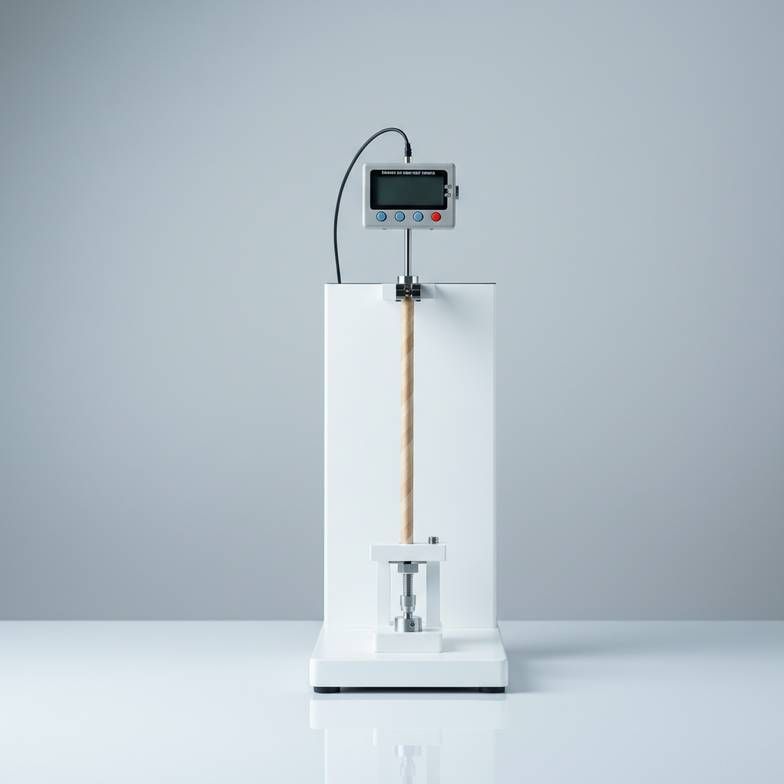
Pull-out resistance is the amount of force required to completely separate the inner and outer tubes of a telescopic paper straw. It should be viewed as a quality control safety net to ensure the straw doesn't accidentally disassemble during normal extension. The goal is to prevent failure, not to make the straw impossible to deconstruct.
Dive Deeper: A Safety Net, Not a Fortress Wall
The purpose of pull-out resistance is to confirm that the straw’s internal locking mechanism is working correctly. This is usually a small, flared, or crimped edge on the end of the inner tube that catches on the outer tube, preventing separation. The goal is simply to ensure this lock holds up during a normal, firm pull to extend the straw.
If a child gets curious and yanks the straw apart with excessive force, that’s a different scenario than the straw failing during intended use. Over-engineering the pull-out resistance can create problems. For instance, a beverage brand once asked us for a pull-out force so high it would have required a significant design change, more adhesive, and thicker paper, which would have driven up the cost and weight.
After we discussed their real-world concerns, we realized their goal was simply to prevent separation during extension. We worked with them to establish a much more reasonable QC threshold that guaranteed this outcome without over-engineering the product and adding unnecessary expense.
Focus on Function, Define With Data
The test for pull-out resistance is straightforward: a force gauge pulls the tubes apart until they separate, and the peak force is recorded. The consistency of this number across a batch tells you how well the manufacturer is controlling the formation of that tiny, critical locking mechanism.
Instead of starting with an arbitrary number, frame your requirement around the desired function. Your specification could state: "The straw must not separate during a standard user extension motion." From there, you can work with your manufacturing partner to define the corresponding QC force measurement that guarantees this outcome. This collaborative approach ensures you get the performance you need without paying for features you don't.
Frequently Asked Questions
Can temperature and humidity affect the performance of telescopic paper straws?
Yes, absolutely. Paper is a hygroscopic material, meaning it absorbs moisture from the air. High humidity can soften the paper fibers, which can reduce the straw's overall stiffness and potentially alter the friction between the tubes, affecting extension force. It is important to partner with a manufacturer who selects appropriate raw materials and understands how to manage these variables in production.
What's more important: the numbers on the spec sheet or physical samples?
They are both essential and serve different purposes. The specification sheet defines the technical target and serves as the basis for quality control. However, physical samples are where you can validate that those numbers translate into the desired user experience. You can't "feel" a spec sheet. Always request samples to hold, extend, and test with your beverage cartons.
How does customization (e.g., printing) affect these technical properties?
Custom printing can slightly change the paper's surface characteristics, stiffness, and thickness. This can have a minor influence on the friction between the tubes and, therefore, the extension force. An experienced manufacturer will account for these effects during the development and production process to ensure your final, branded telescopic paper straws still perform within the agreed-upon range.
What is the typical MOQ for custom telescopic paper straws?
Minimum Order Quantities (MOQs) vary significantly between manufacturers and depend on the level of customization. Factors like custom-printed logos, unique dimensions, special packaging, and non-standard colors all influence the MOQ. The best approach is to discuss your specific project requirements directly with a supplier to get an accurate quotation.
Conclusion
Successfully sourcing telescopic paper straws is a careful balancing act. As we've seen, chasing a single "perfect" number for extension force or pull-out resistance is less effective than defining an acceptable performance range that fits your unique product and end-user. Remember to pay close attention to the often-overlooked factor of tube engagement, as it is fundamental to the straw's stability and perceived quality. By treating these technical specifications as a framework for risk management, you can ask smarter questions, write clearer requirements, and find a manufacturing partner who truly understands the nuances of creating a reliable and user-friendly product.
Ready to move from abstract specs to a dependable straw that complements your brand? Let's review your carton format and user requirements together. Contact us to discuss your custom telescopic paper straw project and request samples to experience our quality firsthand.
Matched Formats for Beverage Cartons
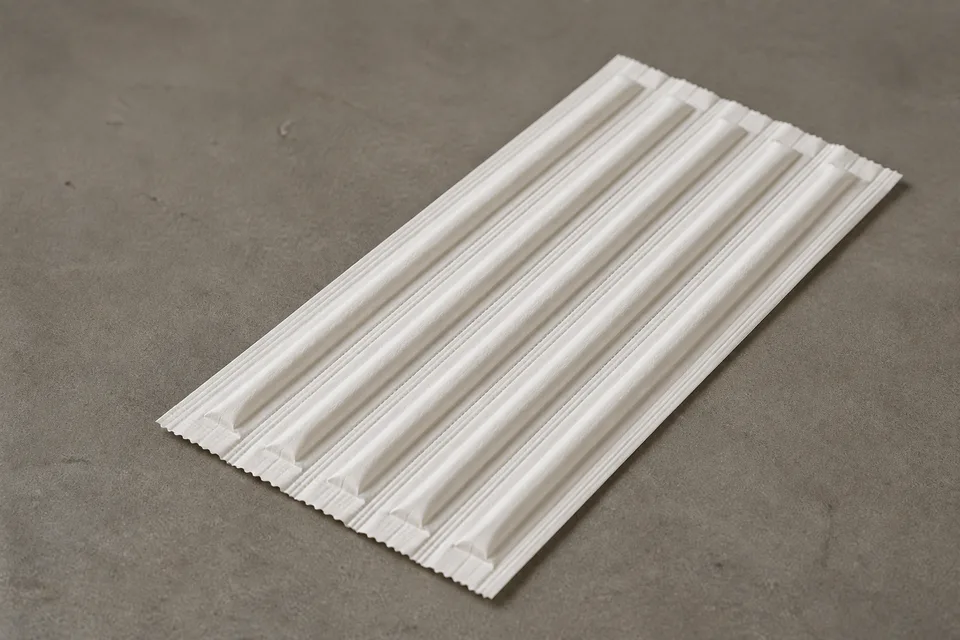
Attached Paper Straws
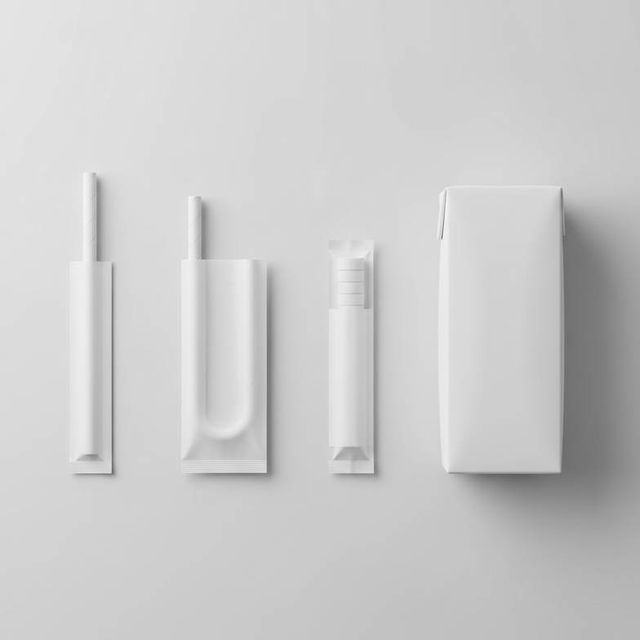
Connected continuous strip for high-speed automatic carton applicators.
View Product Specs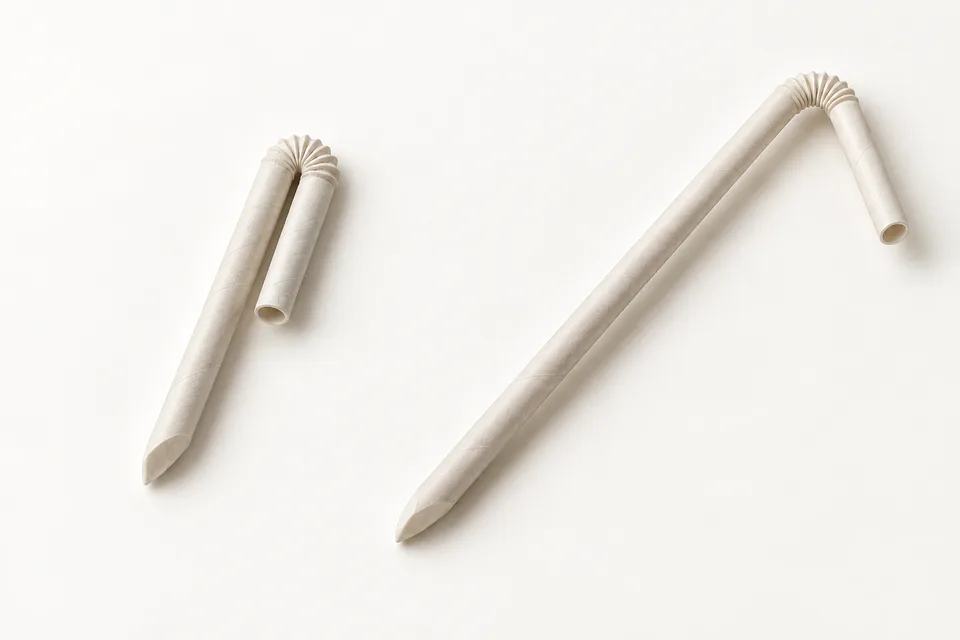
U-Shaped Paper Straws
Folded 180° format maximizing drinking reach on compact beverage cartons.
View Product Specs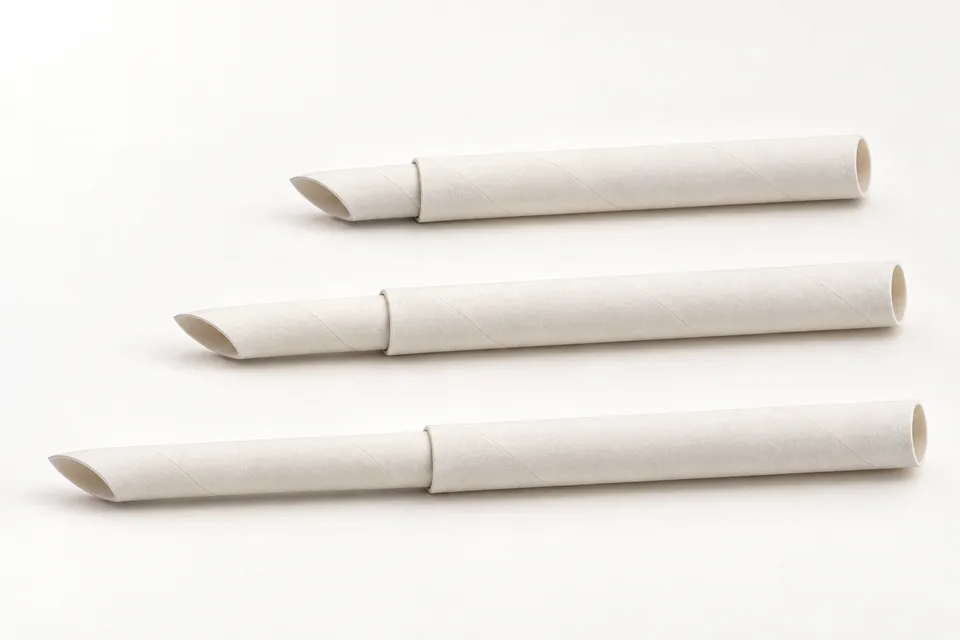
Telescopic Paper Straws
Two-section extendable design offering maximum reach from minimum packed length.
View Product Specs