In This Guide
Sourcing telescopic paper straws can feel like a guessing game. You know you need them to fit your cartons, but you're worried about them jamming, feeling loose, or failing in the hands of your customers. Making a mistake in the specifications isn't just an inconvenience; it can lead to thousands of unusable products and damage your brand's reputation. The solution isn't to find a single magic number, but to specify the dimensions of your telescopic paper straws as a complete system that considers the paper, the glue, and most importantly, your beverage carton.
Specifying dimensions for telescopic paper straws involves defining the inner and outer tube diameters, collapsed length, and extended length in relation to your beverage carton. The ideal clearance between tubes is not a fixed number but a functional range determined by paper thickness, glue, and the number of layers. This balance is critical to ensure both a smooth, easy extension and a snug, high-quality feel for the end-user.
Now that you have the direct answer, let’s unpack this. Getting the dimensions right involves understanding a few key trade-offs. I'll walk you through the questions we ask every B2B buyer to avoid the most common and costly failures.
How Do You Balance the Inner and Outer Tube Diameters for Telescopic Paper Straws?
Are you worried about the straw jamming when a customer tries to extend it? Or maybe you're concerned it will feel wobbly and cheap? This is a frequent point of failure. The tiny gap between the two tubes seems simple, but it’s where most quality problems are born.
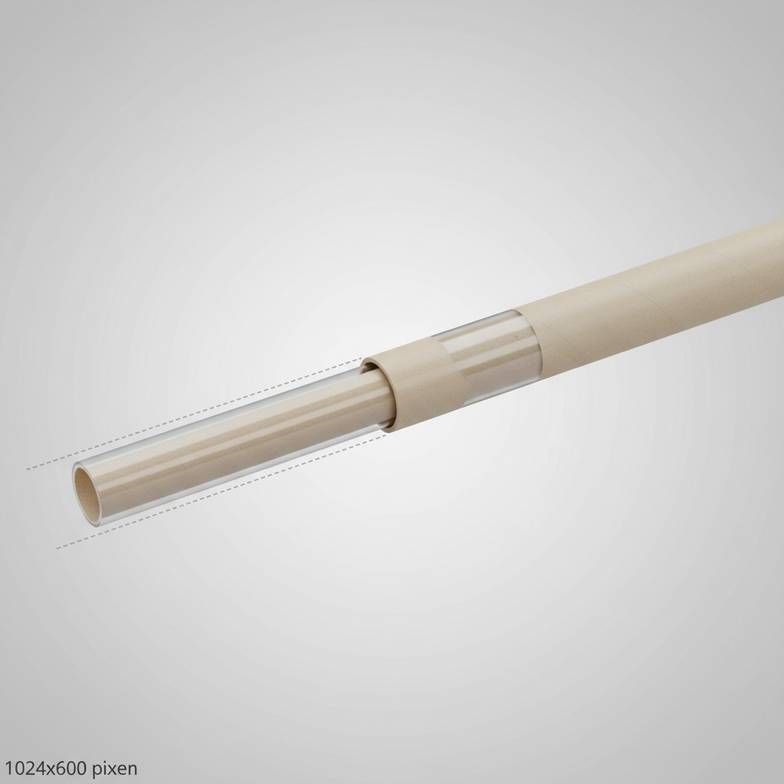
You balance the inner and outer tube diameters by focusing on the functional clearance, or the gap, between them. This space must be wide enough to prevent jamming from variations in paper thickness and glue, yet tight enough to provide a secure, non-wobbly feel during extension.
Dive Deeper
In my experience, one of the first things new buyers ask for is the "correct" clearance between the inner and outer tubes. They're looking for a single number, like 0.5mm. But the truth is, there is no universal "perfect" clearance.
The Myth of a Single "Perfect" Gap
The ideal gap is a moving target that depends entirely on your raw materials and manufacturing process. Here’s what influences it:
- Paper Thickness (GSM): Thicker, higher GSM paper creates a more rigid tube but also has greater potential for thickness variation. This requires a slightly larger clearance to compensate and avoid friction.
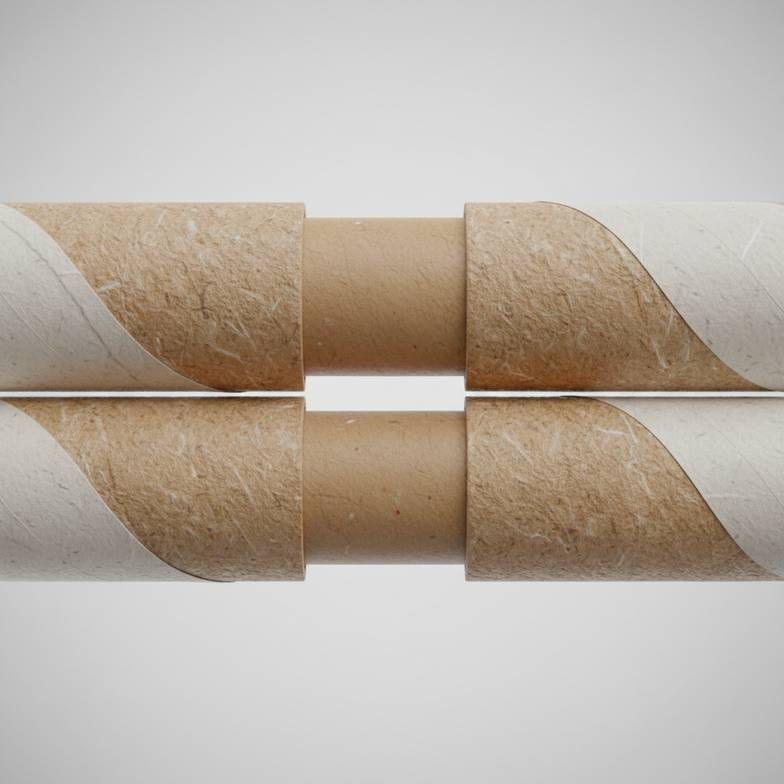
- Number of Paper Layers: Most straws use 3 or 4 layers. More layers mean more potential for accumulated thickness, again suggesting a wider gap might be needed to ensure a smooth slide.
- Glue Application: The amount and viscosity of the food-grade adhesive used to bind the paper layers are critical. If the glue is applied too heavily or unevenly, it can seep slightly and effectively reduce the inner diameter of the outer tube, causing the tubes to stick.
The key is managing the trade-offs:
- A Gap That's Too Tight: This is the primary cause of jamming. A customer pulls, and the inner straw gets stuck. This is especially a risk in humid environments, which can cause the paper to swell slightly. It’s an instant product failure and a frustrating experience.
- A Gap That's Too Loose: While the straw will extend easily, it will feel flimsy and cheap. A wobbly straw signals poor quality control and can rattle around inside the carton hole.
So, what should you do? Instead of specifying a precise gap, communicate the performance you need. A good supplier will then use their production experience to engineer a solution. For example, a common question we receive is about the ideal gap. Our answer is always to ask for their carton and performance needs first, then we produce samples with slightly different tolerances for them to test. I've seen firsthand how a 0.1mm change in diameter can be the difference between a successful product launch and a massive recall.
Are Collapsed and Extended Length More Important for Telescopic Paper Straws?
Many buyers focus intensely on getting the diameters right, but they forget to check if the straw will even fit their product. A straw that is too long when collapsed won't attach to your carton properly. One that is too short when extended won't reach the liquid at the bottom.
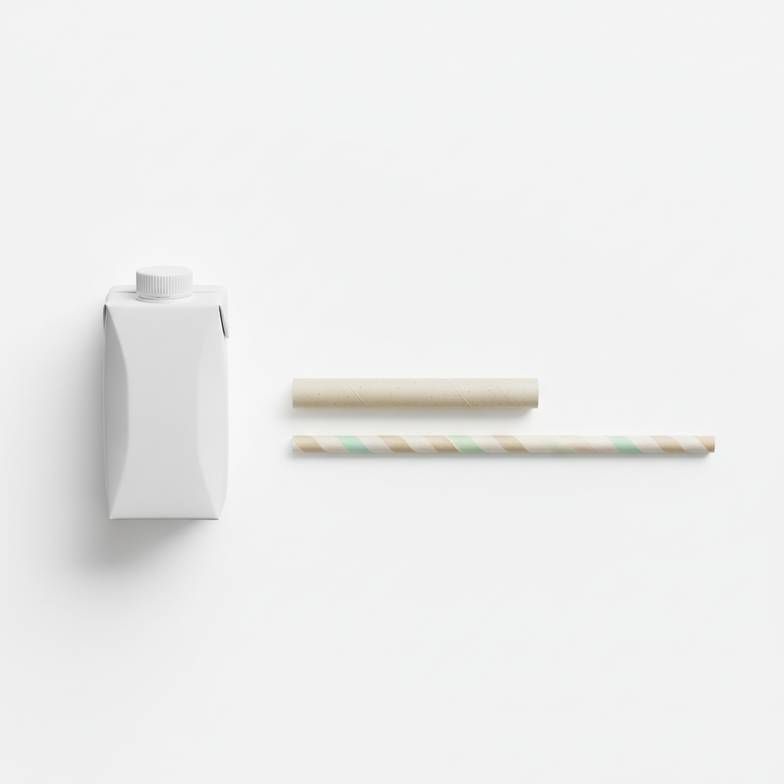
Yes, for many applications, the collapsed and extended lengths are the most critical starting constraints for your telescopic paper straws. The collapsed length must fit the physical dimensions of your beverage carton and work with your attachment machinery. The final extended length must be long enough for a good user experience. These two numbers dictate the entire design.
Dive Deeper
The lengths of your straw are not arbitrary; they are determined by fixed external factors. Getting them wrong means the straw is fundamentally incompatible with your product, regardless of how well the telescopic mechanism works.
The Collapsed Length: Your First Non-Negotiable
Before we even discuss diameters, we have to confirm the collapsed length. This dimension is dictated by your packaging.
- Carton Real Estate: The straw needs to fit on a flat panel of the beverage carton without interfering with seals, folds, branding, or nutritional information. You need to measure the available space precisely.
- Applicator Machinery: If you use an automated machine to glue the wrapped straws onto cartons, that machine has specific grippers and placement tolerances. A straw that is too long or too short might not be picked up correctly or could be crushed during application.
To prevent these issues, what an experienced buyer provides is not just a number, but context. They will send us a technical drawing of their carton or, even better, a few dozen physical samples. This is why our first step is always to request samples of the customer's beverage carton. It eliminates guesswork.
The Extended Length: The User Experience
The extended length is all about function and customer satisfaction.
- Reaching the Bottom: The straw must be long enough to comfortably reach the bottom of the carton, allowing the consumer to drink all of the liquid.
- Handling Comfort: It should also be long enough to hold comfortably without the user's fingers being too close to the carton opening.
These two lengths—collapsed and extended—define the total "travel distance" of the inner tube. This travel, combined with the required diameters for fluid flow, determines if the design is structurally sound and manufacturable. A request for a very short collapsed length and a very long extended length, for example, might result in a flimsy straw because the overlap between the tubes becomes too short to provide stability.
How Does the Beverage Carton Dictate Specifications for Telescopic Paper Straws?
Imagine you’ve designed the perfect straw. It extends smoothly and feels sturdy. Then you discover it doesn't fit through the pre-punched hole in your beverage carton. This is a simple but surprisingly common and costly oversight. The straw does not exist in a vacuum; it is part of a packaging system.
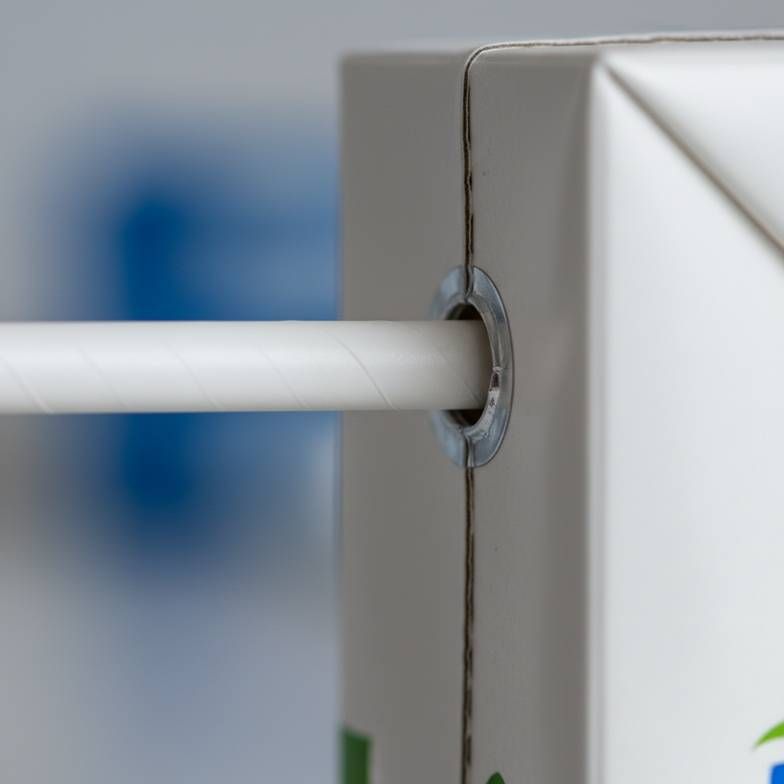
The beverage carton dictates several non-negotiable specifications for telescopic paper straws. It sets the maximum outer diameter (from the straw hole), the required collapsed length (from the available panel space), and often influences the adhesive required for attaching the wrapped straw. Your carton's specs are the starting point for any successful straw design.
Dive Deeper
A competent supplier shifts the conversation from "What dimensions do you want?" to "Tell me about your carton." This is because the carton provides the boundaries within which we must engineer a solution.
The All-Important Straw Hole
The diameter of the pre-punched hole in your carton sets the absolute maximum for the outer tube's diameter.
- Fit and Seal: The straw's outer tube must be slightly smaller than the hole to be pushed through easily, but not so small that it creates a leaky gap.
- Material Interaction: The material around the hole (often a thin layer of aluminum foil or plastic) can deform. You need to account for this. A sharp edge on the straw could tear the foil, while a straw that's too tight could delaminate the layers around the hole.
A common mistake I see is when a buyer specifies an outer straw diameter that is exactly the same as the hole diameter on their drawing. They forget that both the straw and the carton hole have manufacturing tolerances. You need to design for the worst-case combination to ensure every straw fits every carton.
Carton Panel and Attachment Process
Beyond the hole, the carton body itself is critical.
- Attachment Surface: The size of the flat panel on the carton dictates the maximum collapsed length of the straw.
- Surface Material: The carton's coating (e.g., PE, matte finish) affects which type of hot-melt glue will work best for attaching the straw's outer wrapper. The wrong glue can lead to straws falling off during transit.
- Automation Compatibility: As mentioned earlier, your straw applicator machine has specific requirements. We often troubleshoot production line issues that trace back to a mismatch between the straw's final dimensions and the machinery's settings.
To de-risk your procurement, here's a checklist of what you should provide your supplier:
- Technical drawings of the beverage carton.
- Physical samples of the exact carton model, including the straw hole punch-out.
- The specified diameter of the pre-punched straw hole, with tolerances if known.
- Details about your straw applicator machine and the adhesive you use, if possible.
By starting with the carton, you move from abstract specifications to a practical, collaborative design process.
Frequently Asked Questions
What's a typical clearance between the inner and outer tubes?
There is no single "typical" number because it depends on the paper, glue, and number of layers. Functionally, the range is often between 0.3mm and 0.6mm. However, you should focus on performance (smooth pull, no wobble) and allow your manufacturer to achieve that with their specific materials by testing samples.
How many paper layers are best for telescopic straws?
Most telescopic paper straws are made with 3 or 4 layers of food-grade kraft paper. Three layers can be sufficient for smaller juice boxes, while four layers add rigidity and a more premium feel, which is better for larger cartons or thicker liquids. It's a trade-off between strength, diameter, and cost.
Can you print on telescopic paper straws?
Yes, custom printing is very common on the outer tube of telescopic straws. It's crucial to specify that the printing must be done with food-safe inks. You also need to ensure the printing process doesn't add significant thickness that could interfere with the straw's smooth extension or its fit in the carton hole.
What information should I provide to get an accurate quote for telescopic paper straws?
To get a fast and accurate quote, provide your supplier with: your beverage carton's technical drawings or physical samples, the required collapsed and extended lengths, your target inner/outer diameters, estimated annual order quantity, and your destination market for compliance and shipping purposes.
Conclusion
Specifying the right dimensions for telescopic paper straws is less about finding a perfect set of numbers and more about managing a complete packaging system. The most successful projects I've been a part of begin with a collaborative conversation, not a rigid spec sheet. By focusing on the constraints imposed by your beverage carton—the collapsed length, extended length, and hole diameter—and communicating your performance goals like a smooth pull and a sturdy feel, you empower your manufacturing partner to deliver a reliable product. A good supplier won't just sell you a straw; they will help you engineer a solution that works from the production line all the way to the end consumer.
Instead of guessing at dimensions and risking a costly error, let's get it right from the start. Submit your carton specifications and let our experienced team recommend a proven, testable solution for your project. Request a carton format review today to begin the conversation.
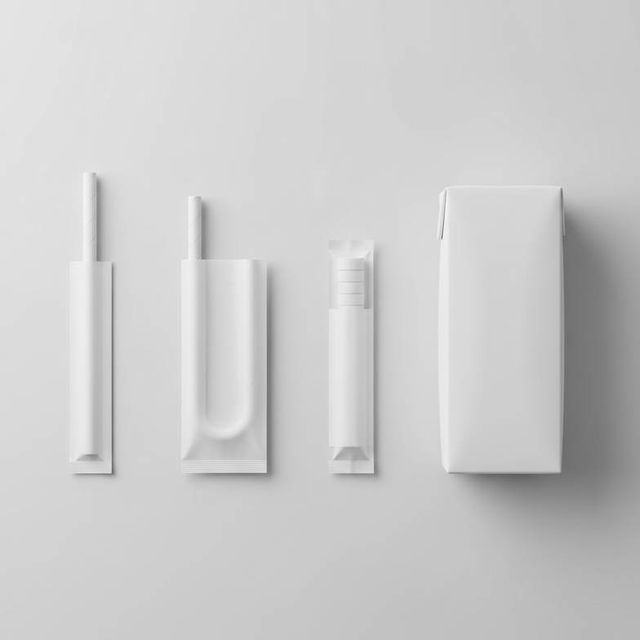
Matched Formats for Beverage Cartons
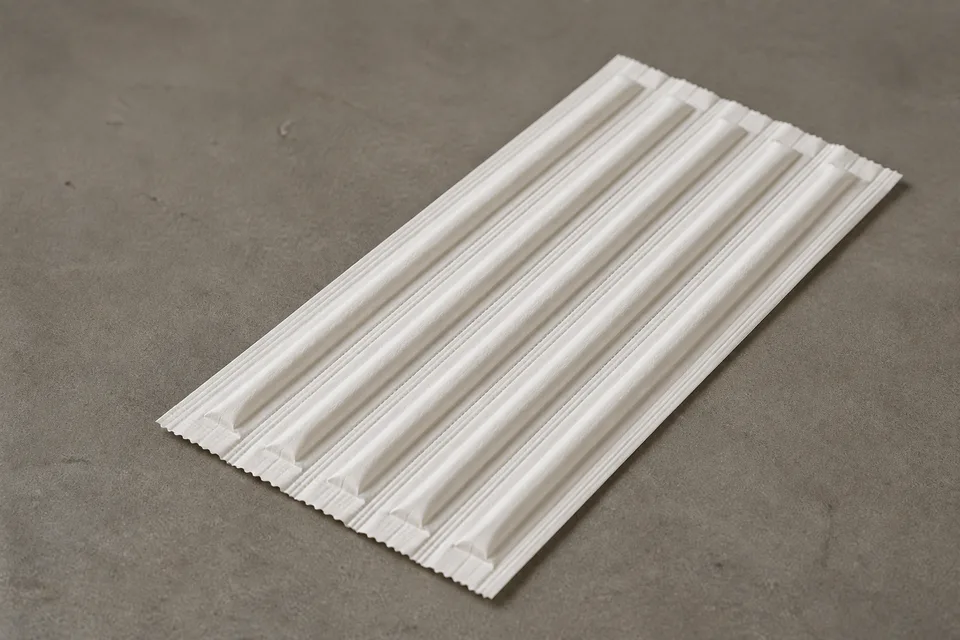
Attached Paper Straws
Connected continuous strip for high-speed automatic carton applicators.
View Product Specs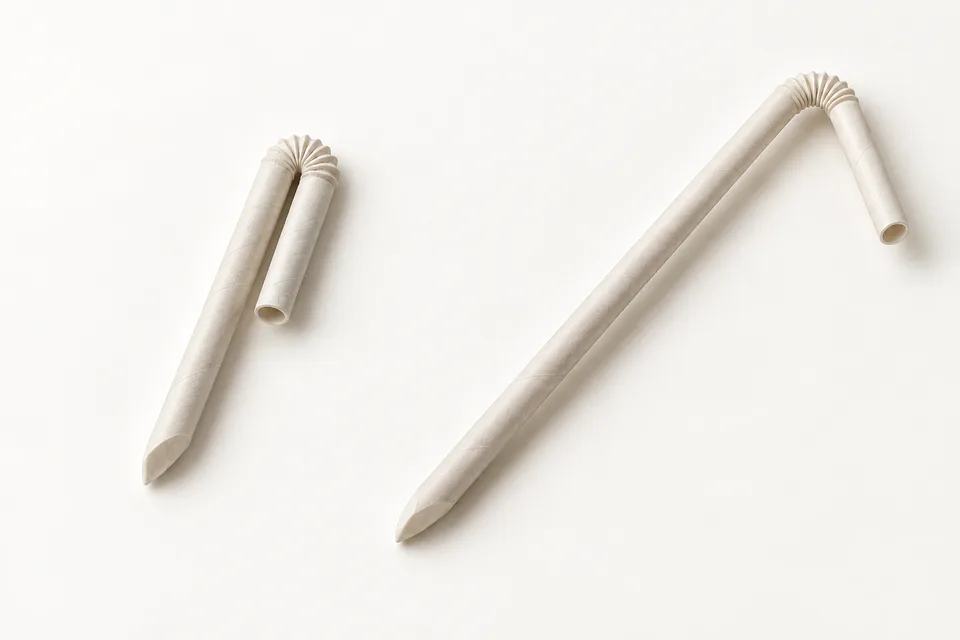
U-Shaped Paper Straws
Folded 180° format maximizing drinking reach on compact beverage cartons.
View Product Specs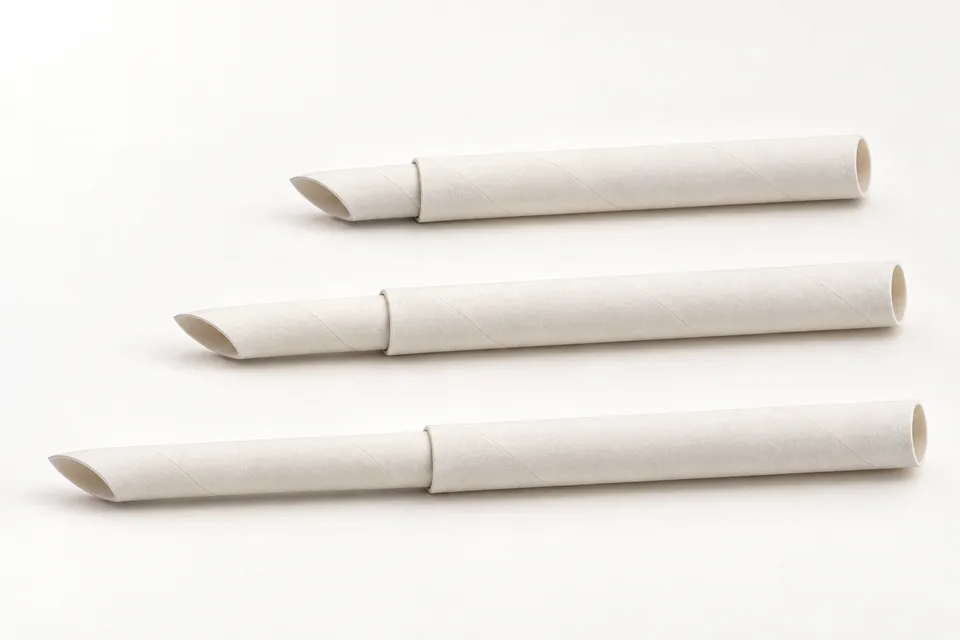
Telescopic Paper Straws
Two-section extendable design offering maximum reach from minimum packed length.
View Product Specs