In This Guide
Sourcing U-shaped paper straws for your beverage cartons is a smart move, but you're probably worried about the bend. What if the wrapper fails in transit, the straw gets crushed, and your customers can't use it? A damaged bend leads to a useless straw, a frustrated consumer, and potential harm to your brand's reputation. The key isn't finding some magic, ultra-strong film, but in engineering a complete U-shaped paper straw wrapper system that balances protection, cost, and machine compatibility.
Designing a protective U-shaped paper straw wrapper requires a systems-based approach. Instead of focusing on a single material, you must evaluate the interaction between the wrapper film (like BOPP or PLA), its thickness, seal strength, and dimensions against your specific straw geometry, carton application machinery, and supply chain stresses. The goal is to create a wrapper that fits the bend without tension and performs reliably during attachment and transport.
Now that we know it's about looking at the whole system, let's break down the critical factors you need to discuss with your supplier. You’ll see that it's less about the wrapper material itself and more about how all the pieces work together in your specific production environment.
What's More Important Than Just Wrapper Material Strength?
You might think a thicker, stronger film is the obvious answer to protecting the U-bend. It seems logical. But what if that "strong" film is too stiff and actually causes more problems, like jamming your high-speed carton application machines or even creating stress points that lead to punctures?
The material's specific properties—like its flexibility, puncture resistance, and heat sealability—are far more important than just its raw strength or thickness. The real goal is to select a film that can conform to the straw’s U-bend without creating tension and then run smoothly through your equipment.
Dive Deeper
Let's get into the details. Choosing a material is a balancing act. From my experience working with beverage producers, the conversation often starts with material type but quickly moves to performance characteristics once we start looking at their actual production lines.
Common Wrapper Materials: A Quick Comparison
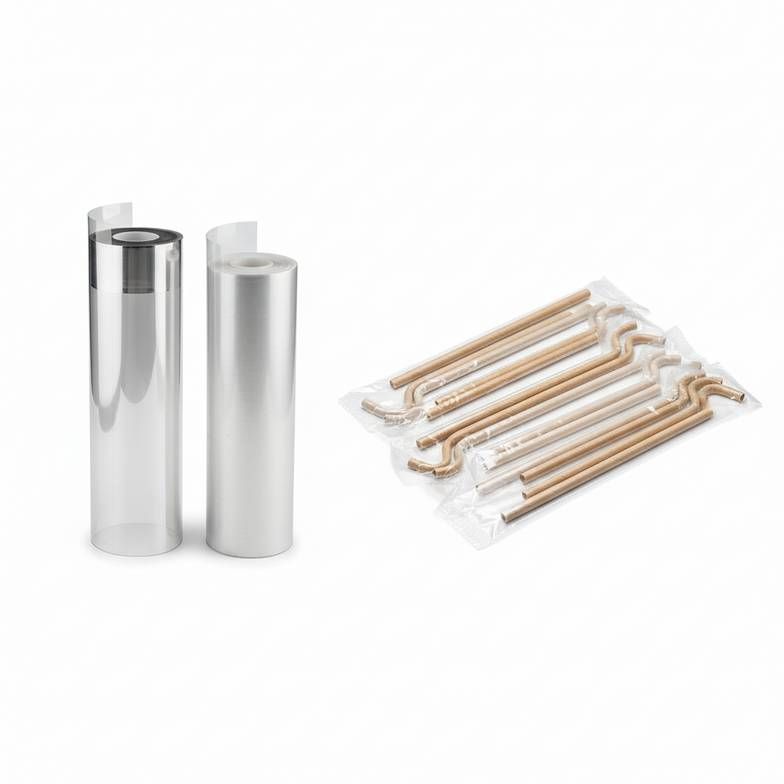
Most individually wrapped straws use one of two main plastic films, each with its own profile.
- BOPP (Biaxially Oriented Polypropylene): This is the industry workhorse for a reason. It's generally the most cost-effective option, provides excellent clarity to see the straw inside, and has good moisture barrier properties. Its relative stiffness can be a benefit for smooth handling in machinery, but it can also be a drawback. If the U-shaped paper straw wrapper isn't sized perfectly, that stiffness can concentrate stress right at the inside of the bend.
- PLA (Polylactic Acid): This is the go-to choice for brands focused on compostability claims. PLA is derived from renewable resources like corn starch. It can feel a bit softer or have a different texture than BOPP, but it can also be more brittle under certain conditions. It's a great material, but it's crucial to verify its performance on your specific high-speed wrapping and application machines, as it can behave differently from BOPP.
While paper wrappers exist, they are far less common for U-shaped straws. They lack transparency and achieving a durable, hermetic seal around the complex U-shape using heat or glue can be challenging and costly.
Beyond Material: Key Performance Properties
Instead of just asking "Is it BOPP or PLA?", you should be discussing these performance indicators with your supplier:
- Flexibility vs. Stiffness: This is the core trade-off. A film that's too stiff puts constant pressure on the bend, making it a ticking time bomb for punctures. A film that's too flimsy can easily tear during application or transport. This property is influenced by the film's thickness (measured in microns), but it's not the only factor. The material's chemical formulation plays a huge role.
- Puncture Resistance: This is absolutely critical. The wrapped straw has to survive a long journey—being packed into master cartons, shipped across the country or ocean, and handled in warehouses. We've seen cases where a perfectly good straw is punctured simply because of how it rubs against another wrapped straw inside the shipping box.
- Seal Strength: The heat seals at the top and bottom of the wrapper are potential weak points. A poor seal can allow moisture, dust, or other contaminants to get inside, compromising hygiene. You should ask your supplier about their seal integrity testing process. A simple pull test isn't enough; it needs to withstand the pressures of your supply chain.
Is Your U-Shaped Paper straw Wrapper the Right Size?
Let's say you've selected a material with the right properties. Yet, you're still seeing straws get damaged right at the bend. You might be tempted to blame the film, but the real culprit is often hiding in plain sight: the wrapper's dimensions.
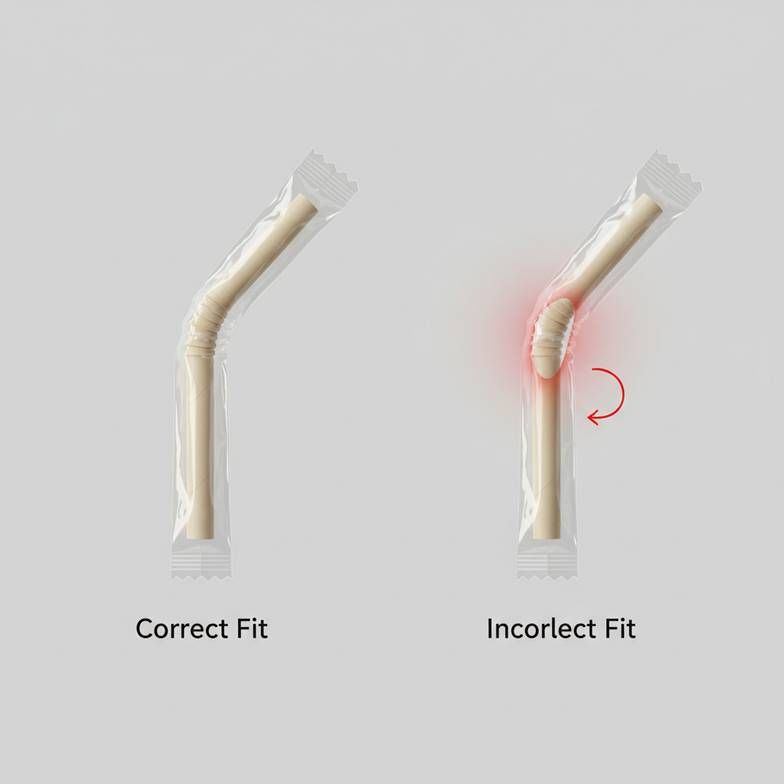
A wrapper's length and width are just as critical as its material. A wrapper that's too tight will stretch over the bend like a guitar string, creating a massive amount of tension and a prime spot for a puncture. On the other hand, a wrapper that's too loose can sag, get caught in machinery, and cause jams.
Dive Deeper
In our conversations with beverage companies, this is the most common and easily fixed issue we encounter. A small adjustment in wrapper dimensions can make the difference between a 5% failure rate and a 0.1% failure rate.
The "Tenting" Effect: A Common Failure Point
The number one cause of wrapper failure at the bend is something we call "tenting." This happens when the film is pulled taut across the inside of the "U," leaving a small gap between the film and the straw itself. This tension creates an extremely vulnerable point. Any small impact or abrasion during shipping is focused right on that spot, and the film punctures.
A frequent mistake we see is buyers providing only the straw's total length and diameter. They forget to specify the geometry of the bend. Without knowing the bend's radius and exact position, it's nearly impossible for a supplier to manufacture a U-shaped paper straw wrapper that fits correctly and avoids this tenting effect.
How to Specify Wrapper Dimensions for a Perfect Fit
To prevent these issues, you need to provide your supplier with a complete set of specifications. Don't leave it to guesswork. Here's what you should include:
- Straw's total unbent length (if you were to straighten it out).
- Straw's outer diameter (OD).
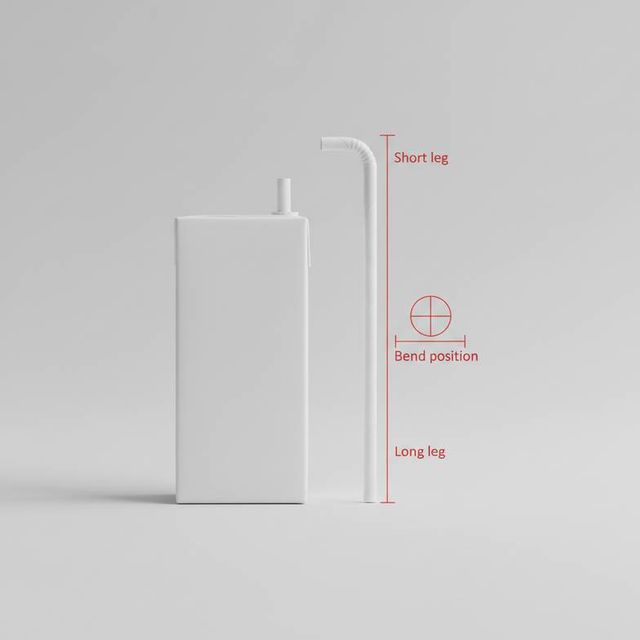
- Position of the U-bend (e.g., is it centered, or off to one side?).
- Radius of the U-bend (the tightness of the curve).
- A physical sample of your beverage carton. Honestly, this is the best way. It allows the supplier to physically match the straw and its wrapper to your final product.
Here’s a simple checklist to guide your conversation with a potential manufacturing partner.
| Parameter to Specify | Why It's So Important |
|---|---|
| Wrapper Width | Must be sufficiently wider than the straw's diameter to allow for a secure side seal without pulling the film tight across the straw's body. |
| Wrapper Length | Must be long enough to accommodate the full arc length of the U-shaped straw, not just its point-to-point length, plus the seal areas. |
| Seal Area Dimensions | The size of the sealed sections at the top and bottom affects how the straw is held and how it interacts with your application machinery. |
Will Your U-Shaped Paper Straw Wrapper Work With Your Machines?
So, you've done your homework. You've selected a material with the right properties and worked with your supplier to get the dimensions perfect. The wrapper looks great on paper. But when you try to run it on your production line, you're faced with constant jams, mis-applications, and costly downtime. What went wrong?
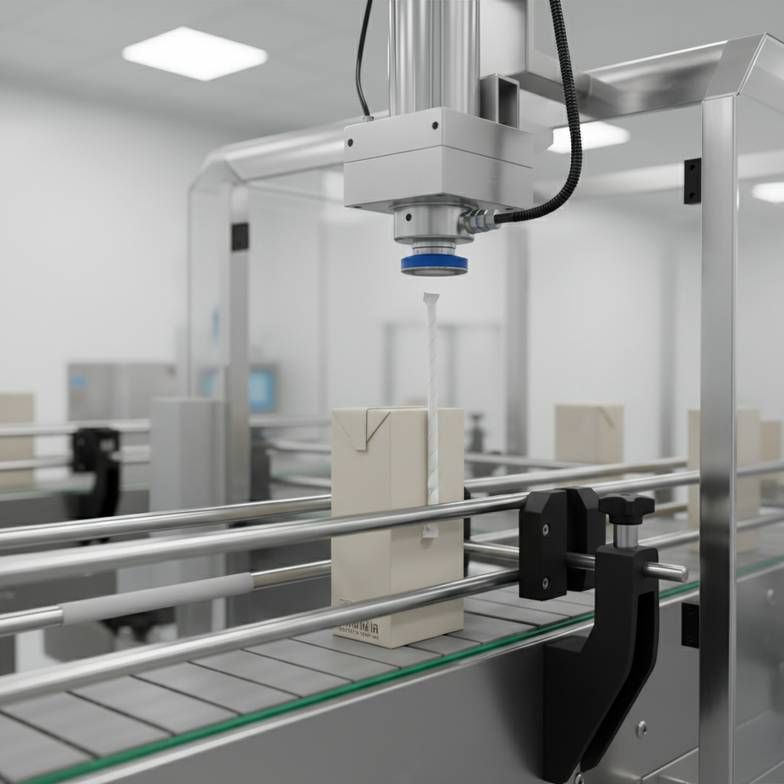
The wrapper isn't just a simple package; in a modern factory, it's a machine part. Its material, thickness, static properties, and even the ink on it must be compatible with your straw wrapping machine and, most critically, your carton application equipment.
Dive Deeper
This is where our experience in both finished straw production and machinery supply becomes really valuable. We've seen firsthand how a seemingly minor change in wrapper spec can bring a multi-million dollar packaging line to a halt.
Compatibility with the Straw Wrapping Machine
The first machine the wrapper interacts with is the one that actually wraps the straw. These machines typically use heat and pressure to create the seals.
- Heat Sealing: A film that's too thick or has certain coatings might not seal properly at the high speeds required in production. I remember a client who switched to a thicker BOPP film hoping for more protection. Their wrapping machine's heating element couldn't transfer enough heat fast enough, leading to a 20% seal failure rate right off the line.
- Static and Friction: Film rolls can build up static electricity, which can cause them to cling to machine parts and feed incorrectly. The film's coefficient of friction (how slippery it is) also has to match what the machine is designed to handle.
The All-Important Carton Application Machine
This is the step that is most often overlooked. After the straw is wrapped, a different machine—the applicator—has to take that wrapped straw and glue it onto your beverage carton. This machine is often very sensitive.
A U-shaped paper straw wrapper that is too stiff might resist the mechanical fingers or vacuum cups of the applicator, causing the straw inside the wrapper to be crushed or bent out of shape during the application process. Conversely, if the wrapper's seals are too weak, the pressure from the applicator can cause them to burst, leading to a contaminated product and a mess on the line.
Asking Your Supplier the Right Questions About Machinery
To avoid these painful and expensive problems, you need to treat your straw supplier like a true technical partner. Providing them with information about your machinery isn't just helpful; it's essential for de-risking your purchase. Be prepared to discuss:
- The make and model of your straw application machine.
- Your target application speed (e.g., 200 cartons per minute).
- Any known sensitivities your line has with certain film types.
A good supplier will use this information to recommend or develop a wrapper system that has been proven to work in a similar operational environment.
Frequently Asked Questions
What's the best material for a U-shaped paper straw wrapper?
There's really no single "best" material. It's a trade-off. BOPP is often more cost-effective and runs well on many machines, while PLA is the choice for compostability. The most important thing is ensuring the material's properties (flexibility, sealability) are a match for your straw's shape, your machinery, and your supply chain.
How thick should the wrapper film be?
Thickness (in microns) is a result of the overall design, not a starting point. It depends entirely on the material type, the geometry of your straw's bend, and the demands of your machinery. Thicker is not always better and can sometimes cause more problems than it solves. This is a specification that should be determined through testing and trials.
How can I test if a wrapper is protective enough?
The ultimate test is a trial run on your actual production line. Before you get there, you can ask your supplier for lab test data on puncture resistance and seal strength. You can also conduct your own practical tests, like simulating shipping conditions with a shake test on a case of finished products to see if any wrappers get punctured.
Can the printing on the wrapper affect its performance?
Yes, absolutely. Heavy ink coverage can slightly change the film's stiffness, texture, and how it behaves with heat-sealing equipment. It's always a best practice to test and approve the final, fully-printed U-shaped paper straw wrapper, not just the plain base film, to ensure there are no surprises in production.
Conclusion
Designing a reliable U-shaped paper straw wrapper is a classic engineering challenge that requires a holistic view. It's not about finding one perfect material, but about building a robust system where the wrapper's material, dimensions, and performance characteristics are perfectly matched to the straw, your machinery, and your logistics. By shifting your focus from asking "what's the best film?" to "what does my complete system require?", you can collaborate more effectively with your supplier. This approach allows you to engineer a U-shaped paper straw wrapper that truly protects the bend, delights your customers, and keeps your production lines running without a hitch.
If you're struggling to find a wrapped straw solution that works for your unique setup, let's talk. We can leverage our experience with both finished products and production machinery to help you. Request a carton format review today, and we’ll help you configure a solution that prevents failures and protects your brand.
Matched Formats for Beverage Cartons
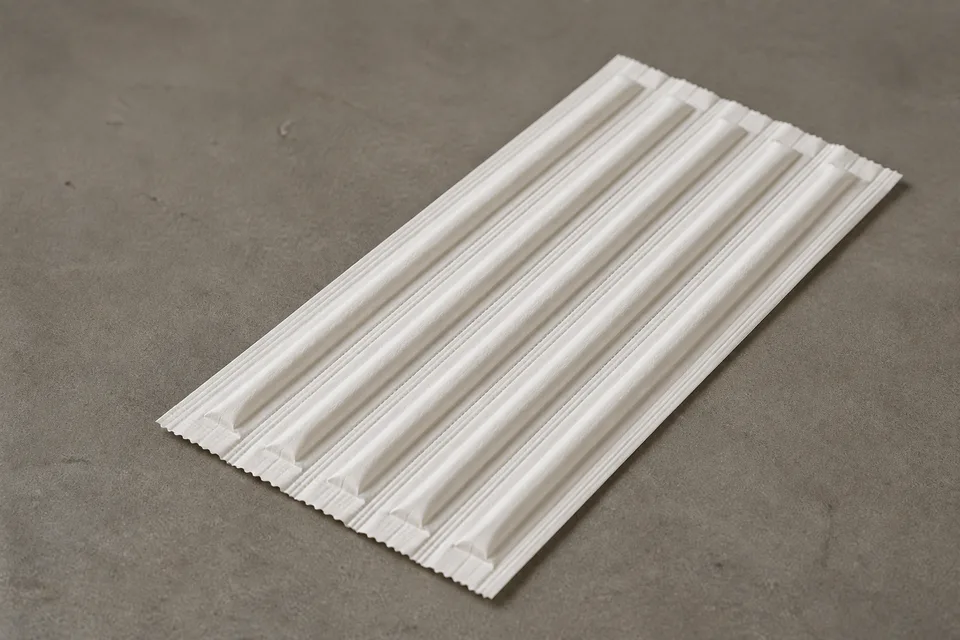
Attached Paper Straws
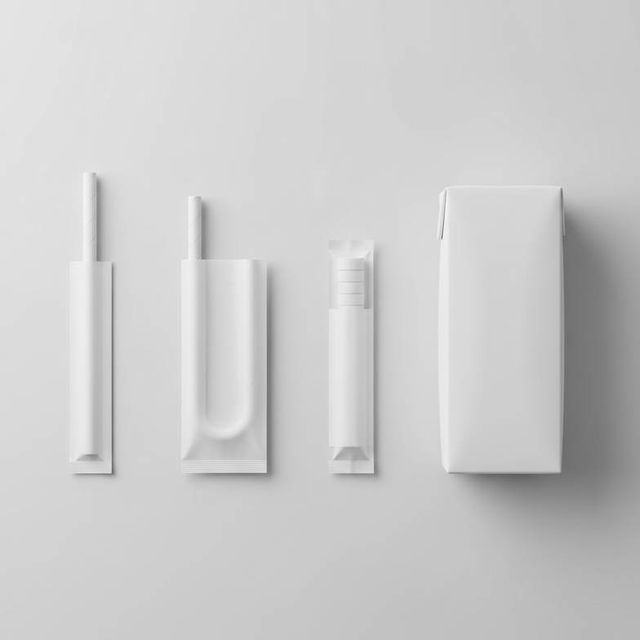
Connected continuous strip for high-speed automatic carton applicators.
View Product Specs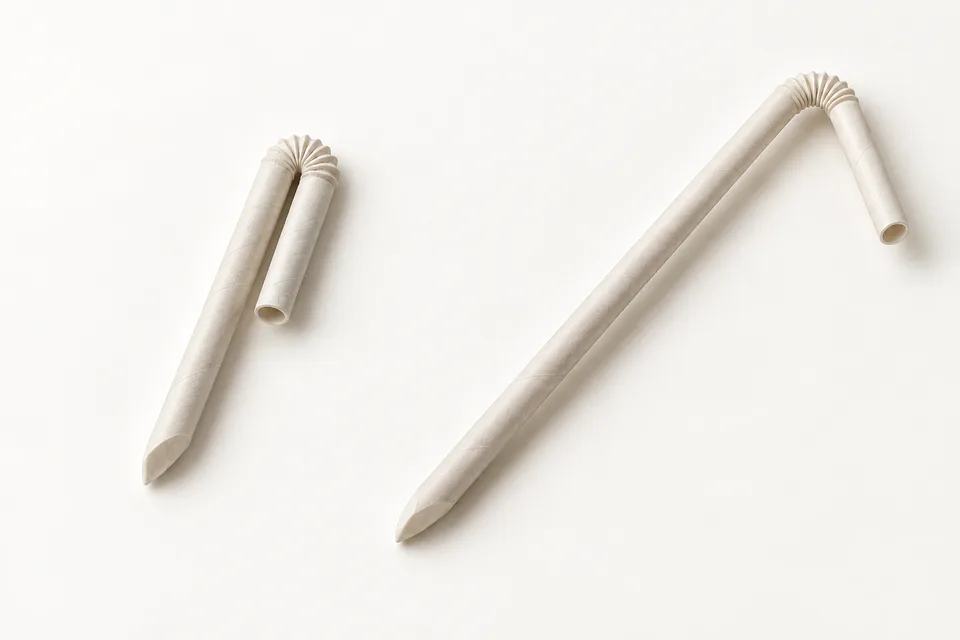
U-Shaped Paper Straws
Folded 180° format maximizing drinking reach on compact beverage cartons.
View Product Specs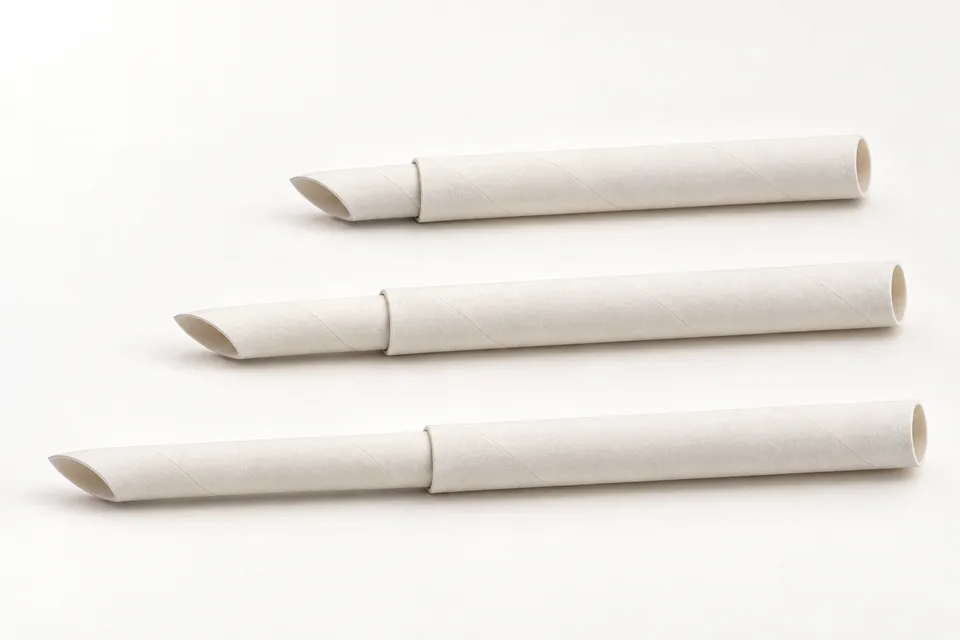
Telescopic Paper Straws
Two-section extendable design offering maximum reach from minimum packed length.
View Product Specs