In This Guide
Sourcing attached straws for your beverage cartons feels like it should be simple, right? You just need a U-shaped paper straw. But then the supplier asks for specs: long leg, short leg, bend position. Suddenly, you're facing a list of measurements that could derail your entire production line if you get them wrong. The agitation is real—a wrong choice could mean thousands of dollars in wasted product, jammed machinery, and unhappy customers. The solution lies in understanding that these aren't just numbers on a spec sheet; they are critical U-shaped paper straw dimensions that define the success of your product.
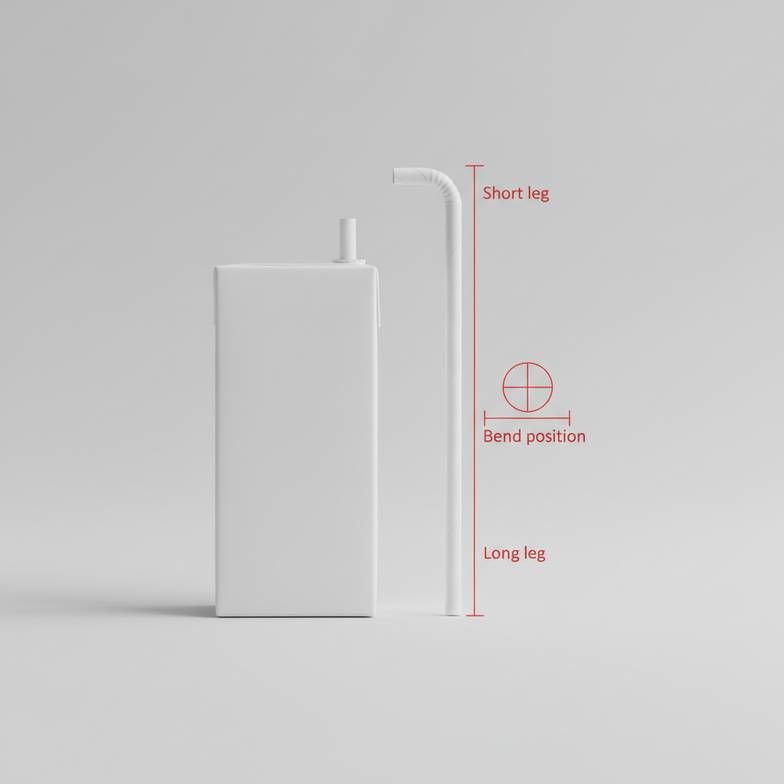
The most critical U-shaped paper straw dimensions are the long leg, short leg, and bend position. These are not universal "standard" sizes. Instead, they form an interdependent system that must be custom-designed based on three factors: the specific height and width of your beverage carton, the location of the straw's puncture hole, and the technical tolerances of your automated straw wrapping and attachment machinery. A successful product requires co-designing these dimensions with your packaging, not just picking from a list.
Now that you know there’s no magic "one-size-fits-all" answer, you're probably wondering what each of these dimensions actually controls. Let's break down this puzzle piece by piece. Understanding the function behind each measurement will empower you to have a much more productive conversation with your manufacturing partner.
Why Is the Long Leg Dimension So Important for Carton Compatibility?
You see the "long leg" on a spec sheet and think, "Okay, it just has to reach the bottom." While that's true, focusing only on length can lead to some major headaches on the factory floor. It's a classic case of a simple detail having complex consequences.
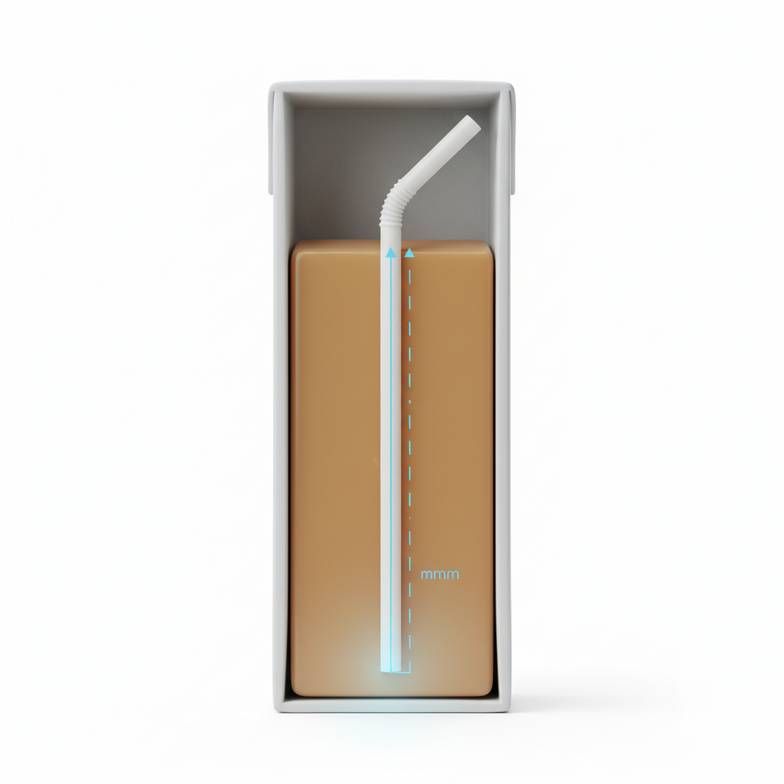
The primary job of the long leg is, of course, to allow the consumer to drink all the liquid in the carton. But its length is also a critical factor for your production machinery. An incorrectly specified long leg can create a folded straw that is too long or too short for your equipment to handle properly.
Diving Deeper into the Long Leg
When we consult with beverage producers, the conversation about U-shaped paper straw dimensions always starts with their carton. The long leg is a perfect example of why.
Reaching the Bottom of the Carton
This is the most obvious function. If the long leg is too short, the consumer is left with a frustrating puddle of juice or milk they can't reach. To get this right, we need to know the internal height of your carton. The ideal long leg length is typically the internal height minus a small clearance gap (usually a few millimeters) at the bottom. This prevents the straw from scraping the bottom or getting clogged.
The Impact on the Folded Profile
Here’s where things get more technical. Once the straw is bent into a 'U' shape, the long leg defines the majority of its folded length. Your automatic attachment machine—the one that glues the wrapped straw onto the carton—is designed to handle a very specific size.
I remember a client who wanted to source straws for a new organic juice box. They insisted on an extra-long straw, thinking it would signal a premium experience. While a noble idea, the resulting folded straw was 5mm longer than their machine's applicator head could handle. This caused constant faults and jams on their packaging line until we co-designed a new straw with a length that balanced consumer experience with machine capability.
How a Production Partner Determines the Right Length
When a customer sends us their carton specifications or, even better, a physical sample, here's what we look at to define the long leg:
- Carton Internal Height: We measure from the inside top to the inside bottom.
- Straw Hole Position: We measure the distance from the top of the carton to the center of the pre-punched straw hole. This tells us how the straw will sit before it's even bent.
- Required Clearance: We discuss both the clearance needed at the bottom (so it doesn't get stuck) and the clearance at the top (for the short leg and bend).
Only by looking at these three factors together can we recommend a long leg dimension that works for the consumer and your machinery.
How Do the Short Leg and Bend Position Affect U-Shaped Paper Straw Dimensions?
So, you’ve got the long leg figured out. But what about the other two key U-shaped paper straw dimensions—the short leg and the bend position? It’s tempting to think of these as afterthoughts, but they are just as critical for function and production efficiency.
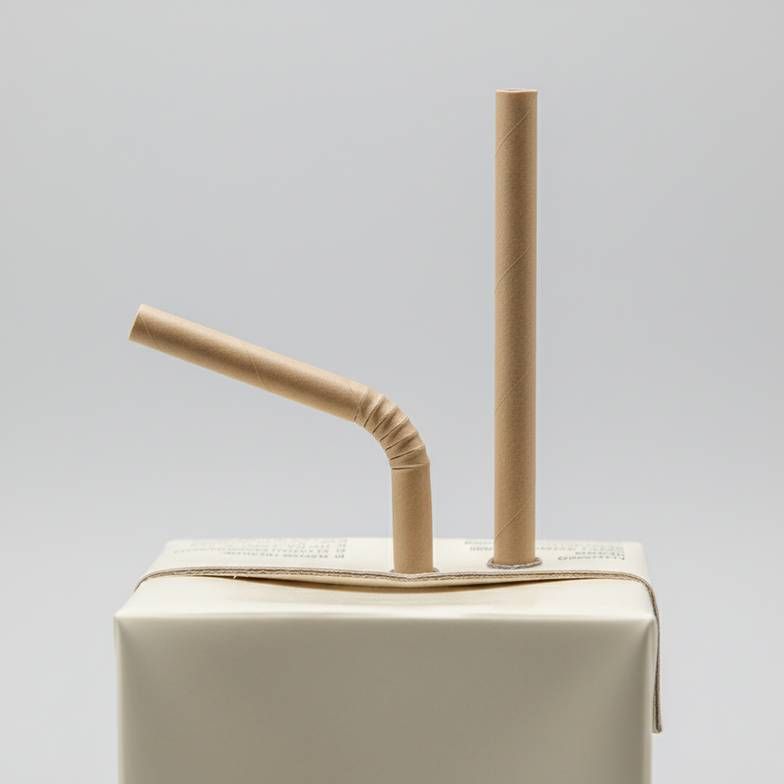
The short leg provides the user with a comfortable and functional mouthpiece, while the bend position is a non-negotiable machine interface point. This position dictates exactly where the straw folds, and that fold must align perfectly with the machinery that wraps it and attaches it to the carton.
Diving Deeper into the Short Leg and Bend
If the long leg is about reaching the product, the short leg and bend are all about assembly and usability. Getting these wrong can make a perfectly good straw unusable.
The Short Leg’s Role in User Experience
Think of the short leg as the "handle." It’s the part the user holds and sips from. Its length is crucial for a good drinking experience.
- Too Short: If the short leg is too short, the user's lips will be pressed right up against the top of the carton. It's awkward and can feel unhygienic.
- Too Long: A short leg that is excessively long can make the folded straw profile too bulky, causing issues with wrapping. It can also create a leverage imbalance, making the straw feel wobbly in the carton.
The ideal length provides enough clearance from the top of the box for a comfortable sip. We typically determine this by looking at the carton's top-edge design and thickness.
Why the Bend Position Is a Machine's Best Friend (or Worst Enemy)
This is the most critical machine-related specification of all. Automated production lines are built for consistency and precision. The machine that bends and wraps the straw expects the bend to occur at the exact same spot, every single time, with sub-millimeter tolerance.
We’ve seen entire production runs halted because a client sourced straws where the bend position was off by just 2mm. The straws wouldn't sit correctly in the machine's guide rails, causing them to be wrapped crookedly or rejected entirely. The bend position isn't just a point on the straw; it's a point of communication between the straw and your factory equipment.
The Interdependent System
It's essential to understand that you can't change one of these dimensions in isolation. They all work together.
| Dimension | Primary Function | Key Consideration | Risk if Incorrect |
|---|---|---|---|
| Long Leg | Reaches the bottom of the carton. | Must account for internal carton height. | Consumer frustration; machine-fit issues. |
| Bend Position | Aligns straw for automated folding. | Must match machine specifications exactly. | Machine jams; inconsistent wrapping/attachment. |
| Short Leg | Provides drinking clearance for the user. | Must clear the top of the carton. | Poor user experience; potential wrapping issues. |
For example, if you decide to make the long leg 10mm longer, that change ripples through the entire system. You have to decide if that extra length will be taken from the short leg or if the overall straw length will increase. This, in turn, affects the final folded profile. It’s a balancing act that is best solved through a technical consultation with your packaging and straw supplier.
Are U-Shaped Paper Straw Dimensions Just About Length?
You've painstakingly specified the long leg, short leg, and bend position. Your work is done, right? Not quite. Focusing only on length and ignoring the straw's diameter and wall thickness is a common oversight that can undermine all your careful planning.
No, U-shaped paper straw dimensions are not just about length. Diameter and wall thickness are equally important. The straw's diameter must fit the carton's pre-punched hole perfectly, while the wall thickness must provide enough structural rigidity for the straw to puncture the carton's seal without bending or collapsing.
Diving Deeper into Diameter and Rigidity
This is where material science meets mechanical engineering. The best-laid plans for length mean nothing if the straw itself fails during its primary job: puncturing the seal and delivering the liquid.
Diameter vs. Carton Hole
The fit between the straw's outer diameter and the carton's straw hole is a matter of precision.
- Too Small: If the straw diameter is too small for the hole, it will feel loose and wobbly. This can break the hermetic seal around the hole, potentially leading to leaks and product contamination.
- Too Large: This is a simpler problem—it just won't fit. Or, if forced, it could tear the carton.
Common diameters for U-shaped straws are around 4mm to 6mm, but the only number that matters is the one that matches your carton's specifications. A good supplier will ask for your carton's hole diameter and recommend a straw with a diameter that creates a snug, secure fit.
Wall Thickness, Rigidity, and the "Puncture Test"
The moment of truth for any attached straw is when the consumer pushes it against the foil or poly-lined seal on the carton. If the straw bends, mushes, or collapses, the product has failed.
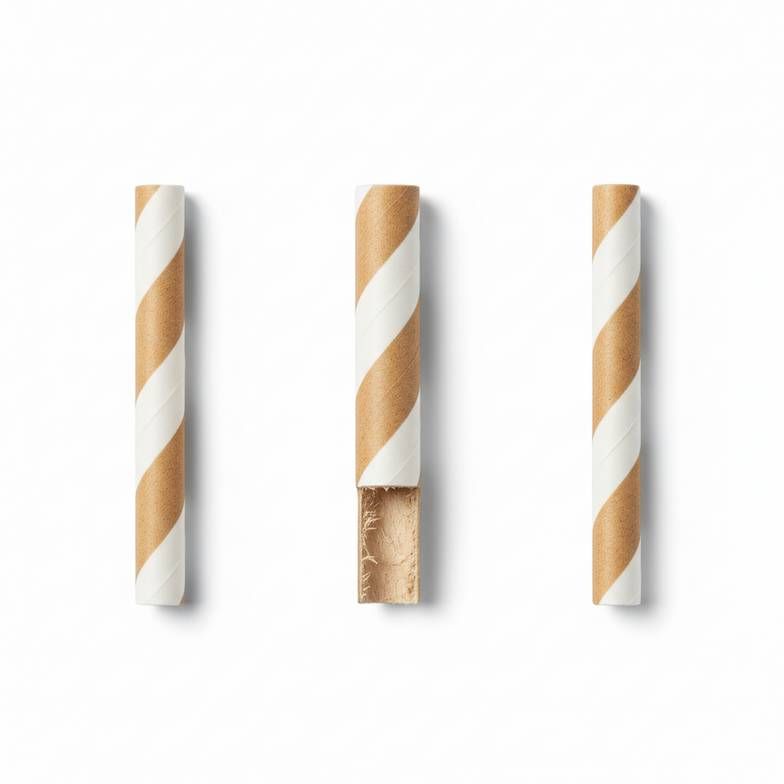
This strength, or rigidity, comes from the wall thickness. Wall thickness is determined by two things: the number of paper layers (plies) and the grammage (weight) of the paper used.
- 3-ply construction: This is a common standard for many juice boxes. It provides a good balance of rigidity and cost-effectiveness.
- 4-ply construction: We often recommend this for milk cartons or packages with thicker, more resistant seals. The extra layer adds significant puncture strength.
- Paper and Glue Quality: Rigidity also depends on using high-quality, food-contact virgin kraft paper and a strong, water-resistant adhesive to bond the layers. Cutting corners here leads directly to soggy, collapsible straws.
A recurring issue we help clients troubleshoot is a straw that fails this "puncture test." It's almost always due to a mismatch between the straw's wall thickness and the carton's seal strength. The solution is to increase the number of plies or use a heavier-grammage paper.
Frequently Asked Questions
Is there a standard size for U-shaped paper straws?
No, there are no universal standard sizes. The correct U-shaped paper straw dimensions are always determined by the specific beverage carton and production machinery. Every specification—long leg, short leg, bend position, and diameter—must be tailored to your unique packaging to ensure a functional and reliable product.
What information do I need to give you to get a quote?
To provide an accurate quote and technical recommendation, we ideally need physical samples or detailed technical drawings of your beverage carton. At a minimum, please provide the carton's height and width, the position of the straw hole, the desired straw diameter, and information about your attachment machinery if possible.
How do you test if the straw dimensions are correct?
We perform a "fitment test." This involves taking the proposed straw samples and physically fitting them to your actual cartons. We check that the long leg reaches the bottom, the short leg provides adequate clearance, and the folded profile fits perfectly in the designated attachment area on the carton.
Can you copy the dimensions from my current plastic U-straw?
Yes, we can use your existing plastic straw's dimensions as a starting point for developing the correct U-shaped paper straw dimensions. However, paper has different material properties than plastic—it's more rigid and less flexible. We often need to make slight adjustments, especially to the bend, to ensure the paper straw performs reliably without breaking or creasing.
Conclusion
Getting the U-shaped paper straw dimensions right is more than a data-entry task; it’s a critical risk-management exercise. The long leg, short leg, bend position, and diameter are not independent variables. They are a connected system that must be engineered in harmony with your beverage carton and production line. Misjudging any one of these can lead to production stoppages, wasted inventory, and a poor customer experience. The key takeaway is to treat straw sourcing as a collaborative design process, not a simple procurement order.
Don't guess on your specifications. Let's get it right together. As an experienced partner in both finished straws and production machinery, we understand the practical challenges you face. Contact us today to discuss your beverage carton requirements. Our team can review your packaging and help you configure the perfect U-shaped paper straw for your production line.
Matched Formats for Beverage Cartons
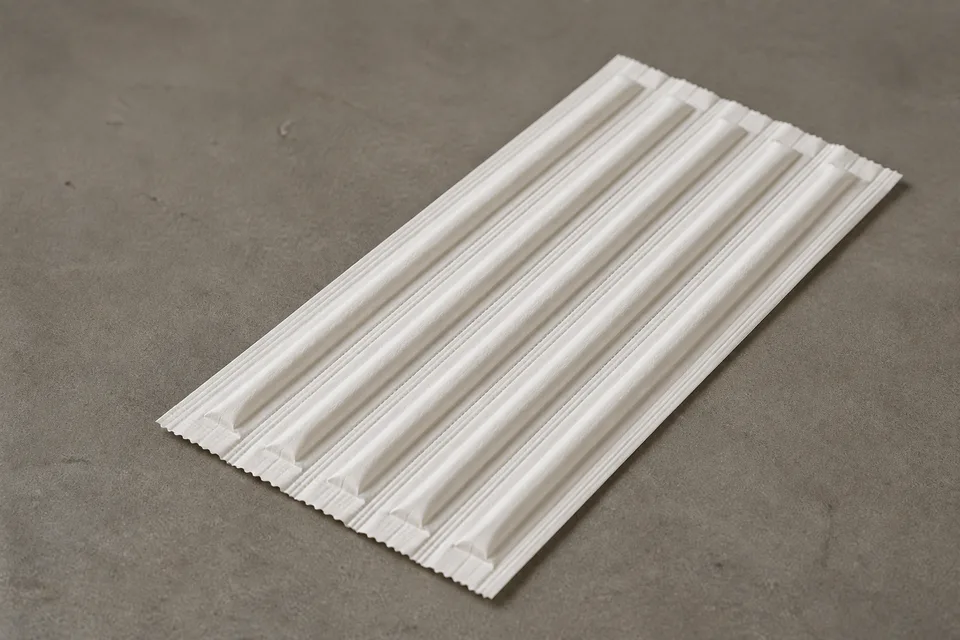
Attached Paper Straws
Connected continuous strip for high-speed automatic carton applicators.
View Product Specs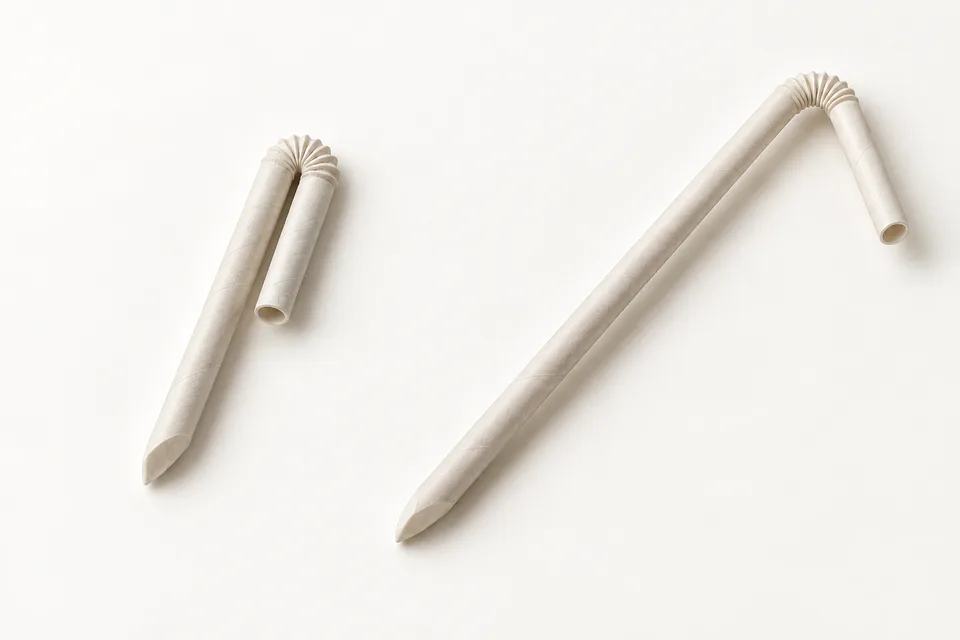
U-Shaped Paper Straws
Folded 180° format maximizing drinking reach on compact beverage cartons.
View Product Specs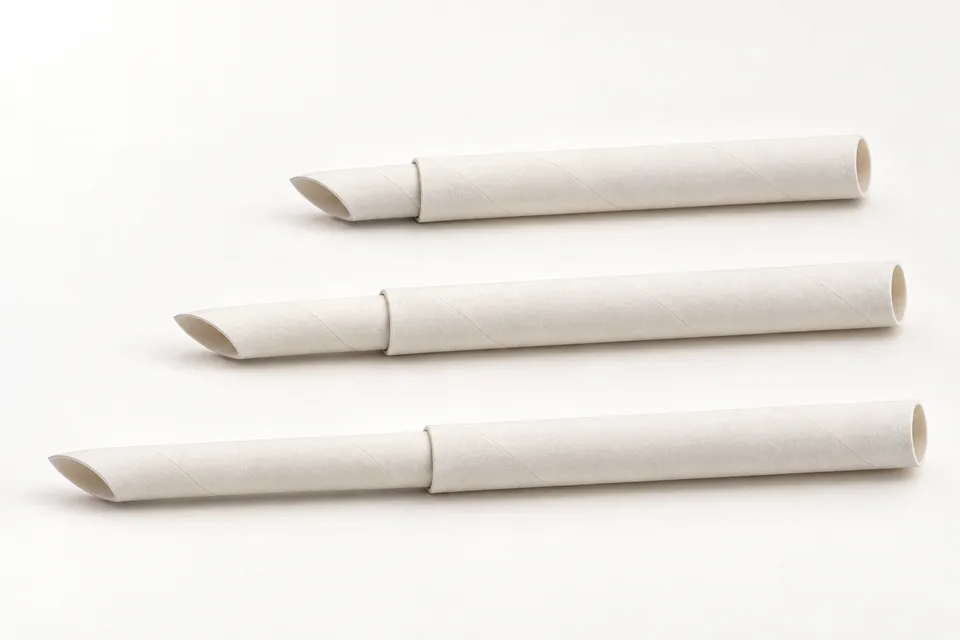
Telescopic Paper Straws
Two-section extendable design offering maximum reach from minimum packed length.
View Product Specs