In This Guide
Struggling to specify the right piercing tip orientation for U-shaped paper straws on your beverage cartons? You're worried that choosing the wrong tip will lead to a flood of customer complaints about straws that just won't puncture the carton seal. Getting this small detail right is crucial for protecting your brand and ensuring a good user experience.
The best piercing tip orientation for a U-shaped paper straw is not a universal standard; it is a system-dependent choice. The optimal orientation—including the angle and direction of the tip—depends entirely on your specific beverage carton, the type of sealing film used, and the capabilities of the straw manufacturing and wrapping machinery. It must be validated through testing.
Now that we've established there's no simple, one-size-fits-all answer, you're probably wondering what to do next. Let's break down the factors you need to consider to find the perfect piercing tip orientation for your unique product.
Why Isn't There a 'Standard' Piercing Tip Orientation for U-Shaped Paper Straws?
You're searching for a simple specification you can add to your purchase order, but it feels like every supplier has a different opinion. It’s frustrating when you just need a reliable, standard solution. The truth is, a "standard" approach to the piercing tip is a recipe for widespread product failure.
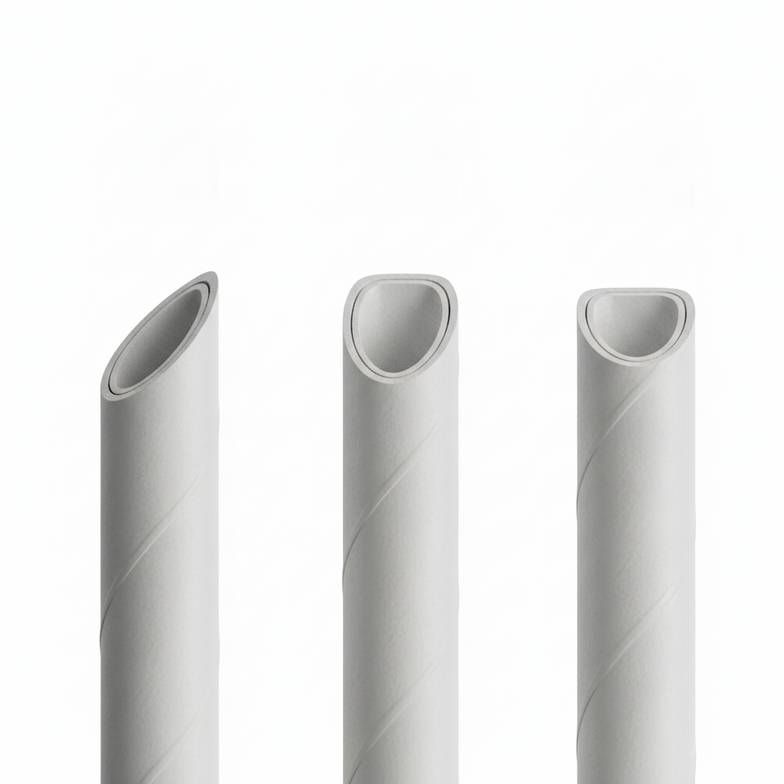
There is no single standard because every beverage packaging system is unique. The ideal piercing tip orientation for U-shaped paper straws is a careful balance between piercing power, straw integrity, and manufacturing consistency. These factors change dramatically depending on the materials you use.
It's a System, Not Just a Straw
I often get inquiries from packaging engineers asking, "What's the best tip angle?" My first question back is always, "Tell me about your carton and your sealing film." A paper straw doesn't work in a vacuum. It functions as part of a system:
- The Straw Tip: Its sharpness, angle, and rigidity.
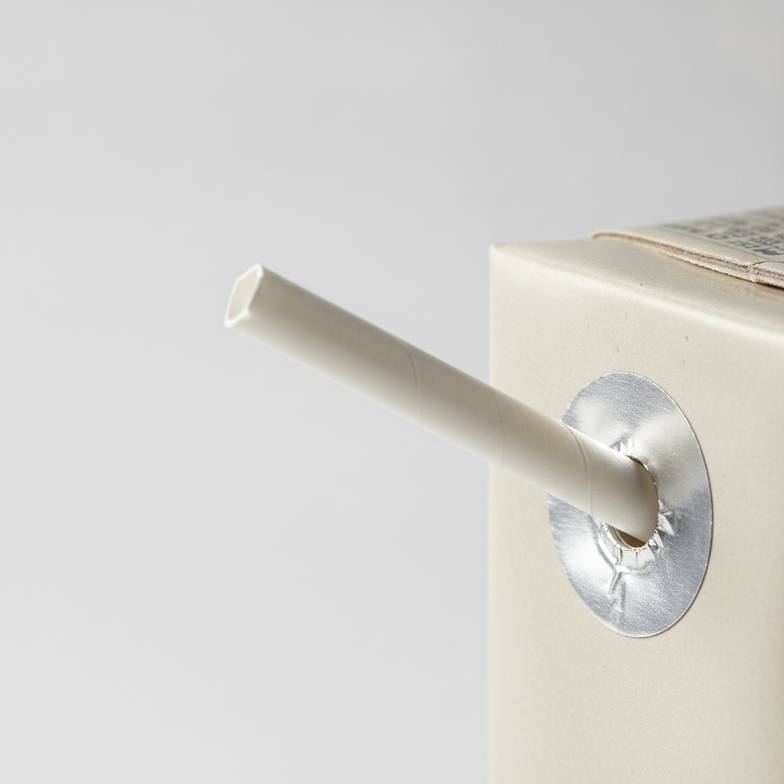
- The Sealing Film: The material (like PE or aluminum foil) and thickness covering the hole.
- The Carton: The structure and material around the pre-punched area that supports the film.
These three components must work together perfectly. A tip that works beautifully on a thin PE film for a juice box might completely fail on a thicker, foil-lined carton for an aseptic dairy drink. We've seen this happen. A client switched carton suppliers without telling us, and suddenly their once-perfect straws started getting complaints. The new carton used a tougher foil layer that their existing straw tip couldn't handle.
Material and Design Trade-Offs
Choosing a tip orientation involves balancing competing priorities. What you gain in one area, you might sacrifice in another.
- Aggressive vs. Safe Tips: A very sharp, steeply angled tip (like 60 degrees) provides excellent piercing power for tough aluminum-lined films. However, that sharp point can be more fragile. It might get damaged during the U-shaped bending and wrapping process. There's also a small risk it could poke through the individual wrapper during transit. A blunter tip (like 45 degrees) is more robust and safer but may require more force from the consumer or fail to puncture thicker films altogether.
- Straw Rigidity: The piercing tip's performance is directly tied to the straw's body. A sharp tip is useless if the straw itself is flimsy. A 4- or 5-ply paper straw has much greater column strength than a standard 3-ply straw. This added rigidity prevents the straw from bending or crumpling when the user applies pressure, allowing the tip to do its job. If you have a tough seal to pierce, you need to consider both the tip and the number of paper layers.
Here’s a quick breakdown of how these factors interact:
| Factor | Influence on Tip Selection | Our Experience Suggests |
|---|---|---|
| Sealing Film Type | Determines the required sharpness and angle. | Multi-layer films with aluminum often require a sharper, more focused tip (e.g., 60° angle). |
| Carton Material | Affects the support around the puncture point. | Softer board material around the hole might benefit from a slightly less aggressive tip to prevent tearing the carton itself. |
| Intended User | Influences the balance between ease of use and safety. | Products for young children often prioritize a robust, less sharp tip to ensure it can't be easily damaged or misused. |
| Straw Construction | The straw's ability to withstand piercing force. | A 4-ply or 5-ply straw provides the necessary rigidity to support a sharper tip without it crumpling upon impact. |
How Does Manufacturing Affect the Piercing Tip Orientation for U-Shaped Paper Straws?
So, you've designed the perfect straw tip on your computer. But can your supplier actually produce it consistently by the million? A great design means nothing if the manufacturing process can't deliver it reliably every single time.
The final piercing tip orientation for U-shaped paper straws is a direct outcome of the production machinery's capabilities. The tip's angle is set during cutting, but the U-shaped bending and wrapping processes determine its final position and integrity. It's a manufacturing reality, not just a design choice.
From Straight Tube to Finished Product
From our experience running our own paper straw production lines, I can tell you that the process is a sequence of precise mechanical actions. If any step is off, the final product will be inconsistent.
The Critical Cutting Stage
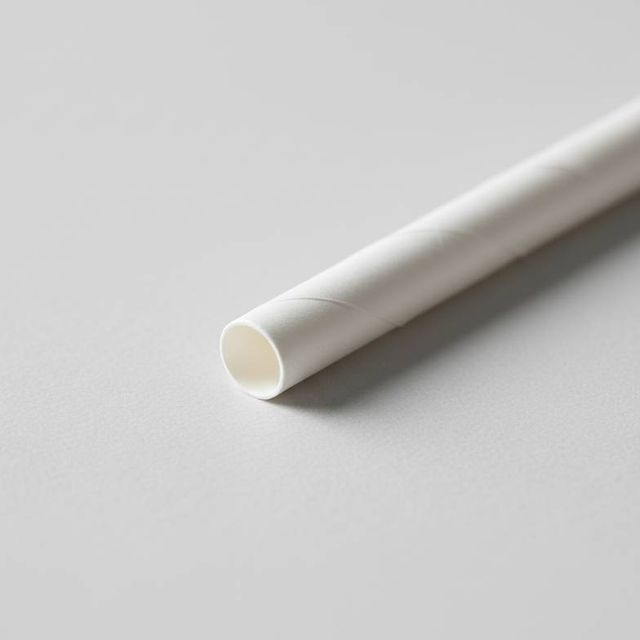
The journey begins with a long, continuous paper straw tube. A multi-knife cutting system slices this tube into individual straws. The angle of these knives is what creates the piercing tip. We can adjust these blades to create different angles, typically between 45 and 60 degrees. This setting is one of the first and most important decisions in the production setup.
The Challenge of the U-Bend
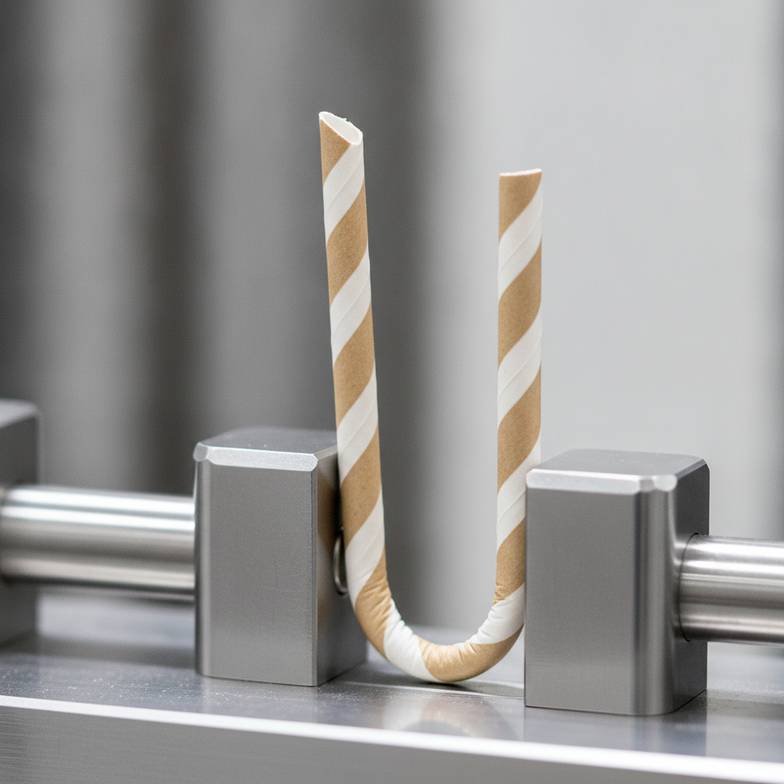
This is where things get tricky. The straight, angle-cut straw is fed into a bending machine. This machine has to form the 'U' shape without crushing, cracking, or deforming the carefully cut piercing tip. From our troubleshooting experience for dairy brands, the U-bend is often where a good tip design goes wrong.
More importantly, the machine must control the straw's rotation before it gets wrapped. Think about it: does the sharp tip end up on the inside of the 'U' or the outside? Does it face left or right? If this isn't controlled, the final orientation will be random. A good supplier uses machinery that ensures the tip is always in the same, predetermined position before it moves to the next stage.
Wrapping and Final Positioning
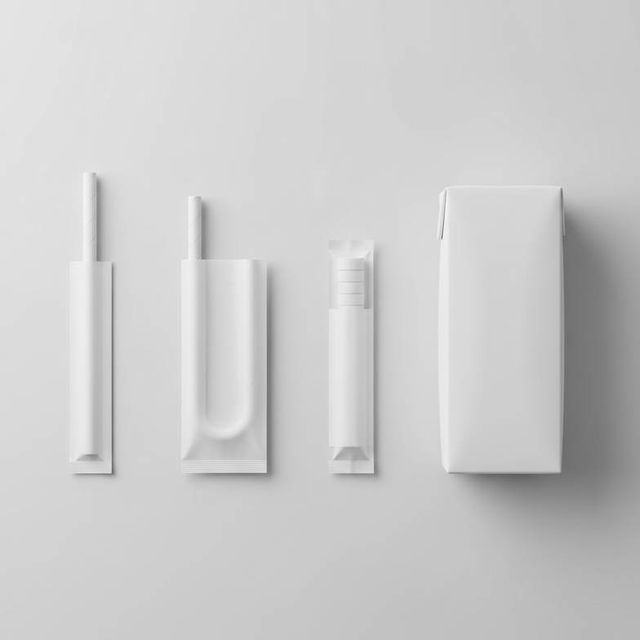
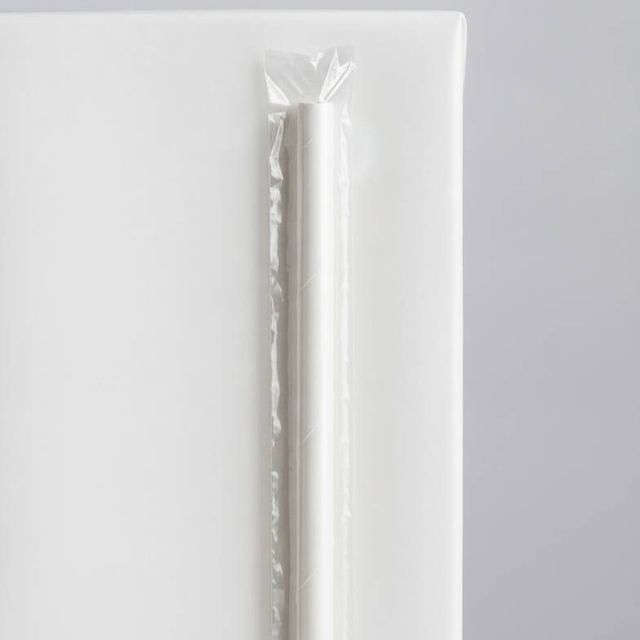
Finally, the formed U-shaped straw is individually wrapped in paper or plastic film. The wrapping process must also be gentle enough not to damage the tip. The orientation is now locked in. When the straw is glued to the beverage carton, its orientation is fixed. If the tip was positioned incorrectly during manufacturing, it will be in the wrong place when the consumer tries to use it.
The journey from a straight tube to a finished product involves several key steps:
- Cutting: A high-speed cutting system creates the angled piercing tip on a long straw tube. The angle is a pre-set machine parameter.
- Bending: A forming machine carefully bends the straight straw into a U-shape, a process that must not compromise the tip's structure.
- Orientation Control: The straw is rotated into a precise position so the piercing tip faces the correct, consistent direction.
- Wrapping: The U-shaped straw is sealed in its individual wrapper, which locks the tip's orientation in place for attachment to the carton.
How Do You Validate the Right Piercing Tip Orientation for Your Beverage Carton?
You simply cannot afford to guess and hope for the best when ordering millions of straws. A single bad batch can cause a public relations nightmare and cost a fortune. So, how can you be absolutely sure you've made the right choice before committing to a large order?
The answer is to implement a systematic validation process. You must get samples with specific tip configurations from your supplier and test them rigorously on your actual beverage cartons. This is the only way to confirm performance and compatibility.
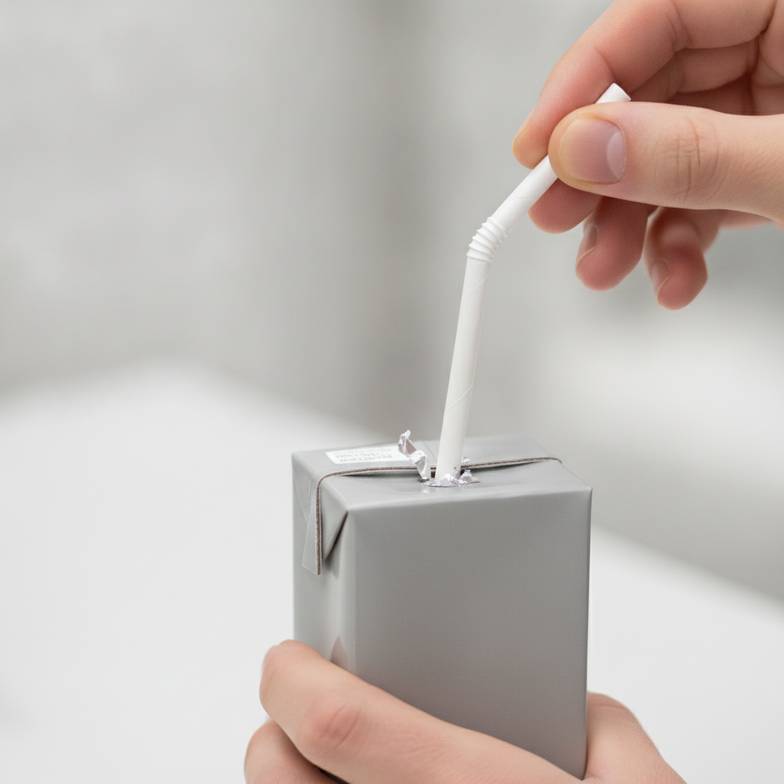
Shift Your Mindset from 'What?' to 'How?'
The most important takeaway is to change the question you ask your suppliers. Stop asking, "What is the best tip orientation?" and start asking, "How can we work together to test and validate the best piercing tip orientation for U-shaped paper straws for my specific carton?"
This collaborative approach shifts the responsibility from a simple supplier-customer transaction to a true partnership focused on problem-solving. A good supplier will welcome this. In my role, this is the part of the process I enjoy most—working directly with a client to solve their unique packaging challenge.
Your Supplier Validation Checklist
To de-risk your procurement process, follow these steps. This is the exact process we use with our B2B clients at RainbowBear.
- Provide Your Packaging: First, send your potential supplier a case of your finished product. They need the exact beverage carton and sealing film you use in production. Don't send them a similar one; it must be the real thing.
- Request Specific Samples: Based on your carton's film, ask for samples of U-shaped straws with two or three different tip configurations. For example, you might request a batch with a 45-degree tip and another with a 60-degree tip, all made from 4-ply paper.
- Conduct Manual Puncture Tests: Once you receive the samples, have your quality control team test them.
- Does the straw puncture the seal cleanly and easily?
- Does the straw tip or body crumple, bend, or soften on impact?
- Does the film tear excessively, creating a messy opening?
- How much force is required?
- Check Production Line Compatibility: Ensure the individually wrapped U-shaped straws are compatible with your downstream equipment that applies the straws to the cartons. Does the straw's size and wrapping format fit your machinery?
- Gather User Feedback: If possible, conduct a small, informal panel with people in your office. Give them the carton and the sample straw and watch them use it. Is the experience intuitive? Do they struggle? Their feedback is invaluable.
By following this checklist, you replace guesswork with data. You make a decision based on proven performance, not on a supplier's generic spec sheet.
Frequently Asked Questions
What is the most common piercing tip angle for paper straws?
While angles like 45° and 60° are frequently used in the industry, there's no single "most common" angle that guarantees success. The best angle depends on your carton's sealing film. A sharper angle (like 60°) is often required for tougher, foil-lined films, but it must be tested for your specific application.
Should the piercing tip face the inside or outside of the U-bend?
This depends on the straw's manufacturing process and how the consumer is expected to unfold it. Both orientations can be effective. The most important factor is consistency—your supplier's machinery must be capable of producing the same orientation every single time without damaging the tip.
Can a blunt-cut paper straw work for beverage cartons?
It is extremely unlikely. Blunt-cut (90-degree) paper straws do not have the focused point needed to cleanly pierce the seals on most beverage cartons. They will almost always crumple on impact, leading to a frustrating customer experience. An angled piercing tip is essential for this application.
Does the number of paper layers affect the piercing tip?
Yes, absolutely. A straw made with more paper layers (e.g., 4-ply or 5-ply) is significantly more rigid. This rigidity prevents the straw from bending or collapsing when piercing the carton, allowing the tip to function effectively. For cartons with tough seals, a higher ply count is often necessary to support the piercing action.
Conclusion
Ultimately, selecting the correct piercing tip orientation for U-shaped paper straws isn't about finding a magic number on a spec sheet. It's about recognizing that the straw is part of a larger packaging system. Success comes from understanding the trade-offs between the tip's design, your carton's materials, and your supplier's manufacturing capabilities. By shifting your focus from seeking a standard answer to implementing a robust validation process, you can eliminate risk and ensure your customers have a positive experience every time.
If you're looking for a partner to navigate these complexities, we're here to help. Our experience spans finished straws, manufacturing machinery, and raw materials. Send us your carton specifications, and let's work together to configure, test, and produce a U-shaped paper straw solution that performs perfectly for your brand.
Matched Formats for Beverage Cartons
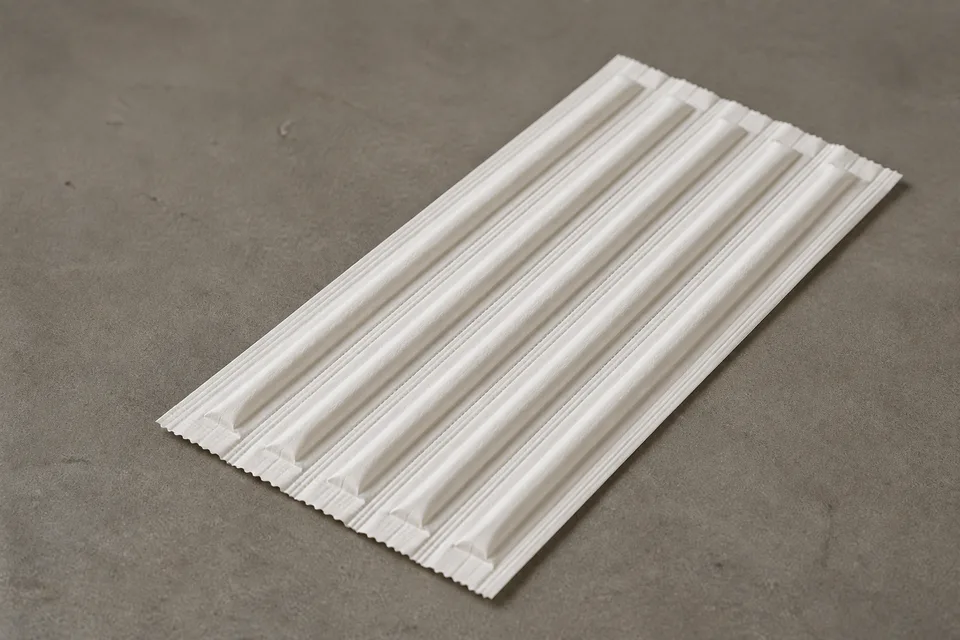
Attached Paper Straws
Connected continuous strip for high-speed automatic carton applicators.
View Product Specs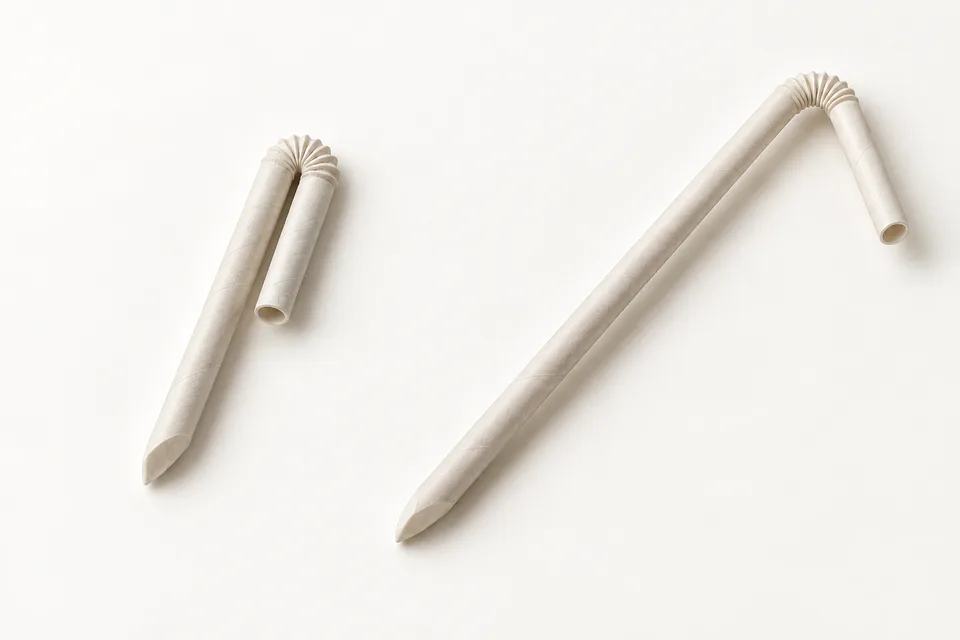
U-Shaped Paper Straws
Folded 180° format maximizing drinking reach on compact beverage cartons.
View Product Specs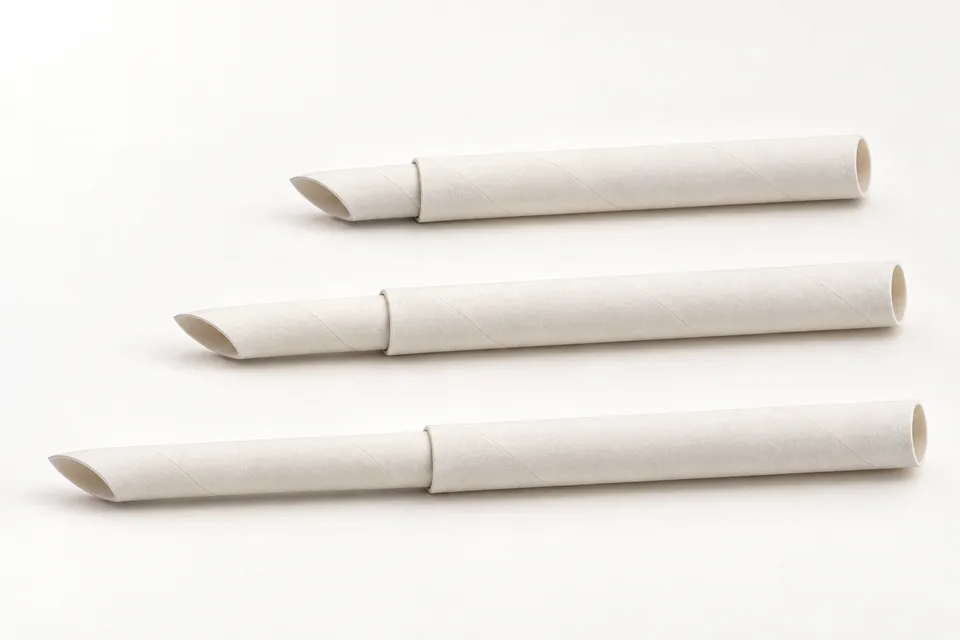
Telescopic Paper Straws
Two-section extendable design offering maximum reach from minimum packed length.
View Product Specs