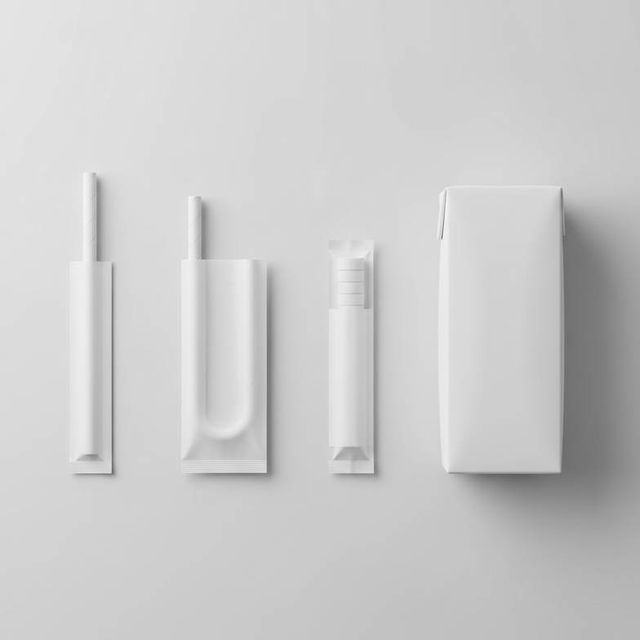
In This Guide
Are you trying to integrate telescopic paper straws with your beverage cartons, but finding that a small detail is causing big problems? A wrong choice in something as simple as how the straw is wrapped and oriented can jam your high-speed production lines, waste materials, and leave customers frustrated. Getting the wrapper orientation and tip direction for telescopic paper straws on cartons right is the key to a smooth, efficient, and user-friendly product launch.
The correct wrapper orientation and tip direction for telescopic paper straws depend entirely on your specific beverage carton design and, most importantly, the straw application machinery you use. There is no universal standard; the optimal choice balances automated application reliability, glue adhesion, and end-user convenience.
Now that we've cleared up that there's no single "best" answer, you're probably wondering what to do next. Let's dive into the specific factors you need to evaluate. This isn't just a minor technical detail; making the right choice directly impacts your production efficiency and your bottom line.
Why Does Straw Tip Direction Matter for Application?
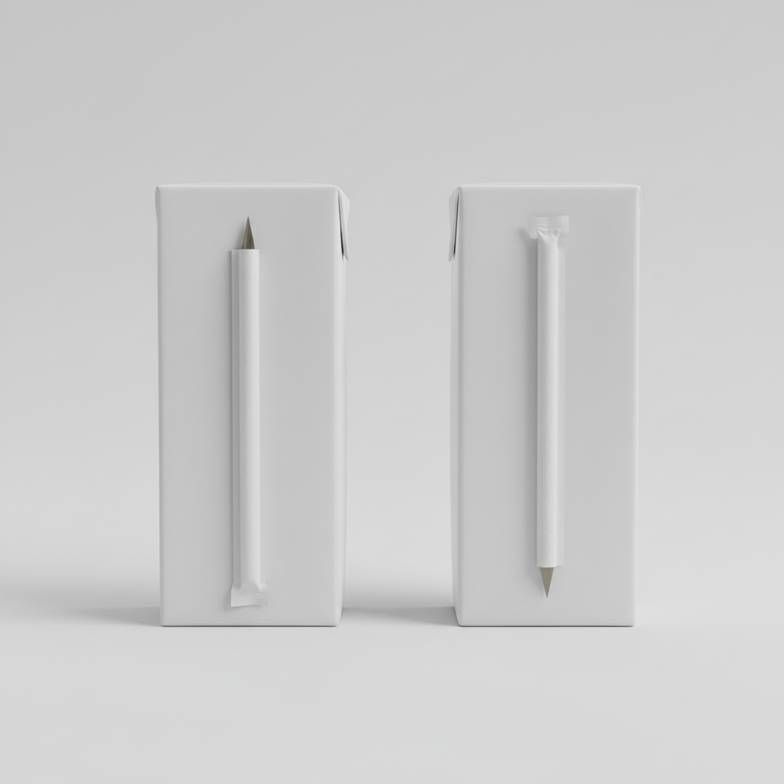
You've got your straw specifications dialed in, but have you thought about which way the sharp tip should point when it's glued to the carton? It feels like a 50/50 choice, but picking the wrong one can bring your expensive, high-speed filling line to a grinding halt.
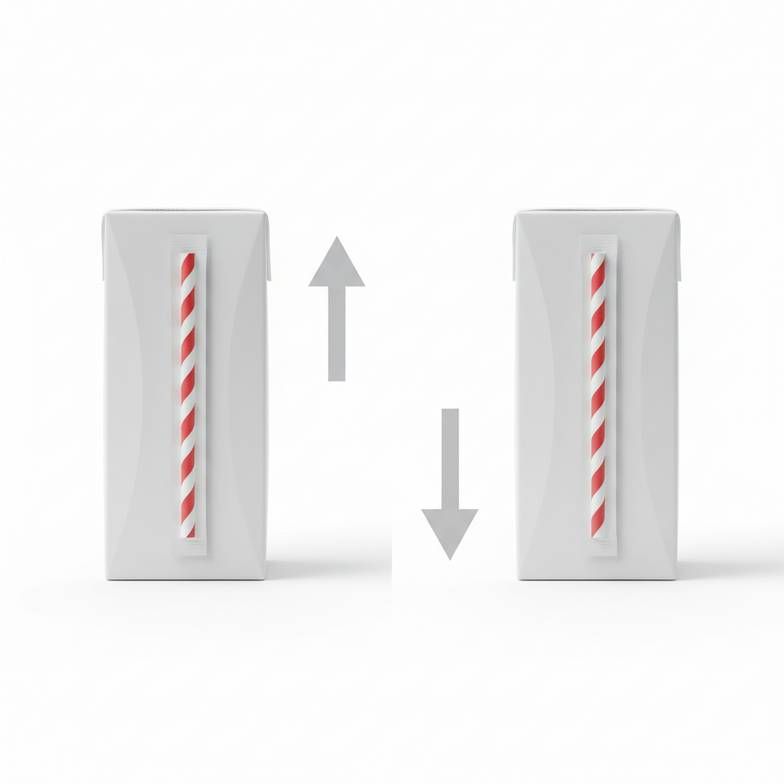
The tip direction—whether it points up or down on the carton—directly impacts how your applicator machine's mechanical grippers or vacuum heads handle the straw. It also changes how the final consumer interacts with it, making it either easy or confusing to use.
Dive Deeper
Let’s be honest, most of us don't think about the intricate dance of machinery that sticks a straw onto a juice box. But for a packaging engineer, it's everything. Straw applicator machines, like those from Tetra Pak or SIG, are designed to work with incredible speed and precision. They typically use either tiny mechanical "fingers" or a vacuum suction head to pick a single wrapped straw from a magazine, apply a dot of hot-melt glue, and press it onto the carton in a fraction of a second.
This is where tip direction becomes critical.
Upward vs. Downward Pointing Tip
- Tip Pointing Upward: When the sharp, angled tip of the straw points toward the top of the carton, it leaves the flat, open end of the outer straw section at the bottom. For the end-user, this can be more intuitive; they naturally see the inner straw section and know to pull it. However, for some machines, that exposed pointy tip can be a liability. It might snag on guides or other components during the rapid transfer process, causing a jam.
- Tip Pointing Downward: In this orientation, the smooth, sealed end of the wrapper is at the top, and the pointy tip is tucked away at the bottom. This often presents a smoother, more uniform profile for the applicator machine to handle, especially for vacuum-based systems that need a good seal to pick up the straw. From my experience helping clients troubleshoot, this orientation often leads to fewer jams. The trade-off? It can be slightly less obvious for a consumer who has to find and pull the inner straw from the sealed end.
Here’s a simple table to break it down:
| Tip Direction | Machine Compatibility | End-User Experience |
|---|---|---|
| Upward | Can be good for certain grippers but may risk snagging on machinery. | Often more intuitive to grab the exposed inner straw and pull. |
| Downward | Often better for vacuum applicators, providing a smoother handling profile. | Can be less intuitive; the user has to pull from the sealed end. |
The Most Important Question to Ask
A common mistake I see buyers make is asking us, "What is your standard tip direction?" That's the wrong question.
The right question is: "Which tip direction have you successfully validated on a [Your Machine Model, e.g., Tetra Pak TSA/21] applicator for a [Your Carton Size, e.g., 200ml Slim] carton?"
A knowledgeable supplier should be able to answer this based on past projects. They should understand that the answer depends entirely on your specific equipment. If they just give you a generic "our standard is tip-up," it might be a sign they lack deep experience with high-speed automated applications. This single detail is often the root cause of project delays and costly line stoppages.
How Does Wrapper Seam Orientation Affect Production of Telescopic Paper Straws on Cartons?
So, you've sorted out the tip direction. But now you're seeing another problem on the line: straws are not sticking to the cartons reliably. The glue seems fine, the machine is running, but your rejection rate is climbing. The culprit might be the wrapper's seam.
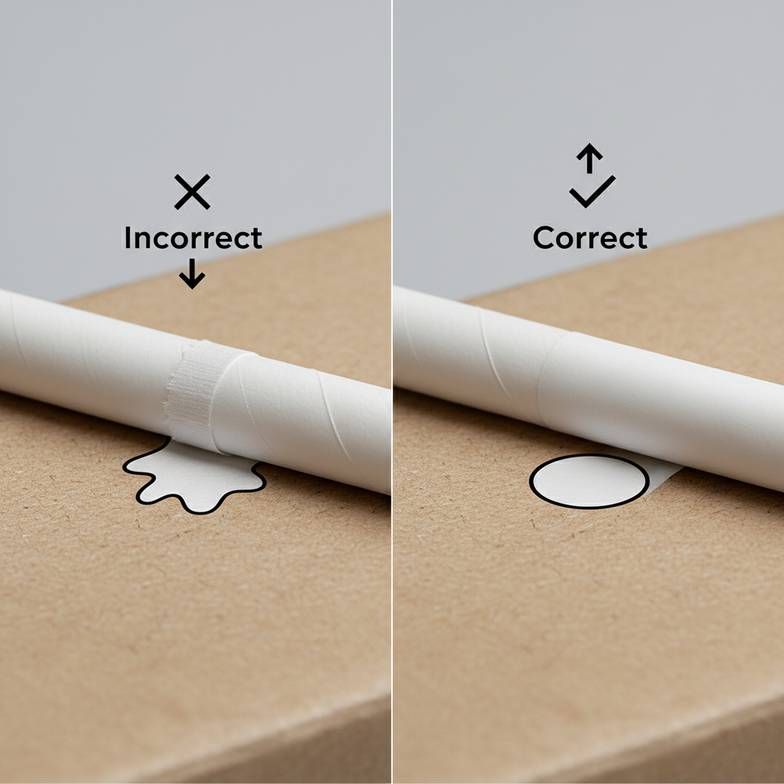
The orientation of the wrapper's longitudinal seam—whether it faces the carton or faces outward—determines the surface where the hot-melt glue is applied. This directly affects the quality of the adhesion, which in turn impacts your production speed and material waste.
Dive Deeper
When the applicator machine presses the straw onto the carton, it's bonding the paper wrapper to the carton's surface with hot-melt glue. For that bond to be strong and consistent, the surface needs to be as flat and uniform as possible. The paper wrapper around the straw has a seam where the paper overlaps and is sealed. Where you place this seam matters. A lot.
Seam-In vs. Seam-Out
- Seam-In (Facing the Carton): This means the glue is applied directly over the wrapper's seam. This is almost always a bad idea. The seam creates a tiny ridge and an uneven surface due to the paper overlap. When the glue nozzle applies adhesive over this ridge, the glue can be distributed unevenly. This creates weak spots in the bond, making it more likely that the straw will fall off during shipping or on the store shelf. I've personally been on factory floors where this exact issue was causing a 5-10% failure rate, which is a massive amount of waste and rework for a high-volume producer.
- Seam-Out (Facing Away from the Carton): This is the correct orientation for almost every automated application. By turning the seam to face outward, you present a perfectly smooth, uninterrupted paper surface to the glue applicator. The glue can be applied evenly, creating a strong, reliable bond across the entire contact area. This simple change can drastically reduce failure rates and allow your production line to run at its maximum intended speed.
How to Specify Seam Orientation
This isn't something you should leave to chance. When you create a purchase order or technical specification sheet for your straw supplier, you should be explicit.
Include a line item that says: "Wrapper seam must be oriented to face outward, away from the carton surface."
A good supplier who specializes in telescopic paper straws on cartons will immediately understand this requirement and why it's important. At PaperStrawTech, this is a standard quality checkpoint for any order intended for automated applicators. If a supplier seems confused by this request, you should be cautious, as they may not have the experience necessary to support a large-scale, automated production environment.
What’s the Best Way to Validate Your Telescopic Paper Straws on Cartons?
You’ve read the spec sheets, had technical discussions with your supplier, and specified the tip and seam orientation. But you still have that nagging feeling in the back of your mind—will it actually work when you flip the switch on a full production run? How do you go from theory to certainty?
The only way to be absolutely sure that your chosen straw configuration will work is through rigorous, real-world testing. You must request production-grade samples that match your exact specifications and run them on your actual machinery at operational speeds.

Dive Deeper
A "sample" that a supplier sends in a box is not a validation. True validation happens on your factory floor, under the pressures of your production targets. Here’s a simple process we recommend to all our B2B customers to de-risk their transition to paper straws.
The Four-Step Validation Process
- Document Your Full Requirements: Before you even ask for samples, create a master document. This should include everything: your carton material and dimensions, your exact applicator machine model (e.g., Tetra Pak Straw Applicator 21), its current speed settings, the hot-melt glue you use, and, of course, your required straw specifications. For the straw, list the length, diameter, tip direction (up or down), and seam orientation (outward).
- Request Specific, Production-Grade Samples: Do not accept a generic "sample pack." Send your master document to your supplier and request samples made to your exact specifications. Be specific with your request, for example: "Please provide a trial batch of 1,000 telescopic straws, 180mm length, 4.5mm diameter, with tip pointing DOWN and wrapper seam facing OUT, wound for a [Machine Model] magazine." A small quantity like 10 or 20 straws is not enough.
- Conduct a Meaningful Line Trial: This is the moment of truth. Don't just hand-test a few straws. Load the sample batch into your applicator's magazine and run the line at its normal operational speed for an extended period. The goal is to simulate a real production environment. You need a large enough sample size to identify intermittent problems that might not show up in a short test. Watch for:
- Picking Failures: Does the machine successfully pick a straw every time?
- Application Failures: Is the straw placed correctly on the carton?
- Adhesion Failures: After cooling, is the bond strong? Try to pull some off.
- Jams: Does the line stop for any reason related to the straw?
- Analyze Data and Collaborate with Your Supplier: After the trial, document everything. What was the failure rate? Where did the failures occur? Take photos or videos of any issues. Share this data with your straw supplier. A true manufacturing partner will welcome this information. From our experience at RainbowBear, this collaborative troubleshooting is where we provide the most value. Sometimes a tiny adjustment to the straw's length or the wrapper tension can solve a problem, and we can work with your engineering team to find that sweet spot.
Frequently Asked Questions
Is there an industry standard for telescopic straw tip direction?
No, there isn't a universal industry standard. It's highly dependent on the specific straw applicator machine model (e.g., from Tetra Pak, SIG, etc.) and the carton format. The best practice is to align the straw specification with the machinery's documented requirements and validate with tests.
Can the wrapper printing affect orientation?
Yes, absolutely. If your wrapper has branding, logos, or instructional text like "Pull Here," its position must be planned in coordination with the required tip and seam orientation. You must ensure the text is readable and correctly placed after the straw is attached to the carton.
What happens if the orientation is wrong?
A wrong orientation can cause frequent machine jams, leading to costly production downtime and operator frustration. It can also result in poor glue adhesion, causing straws to fall off during transit or on store shelves, which looks unprofessional and can lead to customer complaints.
How much does orientation affect the cost of the straw?
Generally, the orientation itself doesn't significantly change the per-unit cost of the straw. However, getting it wrong has massive downstream costs in terms of production line inefficiency, wasted cartons and straws, and potential damage to your brand's reputation. The cost of getting it right is minimal compared to the cost of getting it wrong.
Conclusion
Choosing the right wrapper orientation and tip direction for telescopic paper straws on cartons is far from a minor detail—it is a critical decision for your manufacturing success. The key takeaway is that there is no universal "best" orientation. Success comes from perfectly matching the straw's configuration to your specific carton and, most importantly, your application machinery. The process involves clearly specifying both the tip direction and the wrapper seam orientation based on your equipment's needs, and then rigorously validating that choice with a real-world line trial using production-grade samples. Don't leave this critical variable to chance; it's the foundation of a smooth and efficient production run.
If you are evaluating a switch to paper straws or troubleshooting an existing application, don't guess. We can help you review your carton format and machinery requirements to configure a straw that works from day one.
Contact us today to request a carton format review, discuss your project, or get samples for your own line trial.
Matched Formats for Beverage Cartons
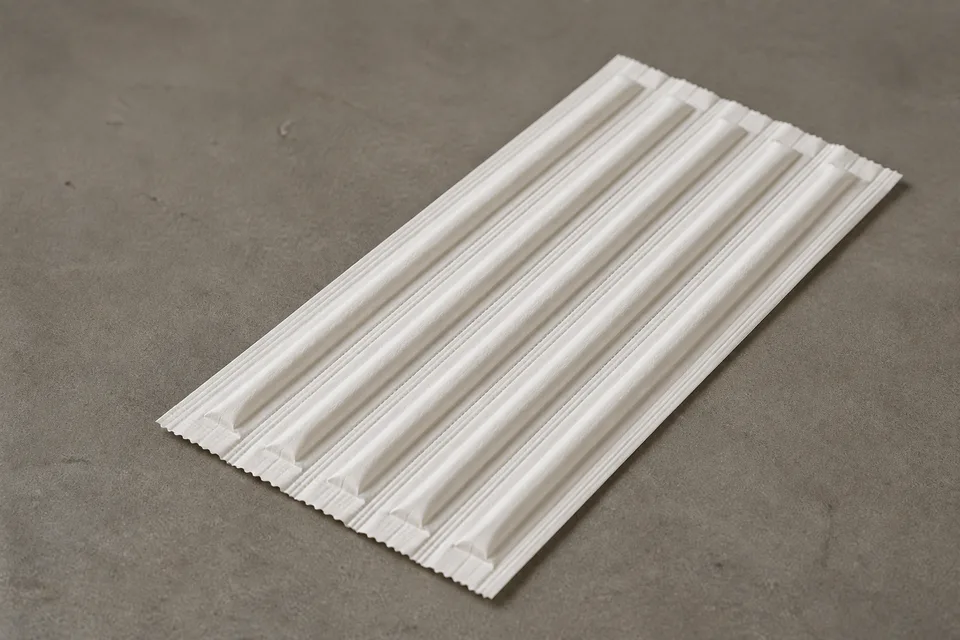
Attached Paper Straws
Connected continuous strip for high-speed automatic carton applicators.
View Product Specs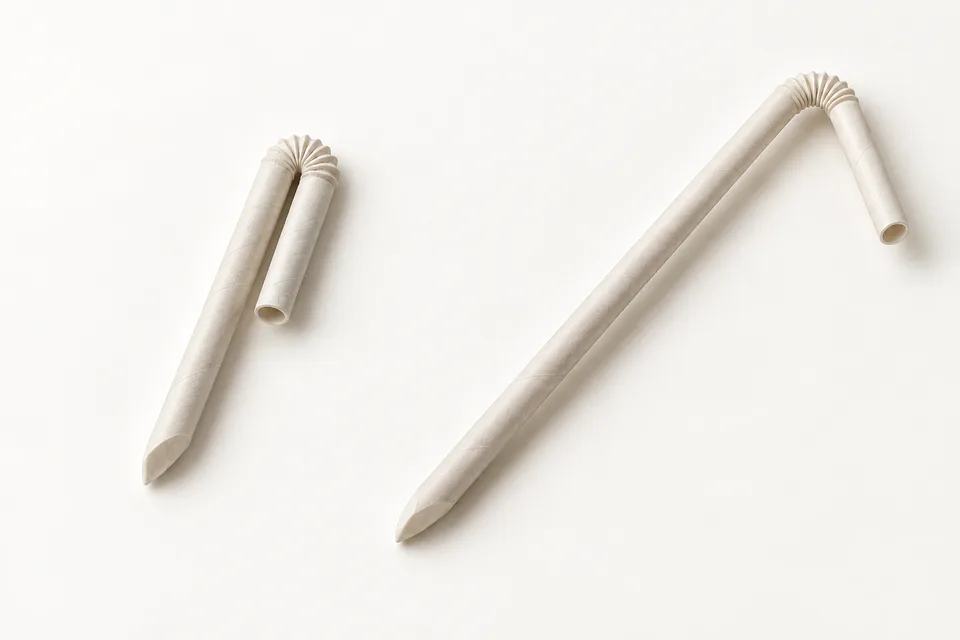
U-Shaped Paper Straws
Folded 180° format maximizing drinking reach on compact beverage cartons.
View Product Specs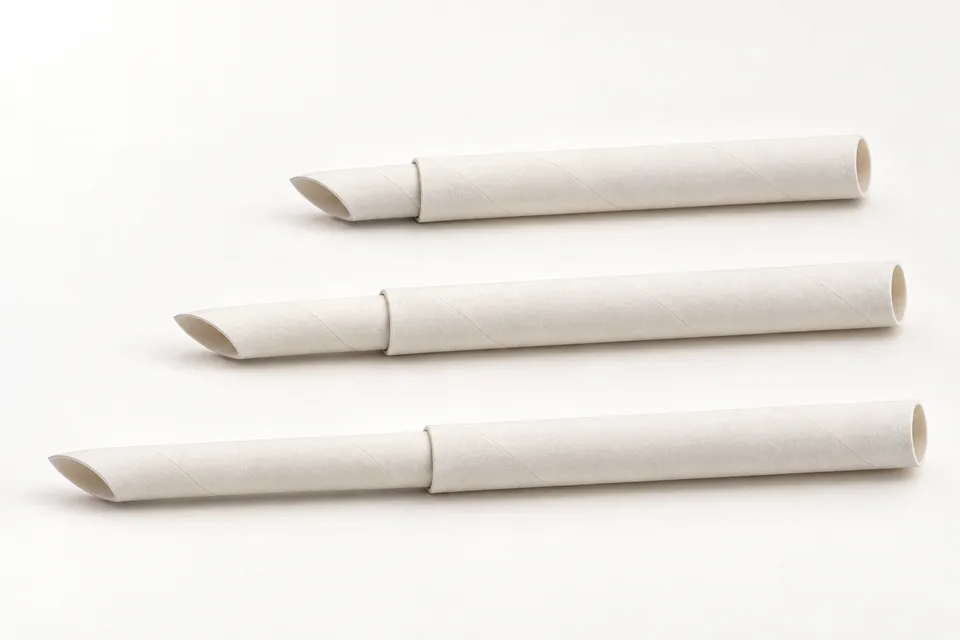
Telescopic Paper Straws
Two-section extendable design offering maximum reach from minimum packed length.
View Product Specs