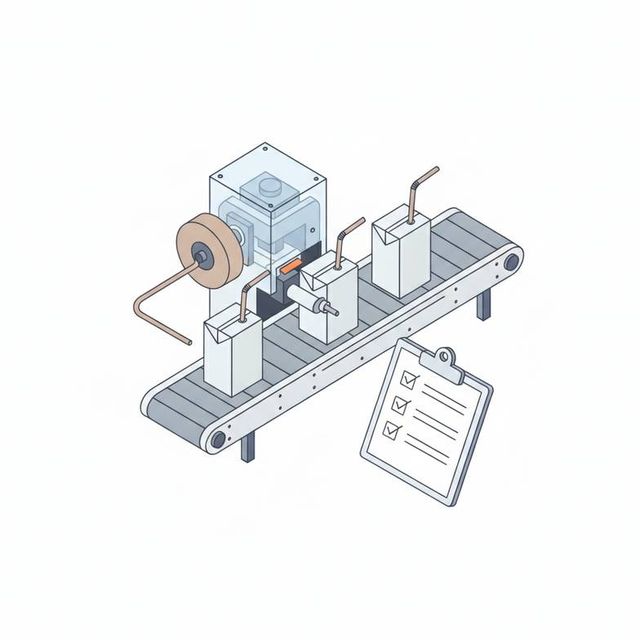

In This Guide
Struggling to find the right attached paper straws for your beverage cartons? It’s a common headache. You know you need to switch from plastic, but you’re worried about production line jams, wasted packaging, and angry customers. The solution isn’t just finding a cheaper straw; it’s about implementing a sourcing process that guarantees operational success from day one.
Sourcing successful attached paper straws requires a systematic validation process. This means precisely matching the straw, its individual wrapper, and the applicator machine to your specific carton packing line. Success comes from treating it as a technical integration project, not a simple commodity purchase.
Moving from a spec sheet to a successful production run can feel like a huge leap. But it doesn't have to be. By focusing on a few key areas, you can de-risk the entire process. Let's break down how to build a sourcing strategy that actually works for your packing line.
Why Does Your Carton and Applicator Matter More Than the Straw Itself?
So, you’ve been tasked with finding paper straws and your first instinct is to ask suppliers for a "standard straw" and a price list. You quickly find this approach leads to vague answers and a lot of frustration. The truth is, the conversation needs to start with what you already have on your factory floor.
The carton's dimensions and your applicator machine's model are the two most critical pieces of information. They dictate the exact specifications required for any attached paper straws you source. Sourcing almost always fails when buyers overlook these details and focus only on the straw.
Dive Deeper
From our experience helping clients, the biggest oversight is underestimating how sensitive their existing equipment is. Your carton packing line is a finely tuned system, and introducing a new component—the paper straw—without careful planning is a recipe for downtime.
Start with Your Machinery
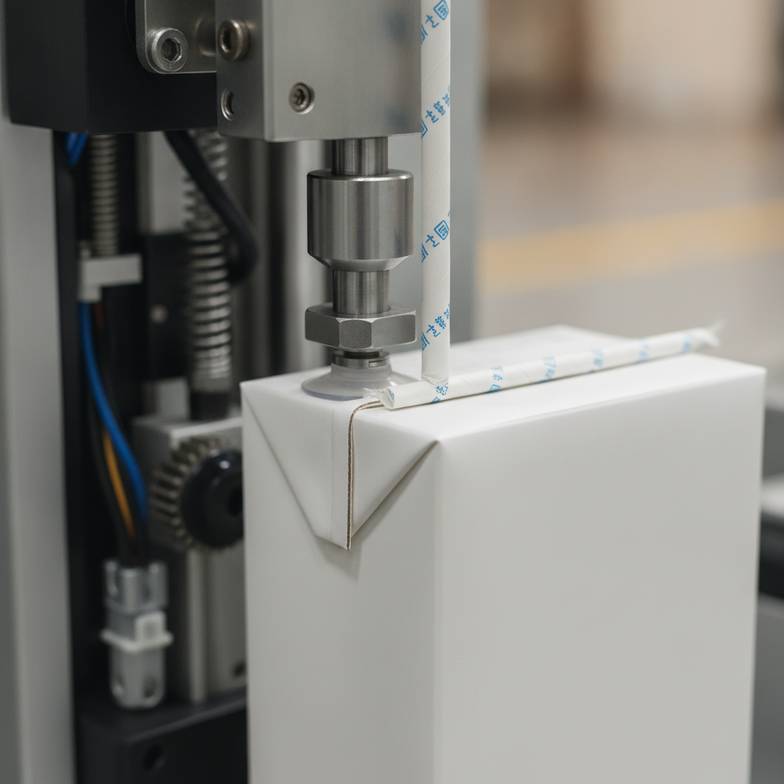
The straw applicator is the heart of the operation. Machines from major suppliers like Tetra Pak, Combibloc, or SIG are not "one size fits all." They are engineered to handle specific straw and wrapper dimensions at high speeds, often over 20,000 units per hour.
The applicator's mechanism—its "jaws" that pick the straw, the glue nozzle that applies the adhesive, and the press that attaches it—is calibrated to tight tolerances. A straw that is too long, a wrapper that is too flimsy, or a diameter that is off by a fraction of a millimeter can cause a jam. And as you know, a single jam can halt the entire line, costing you time and money. When we get a new inquiry, the first question we ask is always, "What applicator model are you running?"
Analyze Your Carton
Next, we look at the carton itself. It’s more than just a box. Key factors include:
- The Aperture: This is the pre-cut hole for the straw. Is it a simple punch-out or a foil-covered opening? The straw's tip must be designed to pierce it cleanly without tearing the carton or leaving paper fibers behind.
- The Surface: Is the carton surface glossy, matte, or coated? This affects how well the applicator's hot-melt glue will bond with the straw's wrapper. An incompatible combination is a leading cause of straws falling off during transit or on the retail shelf.
- Available Space: The physical "real estate" on the carton determines the maximum length of the straw you can use.
A credible supplier needs this information to even begin recommending a solution.
| Parameter | Why It Matters | What to Provide to Your Supplier |
|---|---|---|
| Applicator Model | Determines feeding speed, glue pattern, and pressure. | Example: "Tetra Pak TBA/19 with a TSA30 applicator" |
| Carton Dimensions | Dictates maximum straw length and placement area. | The height, width, and depth of the carton. |
| Aperture Details | Ensures the straw tip fits and pierces correctly. | The precise diameter and style (e.g., pre-perforated). |
I remember a client who struggled for weeks with attachment failures. The problem wasn't the straw itself. It turned out their new carton design had a slightly different surface coating, and the adhesive on the wrapper film wasn't compatible. We helped them switch the wrapper material, and the problem vanished overnight. It all starts with the carton and the machine.
What Are the Hidden Risks in the Straw's Individual Wrapper?
You've found a straw that seems perfect. It has the right length, the right diameter, and the supplier's price is competitive. But once you start a trial run, the straws keep falling off the cartons. The problem might not be the straw or the glue, but the one component everyone overlooks: the wrapper.
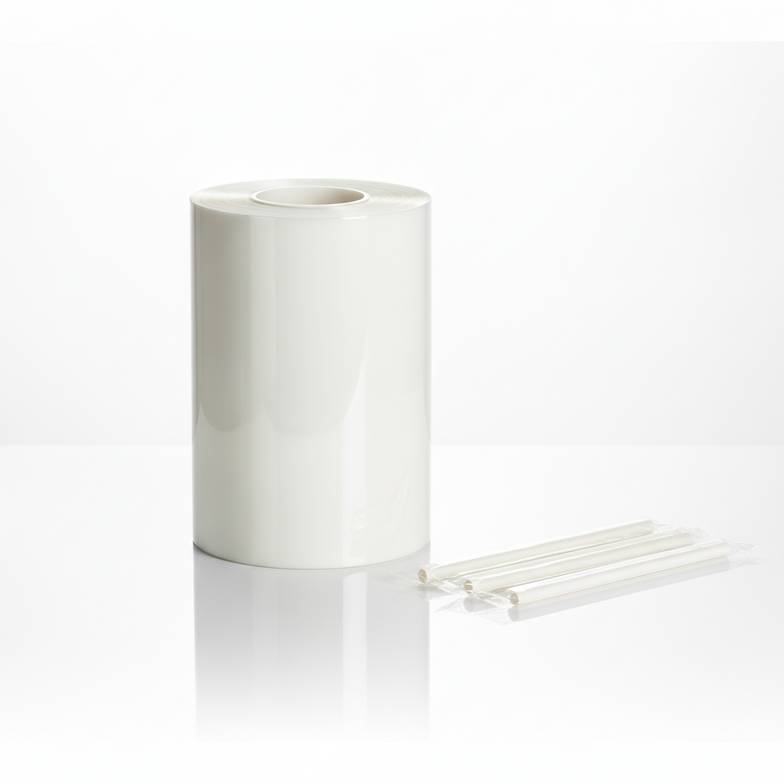
The individual wrapper is a critical mechanical component in the system. Its material, seal strength, and dimensions directly impact whether the straw can be picked, glued, and applied correctly by your high-speed applicator. Focusing only on the straw is a common and costly mistake.
Dive Deeper
Think of the wrapper not as just a hygienic cover, but as the "handle" your machine uses to manipulate the straw. If that handle fails, the whole process fails.
The Wrapper as a Mechanical Part
Your applicator doesn't touch the paper straw directly. It grips the wrapper. If the wrapper film is too flimsy, it will tear or stretch in the machine's grippers, causing a jam. If it's too stiff or brittle, it may not fold correctly or could crack during application. The first thing we check when a customer reports attachment issues is often the wrapper's material and thickness.
Seal Strength and Adhesion Chemistry
This is where the real technical details come in. The hot-melt glue from your applicator doesn't bond to the paper straw; it bonds to the outer surface of the wrapper. Different wrapper materials, like BOPP (Biaxially Oriented Polypropylene) film or coated paper, have different surface properties. An adhesive that works perfectly on one type of film might fail completely on another.
Here are the critical wrapper specifications you must discuss with your supplier:
- Material: BOPP is the most common material due to its strength, stability, and good adhesion properties. Paper wrappers are an option for a fully "plastic-free" image, but they require careful testing as they can be less robust in high-speed machinery.
- Thickness (in microns): This directly affects the wrapper's stiffness and tear resistance. A lower-cost, thinner film might save fractions of a cent per straw but cost you thousands in downtime.
- Seal Type and Strength: The wrapper is typically sealed with heat or ultrasonics. This seal needs to be strong enough to withstand the forces of the applicator and shipping, but weak enough for a small child to easily peel open. This "peel strength" is a measurable specification.
- Dimensions: The wrapper must be wider and longer than the straw itself. This creates a "flange" or border that the machine's grippers can hold and provides a surface for the glue.
A common mistake we see is a company sourcing the cheapest wrapper film available to cut costs. This frequently leads to line stoppages when the applicator's hot-melt glue fails to create a strong bond. The result? Straws fall off in the case-packer, during shipping, or on the supermarket shelf. It's a quality-control nightmare that can be completely avoided by treating the wrapper as the critical component it is.
How Can You Create a Foolproof Validation Process for Attached Paper Straws?
You have spec sheets and price quotes from three different suppliers. On paper, they all look pretty good. How do you cut through the sales pitches, choose the right partner, and avoid a mistake that could shut down your production line for days?
The answer is to move beyond paper specifications and commit to a physical, multi-stage validation process. This involves methodical sample testing, a pilot run on your actual production line, and asking your potential supplier the right questions to gauge their real-world experience.
Dive Deeper
A successful transition to attached paper straws depends less on the product you choose and more on the process you use to qualify it. Here is the three-stage process we guide our partners through.
Stage 1: The Initial Supplier Q&A
This is your first filter. A credible supplier who understands the risks involved will act more like a consultant than a salesperson. They should be asking you more questions than you ask them initially.
If a supplier’s first move is to send you a generic price list without asking about your applicator model, carton type, or line speed, be cautious. That’s a sign they see straws as a simple commodity and may not have the technical depth to support you if problems arise. A true partner will want to understand your operational environment before they even suggest a product.
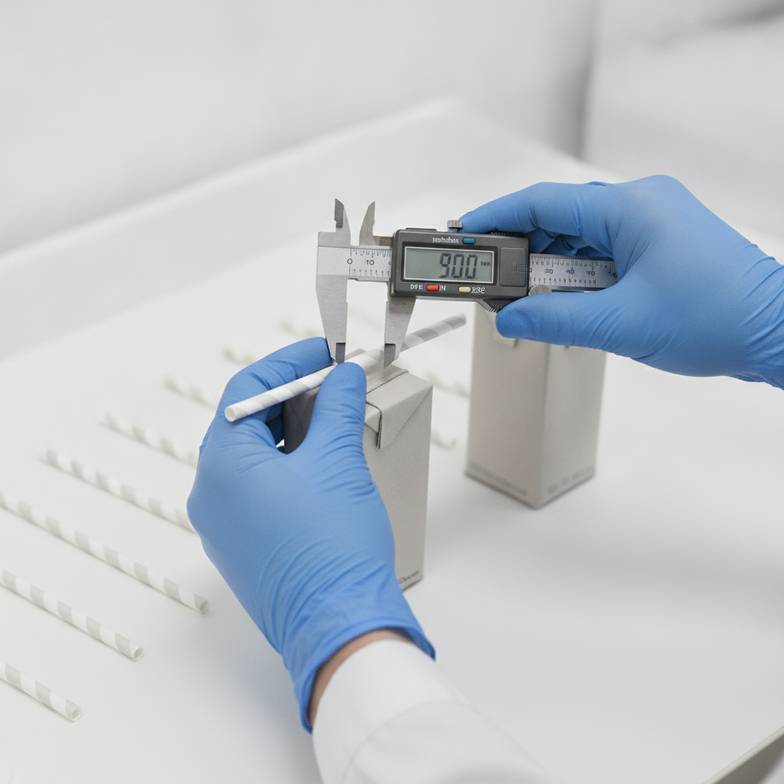
Stage 2: Benchtop and Sample Testing
Once you have a promising supplier, request physical samples. Don't just look at them—test them.
- Measure Them: Use digital calipers to verify the straw's outer diameter and length against the spec sheet.
- Test the Fit: Manually insert the straw into your carton's aperture. Does it fit snugly? Does it tear the opening?
- Feel the Rigidity: Bend the straw. Does it feel sturdy, or does it collapse easily? This is especially important for U-shaped or telescopic straws.
- Check the Wrapper: Try to peel the wrapper open. Is it frustratingly difficult or so easy it might open on its own? This is a preview of your customer's experience.
This hands-on step can weed out low-quality options before you waste valuable machine time on them.
Stage 3: The Pilot Production Run
This is the single most important step in the entire process. No amount of benchtop testing can replace a real-world trial. You must insist on running a significant quantity of samples (at least a few thousand) on your actual production line at its normal operating speed.
During this run, your team should be monitoring for:
- Applicator Jams: How often does the machine stop because of a misfed straw?
- Misplacements: Are straws being applied crooked or in the wrong spot?
- Attachment Failures: How many straws fall off immediately after application or during case-packing?
- Straw Damage: Are the straws being crushed or bent by the machinery?
Calculate a precise failure rate. A 0.1% failure rate might sound great, but on a line running 24,000 cartons per hour, that’s 24 failures every hour—or nearly 200 failures per shift. Only a live pilot run can give you the data you need to make a confident decision.
Frequently Asked Questions
What's the difference between U-shaped and telescopic attached paper straws?
A U-shaped straw is a single-piece straw bent into a "U" shape to fit on smaller cartons. A telescopic straw consists of two or more pieces of different diameters nested inside each other. It extends to a longer length, making it suitable for taller cartons where a U-shaped straw would be too short.
Can I get custom printing on the straw wrapper?
Yes, absolutely. The individual wrapper is an excellent place for branding, instructions, or promotional messages. Most suppliers, including us at RainbowBear, offer custom printing services. You'll typically need to provide your artwork and specify the colors, and we can manage the rest.
What is a typical minimum order quantity (MOQ) for custom attached paper straws?
MOQs can vary widely depending on the supplier and the degree of customization. For a fully custom straw with specific dimensions and printed wrapping, MOQs often start in the range of 500,000 to 1,000,000 units. This is because setting up the machinery and printing plates for a custom run involves significant initial effort.
How do you ensure the paper straws don't get soggy in the drink?
Reputable manufacturers use multiple layers of high-quality, food-grade kraft paper bonded with a food-safe adhesive. This multi-ply construction provides the structural integrity needed to last for several hours in liquid without collapsing or getting soggy. It's important to verify that the supplier uses materials certified for food contact.
Conclusion
Ultimately, sourcing attached paper straws is not a simple procurement task; it's a technical integration project. Success hinges on shifting your focus from the straw itself to the entire system: your carton, your applicator, the wrapper, and the straw working in harmony. By adopting a rigorous, multi-stage validation process and partnering with a supplier who understands the operational risks, you can eliminate guesswork and ensure a smooth, efficient transition. A good partner will ask the right questions and guide you through testing to de-risk your investment and protect your production output.
If you're ready to move beyond generic price lists and begin a detailed technical consultation for your carton packing line, our team is here to help. Request a carton format review today to ensure your switch to attached paper straws is a success from the start.
Matched Formats for Beverage Cartons
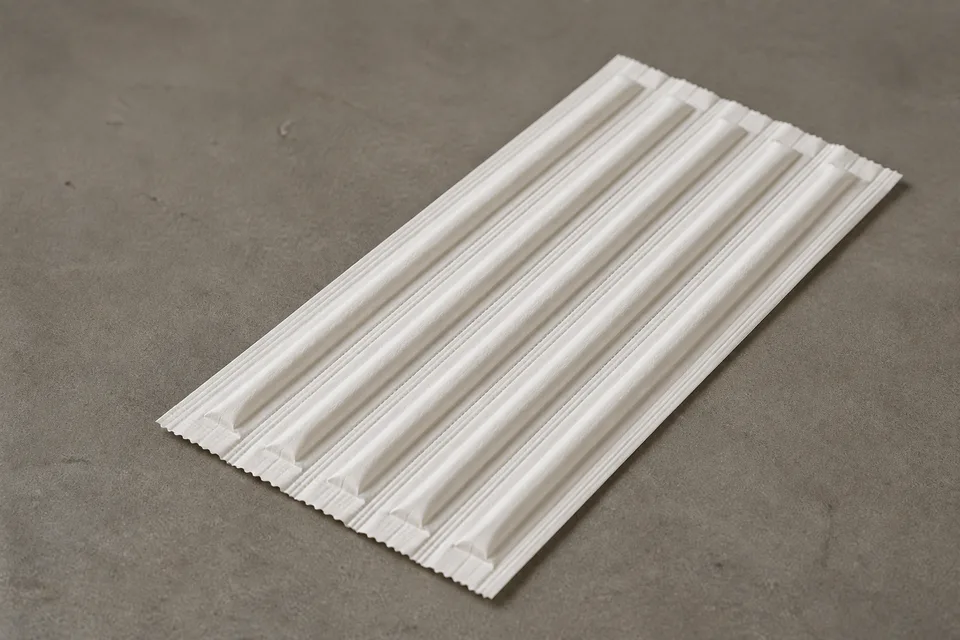
Attached Paper Straws
Connected continuous strip for high-speed automatic carton applicators.
View Product Specs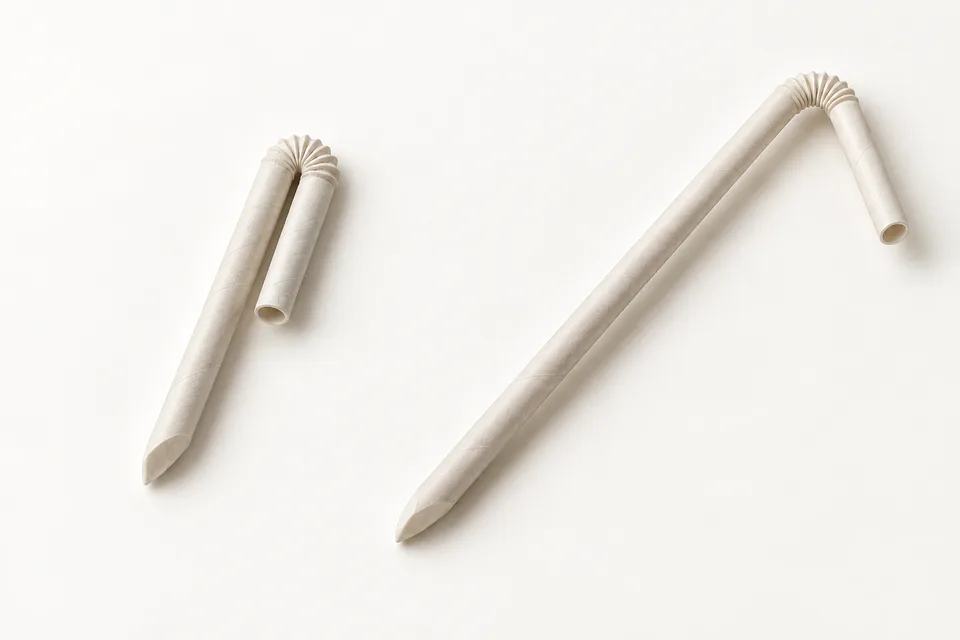
U-Shaped Paper Straws
Folded 180° format maximizing drinking reach on compact beverage cartons.
View Product Specs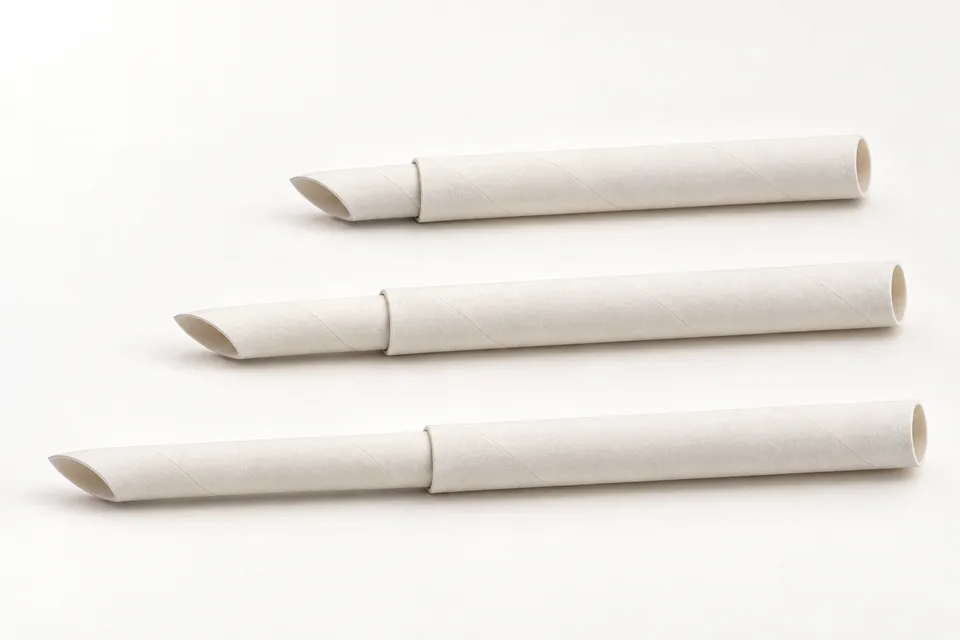
Telescopic Paper Straws
Two-section extendable design offering maximum reach from minimum packed length.
View Product Specs