In This Guide
- Why is the machine's spec sheet not enough for paper straw applicator changeovers?
- What mechanical adjustments are involved in carton size changes?
- How do carton changes affect the entire applicator system?
- What questions should you ask a supplier about paper straw applicator changeovers?
- Frequently Asked Questions
- Conclusion
Switching your beverage carton size seems like a routine production adjustment, but when it comes to the attached paper straw, it's a source of major anxiety. A poorly managed changeover can lead to misaligned straws, weak adhesion, and frustrating line stoppages. The key to avoiding this chaos is realizing that successful paper straw applicator changeovers require a system-level check, not just a quick glance at a spec sheet.
When switching carton sizes, you must check far more than the applicator's official dimension range. The critical steps involve verifying the specific mechanical and software adjustments required, assessing the impact on the glue application system and straw feeding mechanism, and understanding the real-world time and skill needed for an operator to complete the process.
This simple answer hides a lot of complexity. A carton size that is "compatible" on paper can still cause significant downtime on the factory floor. Let's dive deeper into the practical checks you need to make before you commit to a new packaging format.
Why is the machine's spec sheet not enough for paper straw applicator changeovers?
You’ve checked the machine's manual, and your proposed new carton size falls comfortably within the listed length, width, and height specifications. So, you're cleared for a smooth transition, right? Unfortunately, what manufacturers often discover too late is that the spec sheet is only the beginning. Relying on it alone can lead to unexpected jams, poor placement accuracy, and wasted product.
The manufacturer's specification sheet defines a theoretical operating window under ideal conditions. It can't possibly account for the subtle, real-world variables like carton material stiffness, surface coatings, conveyor vibrations, or even the specific type of paper straw you're using. These factors directly influence the success of every single straw pickup and placement cycle.
Beyond Length, Width, and Height
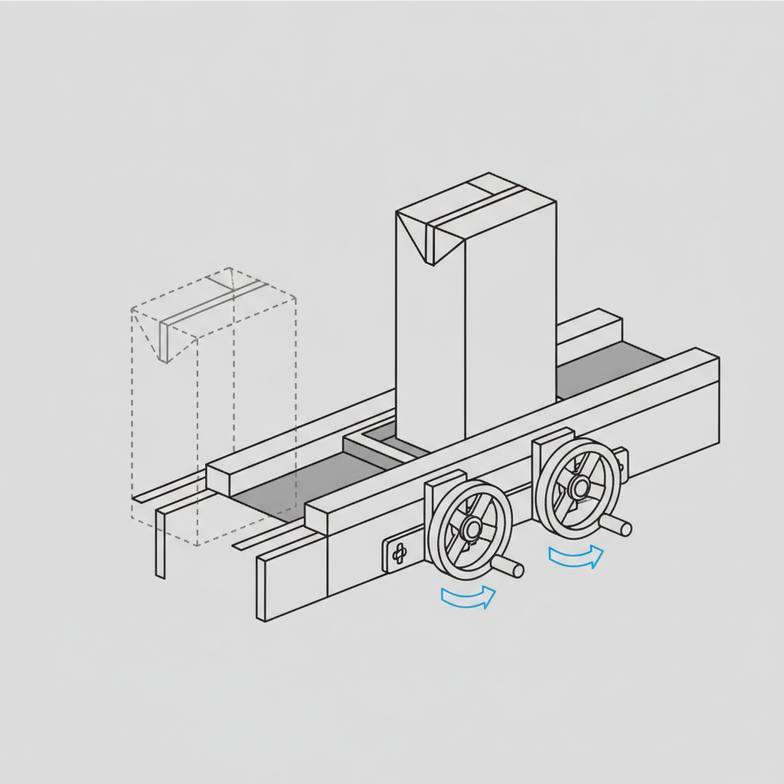
The raw dimensions of a carton are just one piece of the puzzle. The physical properties of the carton itself play a huge role in how it interacts with the applicator.
- Carton Material & Finish: Is the surface a raw, porous paperboard or a glossy, varnished finish? A slick surface can affect how the hot-melt glue bonds, potentially requiring a different temperature or application pattern. Some coatings can even interfere with optical sensors used for carton detection.
- Shape & Stiffness: A less rigid carton might bulge slightly when full, changing the geometry of the surface where the straw is applied. I remember a client who switched to a slightly taller but "compatible" carton. The applicator’s suction head, which worked perfectly before, couldn’t get a reliable grip because the new straw placement point was now on a subtly curved part of the carton face. It was a problem the spec sheet could never predict.
- Conveyor Dynamics: The way a carton travels on the conveyor is also critical. A taller, narrower carton has a different center of gravity than a short, wide one. This can introduce tiny vibrations or slight wobbles as it moves. Even a millimeter of positional variance can cause the applicator to miss its target, leading to angled straws or complete misses. These are the kinds of issues that only appear during a live production run.
In short, the spec sheet is a starting point for a conversation, not the final word. True compatibility for paper straw applicator changeovers must be verified under production-like conditions.
What mechanical adjustments are involved in carton size changes?
You're planning for a quick carton size switch during a scheduled maintenance window, but have you truly accounted for all the hands-on mechanical adjustments? What seems like a few minor tweaks can quickly snowball into significant downtime if the process isn't well-designed and your operators aren't prepared.
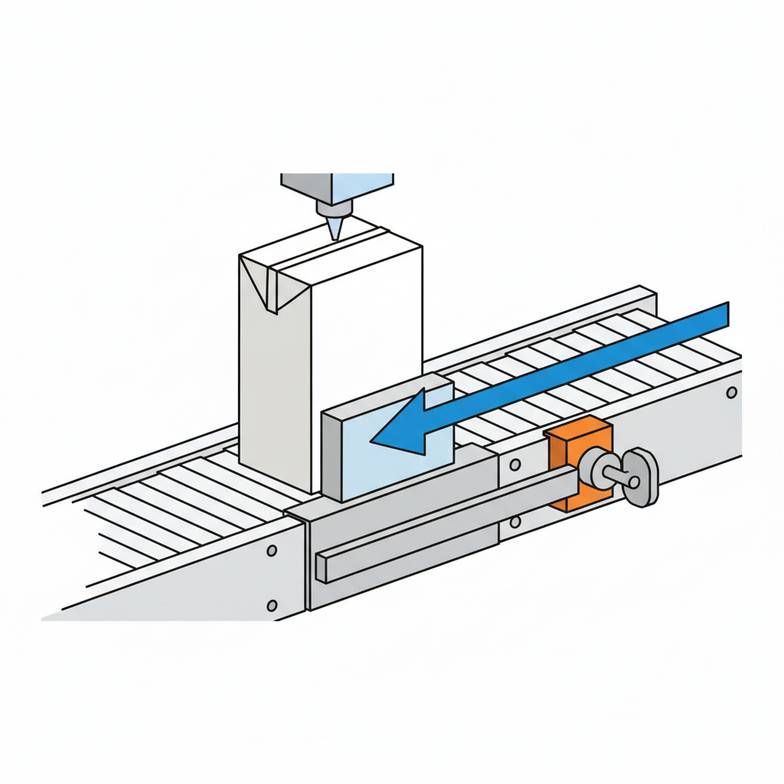
The most common mechanical adjustments include repositioning the side and top guide rails to fit the new carton dimensions, adjusting the carton stopper's position to ensure correct placement under the applicator head, and recalibrating the physical location of detection sensors. The real cost isn't in making these changes, but in the time and precision required to get them right.
Operator-Friendly vs. Technician-Required Adjustments
This is one of the most important distinctions to make when evaluating an applicator's changeover efficiency. Not all adjustments are created equal, and the difference can mean minutes versus hours of downtime.
- Operator-Friendly Tasks: These are adjustments that can be done quickly, often without tools. Look for features like hand-wheels with digital readouts for moving guide rails, or quick-release levers for repositioning carton stops. The goal is to make the process repeatable and remove guesswork. An operator should be able to dial in pre-documented settings for a specific carton size in minutes.
- Technician-Required Tasks: These are the "hidden" time sinks. This could involve using Allen keys and wrenches to unbolt and realign a sensor bracket, physically moving the mount for the glue gun, or adjusting components deep inside the machine that are hard to access. If your "quick changeover" requires a specialized maintenance technician, it's not a quick changeover.
A frequent issue we see in factories is that the adjustment points have no clear measurement marks. Operators are forced into a slow process of trial-and-error, using a "good" carton as a physical guide. They'll make an adjustment, run a few test cartons, see the failure, and tweak it again. This process wastes time, cartons, and straws.
Comparing Changeover Designs
The difference in machine design has a direct impact on your Overall Equipment Effectiveness (OEE). Here’s a simple comparison:
| Feature | Easy Changeover Design | Difficult Changeover Design |
|---|---|---|
| Guide Rails | Hand-wheel with digital counters or clear scales | Requires tools (e.g., Allen keys), manual measurement with a ruler |
| Carton Stopper | Quick-release lever with indexed positions | Bolted in place, requires tools and realignment |
| Sensor Position | Slides on a marked track with a locking screw | Fixed bracket that must be unbolted and moved |
| Documentation | Clear visual guide with pre-calculated settings per size | Vague instructions, no reference settings |
When evaluating a machine, don't just ask if a changeover is possible. Ask to see how it's done. The design philosophy behind these small mechanical features will determine how agile your production line can truly be.
How do carton changes affect the entire applicator system?
You've meticulously adjusted the guide rails and stoppers for the new carton. You start the line, but now the straws are jamming in the magazine or the glue isn't holding them securely. What's going on? The problem often isn't the applicator's mechanical setup, but how the carton change has created a domino effect across the entire straw application system.
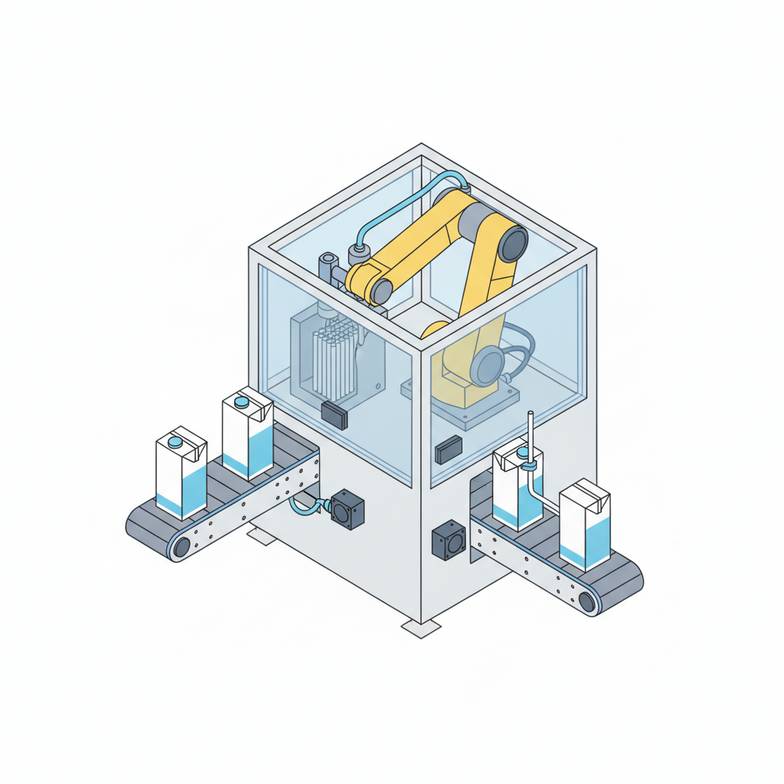
A carton size change is a system-level event, not an isolated adjustment. It directly affects the straw feeding mechanism, the hot-melt glue application, and the sensitive timing with the main conveyor. To ensure successful paper straw applicator changeovers, each of these interconnected components must be re-verified.

The Straw Magazine and Feeding Cycle
The straw itself is where many changeover problems begin. A taller or shorter carton means the target application point on the carton face moves up or down. This simple shift has consequences:
- Magazine Alignment: Does the straw magazine need to be adjusted vertically to ensure the pickup head can grab the straw cleanly? If the pickup motion is now at a slightly different angle, it can lead to mis-picks or jams.
- Pickup Path: On more advanced servo-driven applicators, the path the arm takes from the magazine to the carton is programmed. A new carton size might require selecting a different program or having a technician adjust the motion path in the machine's software (PLC).
The Hot-Melt Glue System
Glue is the literal bond that holds everything together, and it's extremely sensitive to change. A new carton size requires a review of the entire gluing process.
- Application Pattern: A wider carton may require a longer line of glue for proper adhesion. A different carton surface material might bond better with a dot pattern instead of a solid line. This setting is often controlled in the PLC and must be adjusted.
- Timing and Position: The applicator's brain, the PLC, is programmed to fire the glue gun at the precise moment the carton is in position. If the new carton size changes how or when the carton sensor is triggered, the glue timing will be off. You might end up applying glue too early or too late, resulting in a weak bond or a messy-looking product.
- Glue Volume & Temperature: A colder or more absorbent carton material might dissipate the glue's heat too quickly, causing it to set before the straw is applied. This often requires a slight increase in glue temperature or the volume of glue dispensed to compensate.
Conveyor and Sensor Synchronization
The applicator doesn't work in a vacuum. It relies on a sensor to "see" an incoming carton and trigger the entire application cycle. When you change the carton size, you must ensure this critical handshake is still working perfectly. Is the sensor still aimed at a reliable spot on the carton? If you switch from a large carton to a small one, the sensor might now be aimed at the empty space between cartons, causing the system to fail entirely.
What questions should you ask a supplier about paper straw applicator changeovers?
You're ready to invest in a new production line or modify your existing one with a different carton format. How do you move past the sales brochure and get the information you need to avoid costly surprises? Asking vague questions gets you vague answers. You need to ask sharp, process-oriented questions that force a supplier to demonstrate real-world performance.
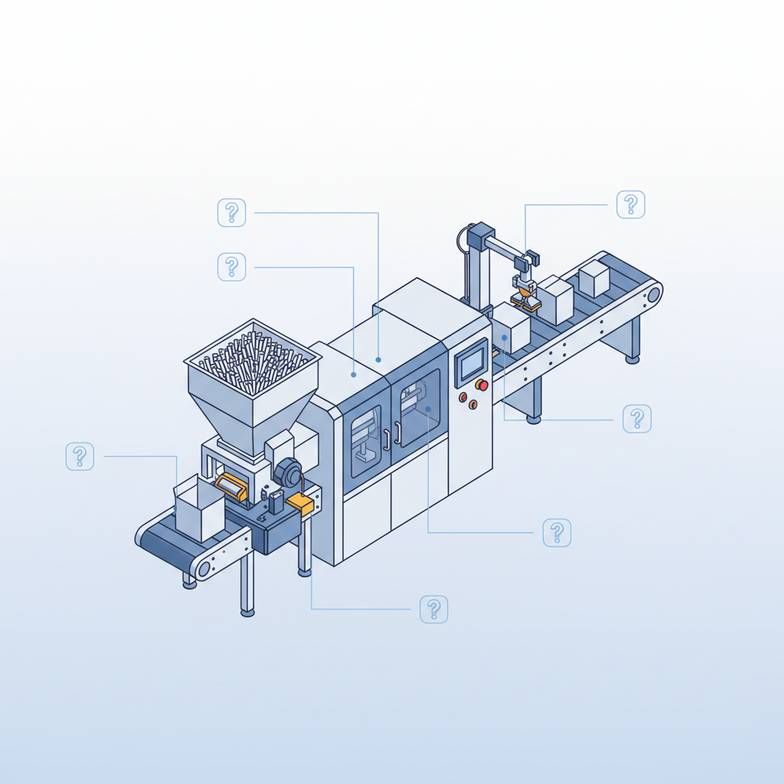
Instead of simply asking, "Is this carton size compatible?", you need to probe the specifics of the changeover process itself. The best approach is to request demonstration videos, ask for documented changeover times performed by an average operator, and inquire about common failure points and how to troubleshoot them.
Building Your Verification Protocol
Treat this like a risk assessment. Your goal is to uncover potential downtime and hidden costs before the machine is on your factory floor. When you talk to a machinery supplier, use this framework to guide the conversation.
Here are the critical questions you should be asking:
- "Can you provide a detailed video showing a complete changeover between our current carton size and our proposed new size?"
- "What is the documented, average time for a trained operator to perform this specific changeover, from the last good carton of the old size to the first good carton of the new size?"
- "Which specific adjustment points are tool-less, and which require tools? Can you provide a list of the tools required?"
- "Does the machine's software allow us to save pre-programmed 'recipes' for different carton sizes to automate servo positions and timing?"
- "Based on your experience with other customers, what are the top 2-3 most common issues or failure points that occur during this type of changeover?"
- "What specific adjustments, if any, are needed for the hot-melt glue system and the straw magazine to accommodate this change?"
- "Can you provide a list of recommended spare parts we should keep on hand if we plan to perform this changeover daily or weekly?"
The ultimate test is the Factory Acceptance Test (FAT). Before the machine ever ships from the supplier's facility, you should insist on testing your specific changeover scenarios. Bring samples of your old and new cartons. Time the changeover process yourself. Run a few hundred of the new cartons to check for consistency. This is your best and final opportunity to verify a supplier's claims. As a solution provider, we welcome this level of scrutiny. We would much rather help you configure a robust process upfront than troubleshoot production issues remotely.
Frequently Asked Questions
How long should a typical paper straw applicator changeover take?
This varies widely based on machine design and operator skill. For a well-designed applicator with clear guides and a trained operator, a changeover should take between 15 to 30 minutes. More complex changes involving hard-to-reach adjustments or software modifications can easily take over an hour. Always verify this with your supplier for your specific carton sizes.
Can software settings automate the changeover process?
Partially. Modern applicators with servo motors can use software "recipes" to automatically adjust things like the straw pickup path and glue timing. However, physical adjustments like moving guide rails or sensor brackets are still often manual. Fully automated changeover systems exist but represent a significantly higher capital investment.
What's the biggest hidden cost of frequent carton size changes?
The biggest hidden cost is the accumulation of small downtimes and wasted product. An extra 30 minutes of trial-and-error per changeover might not seem like much, but if you're changing formats multiple times a week, it adds up to a massive loss in Overall Equipment Effectiveness (OEE) and throws off production scheduling.
Do I need a new applicator for a significantly different carton shape?
Potentially, yes. If the new carton format is fundamentally different and falls outside the machine's core mechanical range—for example, switching from a standard flat-top brick carton to a gable-top carton—a different applicator model or significant custom modification will likely be required.
Conclusion
Successfully managing paper straw applicator changeovers is about shifting your mindset from a simple spec check to a holistic process review. A "compatible" carton size on a data sheet means very little until you've verified the real-world impact on your production line. By focusing on the entire system—the mechanical adjustments, the software settings, the glue system, and the straw feeding mechanism—you can anticipate problems before they happen. Arm yourself with a rigorous verification protocol and ask your suppliers tough, process-oriented questions. Proactive planning is the single most effective way to ensure your carton size changes are a source of market agility, not production downtime.
If you are planning to switch carton sizes, upgrade your equipment, or establish a new production line, our team can help you navigate these complex considerations. Contact us to discuss your specific product requirements and configure a complete solution that minimizes risk and maximizes your operational efficiency.
Matched Formats for Beverage Cartons

Attached Paper Straws
Connected continuous strip for high-speed automatic carton applicators.
View Product Specs
U-Shaped Paper Straws
Folded 180° format maximizing drinking reach on compact beverage cartons.
View Product Specs
Telescopic Paper Straws
Two-section extendable design offering maximum reach from minimum packed length.
View Product Specs