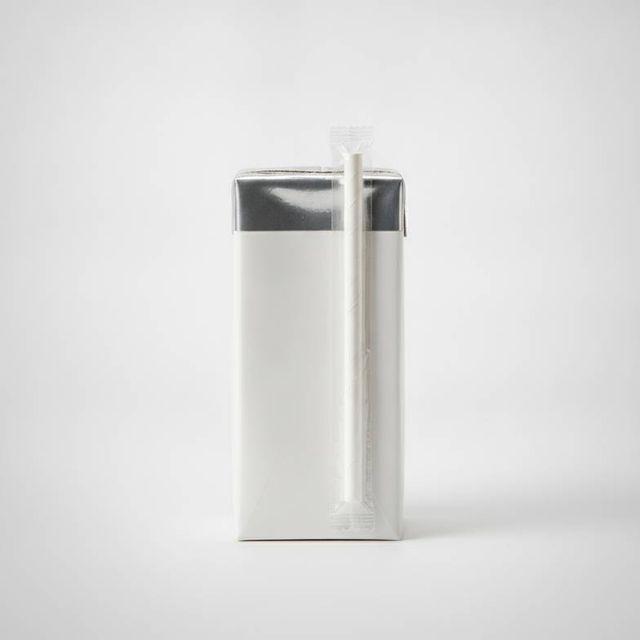

In This Guide
Sourcing straws for your beverage cartons seems straightforward, but are you sure you're asking for the right thing? Many buyers get stuck asking for a "standard size," only to find that a small mismatch in specifications can lead to jammed packaging lines or unhappy customers. The key to avoiding these costly problems isn't finding a universal standard, but understanding the critical details you need to confirm. This guide will help you navigate the essential paper straw sizes and specs for a risk-free purchase.
There is no single "standard" for paper straw sizes when it comes to juice and milk cartons. The correct dimensions are entirely dependent on your specific product system. Critical factors include the carton's height and shape, the location of the straw's punch-hole, the viscosity of the liquid inside, and the type of straw you need (e.g., U-shaped or telescopic). The most effective approach is to provide your supplier with your carton specifications or a physical sample for a precise compatibility review.
Now that we've established that a "one-size-fits-all" approach is a myth, you might be wondering what you should be asking for. Let's dive into the specific variables that truly matter, moving beyond basic length and diameter to ensure a perfect fit for both your product and your production line.
Why Is There No "Standard" Paper Straw Size for Cartons?
Have you ever asked multiple suppliers for a "standard" carton straw and received slightly different answers from each one? It’s a common and frustrating experience. This happens because a paper straw doesn't exist in a vacuum; it’s one part of a complete product system.
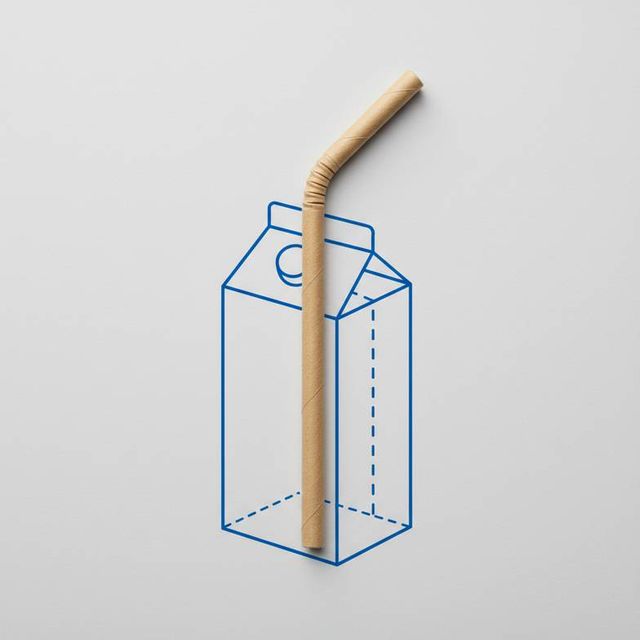
The idea of a single standard size fails because every beverage product is unique. A straw that works perfectly for a 200ml juice box will be completely wrong for a 250ml milk carton. The correct specifications are determined by the carton itself, not by an industry-wide rule.
Dive Deeper: The Variables That Define Your "Standard"
Instead of searching for a non-existent standard, your focus should be on defining the parameters set by your own product. In my experience helping clients troubleshoot sourcing issues, the problems almost always trace back to a mismatch in one of these three areas.
The Carton Height and Straw Length Relationship
This is the most obvious factor, but the details matter. The straw needs to be long enough for a customer to comfortably reach the bottom of the carton. A straw that's too short is a classic cause for customer complaints.
However, a straw that's too long can also be a problem.
- Cost: Extra length means more raw material, which increases your unit cost. Across millions of units, this adds up.
- Packaging: An excessively long straw might not fit neatly on the side of the carton, creating issues with your wrapping and multipack bundling.
- User Experience: A disproportionately long straw can feel awkward and flimsy to the end-user.
For example, a typical 200ml carton might be around 120mm tall. A straw that is 140-150mm long might be appropriate. But for a taller, slimmer 250ml carton that is 160mm tall, you'd likely need a straw closer to 180mm. You have to measure your specific carton.
The Punch-Hole Position
Where the straw enters the carton is just as important as the carton's height. Some cartons have the hole placed centrally, while others have it offset to one side. This position affects the "effective reach" of the straw.
Imagine two cartons of the same height. One has the hole in the center, and the other has it near a corner. The straw for the corner-punched carton needs to be slightly longer to reach the opposite bottom corner. A common mistake I see is when a company changes its carton design and moves the punch-hole, but forgets to update the straw specification.
Liquid Viscosity and Straw Diameter
The type of beverage you're selling directly impacts the ideal straw diameter. A wider straw is not always better. You need to match the inner diameter to the flow characteristics of your product.
| Liquid Type | Typical Viscosity | Recommended Inner Diameter | Why? |
|---|---|---|---|
| Juice / Iced Tea | Low | 4-5mm | Allows for easy sipping without being too wide. |
| Whole Milk | Medium-Low | 5-6mm | A slightly wider bore helps with the slightly thicker liquid. |
| Milkshakes / Smoothies | High | 6-8mm | A narrow straw would require too much effort and frustrate the user. |
Choosing a 4mm straw for a thick smoothie will lead to a terrible customer experience. Conversely, using a huge 8mm straw for thin apple juice is wasteful and can lead to spills for young children.
What Are the Critical Specs Beyond Length and Diameter?
So you've measured your carton and considered your liquid. You're ready to order, right? Not so fast. Focusing only on length and diameter is a common oversight. Two straws with the exact same length and width can perform completely differently if their structural details don't match your needs.
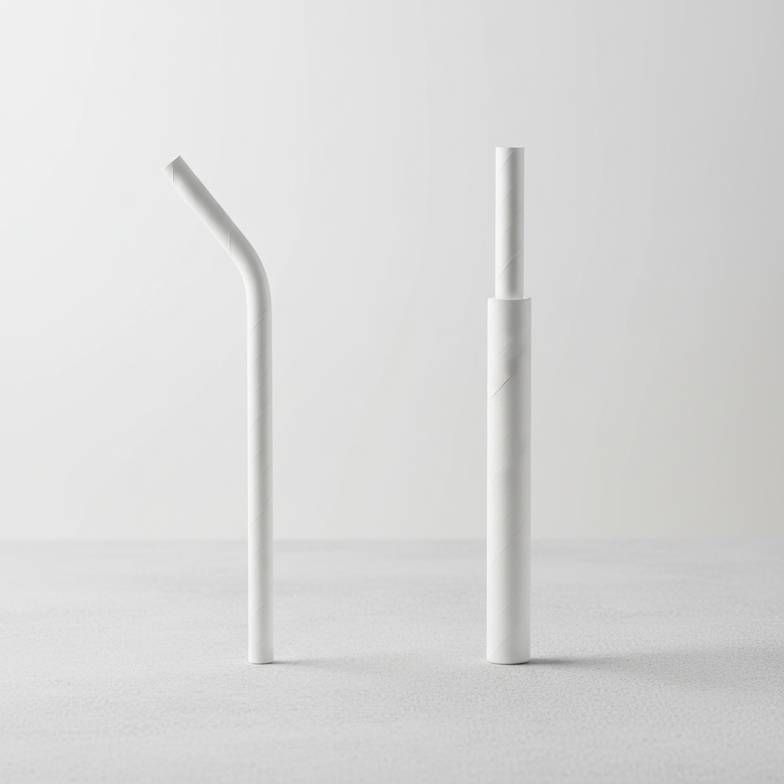
When it comes to attached straws for cartons, you're usually dealing with either U-shaped or telescopic straws. Each has its own set of critical specifications that determine whether it functions correctly. Getting these details wrong is a frequent source of failure.
Dive Deeper: The Functional Details That Matter
From my experience, the issues that cause the most headaches are rarely about the basic dimensions. They're about these functional characteristics that affect usability and manufacturing.
For U-Shaped Straws: The Bending Point Is Key
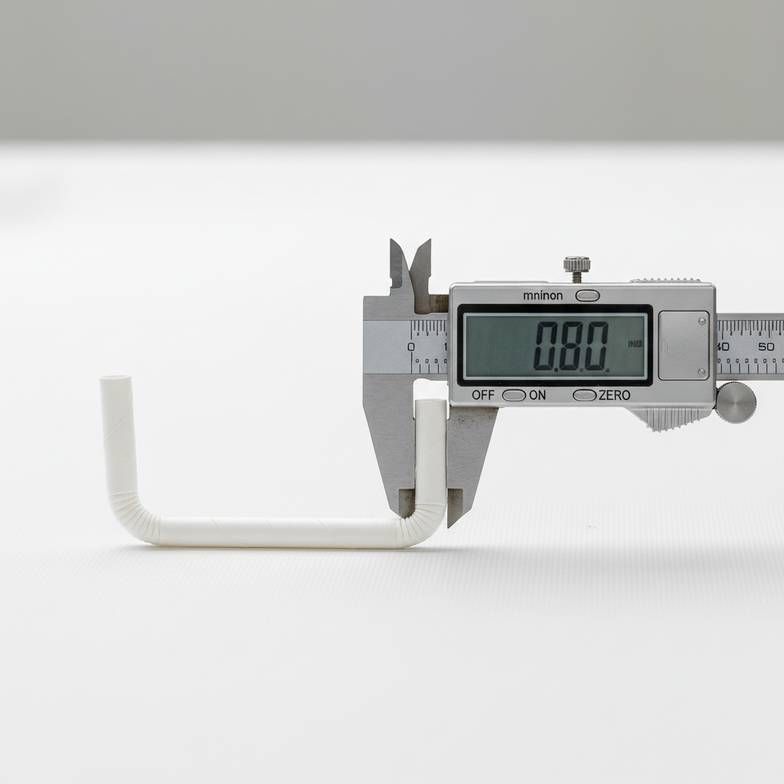
A U-shaped straw is designed to wrap neatly over the top edge of a carton. For this to work, the "U" bend must be positioned precisely.
- If the bend is too high (too much length on the short side): The straw won't sit flush against the carton's side. It might stick out, get snagged during transport, or cause problems on your straw applicator machine.
- If the bend is too low (not enough length on the short side): The straw will be stretched too tightly over the carton's edge. This can weaken the paper at the bend, leading to splits or cracks before the customer even uses it.
When you specify a U-shaped straw, you need to provide not just the total length but also the length of each segment. For example, instead of just saying "150mm U-shaped straw," you should specify "150mm total length, with a 40mm + 110mm split." This tells the manufacturer exactly where to create the bend.
For Telescopic Straws: Extension and Friction
Telescopic straws offer a great user experience, but their two-part construction introduces new variables. The magic is in how the inner tube slides out of the outer tube.
- The Fit: The clearance between the inner and outer straws has to be perfect. Too loose, and the inner straw might fall out or feel wobbly. Too tight, and a child (or adult!) might struggle to extend it.
- The Locking Mechanism: A well-made telescopic straw has a slight "catch" or increased friction at full extension to prevent the inner tube from sliding back in while drinking. This is a subtle manufacturing detail that separates good suppliers from bad ones. It’s not something you can easily measure, which is why testing physical samples is so important.
Paper Layers and Rigidity
Is it a 3-ply or 4-ply straw? This specification directly relates to the straw's stiffness and durability. For thicker drinks like milk or for products aimed at children who might be rough with the straw, a 4-ply construction provides extra rigidity. It's more resistant to bending and getting soggy quickly. For a small, single-sip juice pouch, a 3-ply straw is often sufficient and more cost-effective. This isn't strictly a "size," but it's a critical part of your specification that impacts performance and cost.
How Do Paper Straw Sizes and Wrapping Affect Your Packaging Line?
Let's say you've found a straw that perfectly fits the carton and feels great to use. There's one final, crucial system it has to fit into: your automated packaging line. A perfectly good straw that causes your high-speed applicator machine to jam is useless.
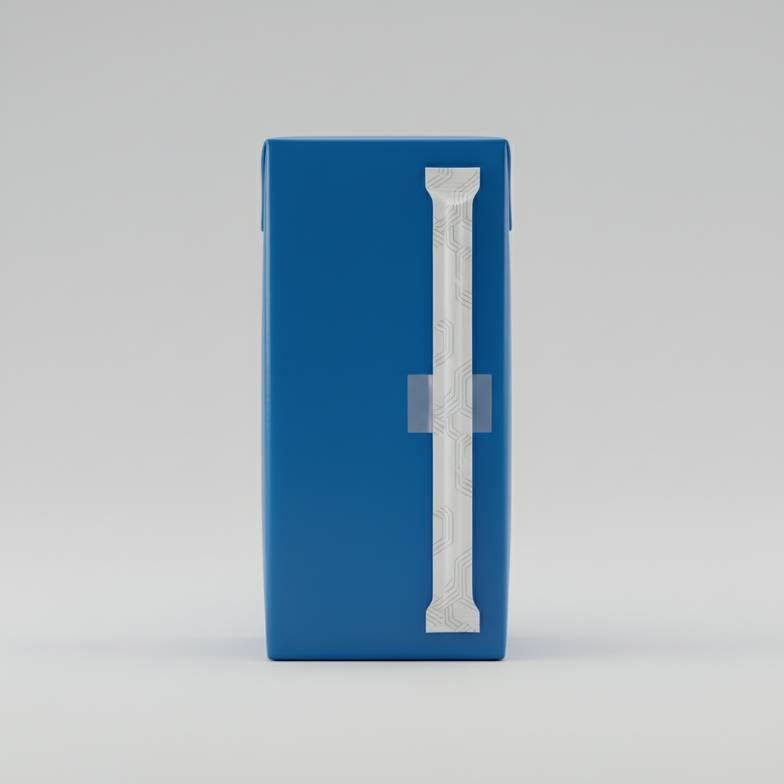
A common question we get from packaging engineers is about compatibility with their specific equipment, whether it’s from Tetra Pak, SIG Combibloc, or another machine provider. The straw and its individual wrapper are components that your machinery has to handle thousands of times per hour. Even a millimeter of difference can cause major disruptions.
Dive Deeper: Integrating the Straw with Automation
To de-risk your procurement, you must think like a packaging engineer. The straw isn't just for drinking; it's a part that your factory has to process automatically and efficiently.
Individual Wrapper Compatibility
The machine that applies the straw to the carton is calibrated for a very specific wrapper size. If your new supplier's individually-wrapped straw has a wrapper that is even 1mm wider or has a different heat-seal characteristic, it can lead to:
- Feeding Errors: The applicator fails to pick up the straw correctly from the magazine.
- Alignment Issues: The straw is glued on crooked, which looks unprofessional and can cause problems in downstream case packers.
- Machine Jams: The wrapper gets caught in the mechanics, forcing a line stop. I once worked with a client whose production efficiency dropped by 20% due to constant micro-stoppages, all because their new straw's wrapper was slightly thicker than their machine was set up for.
You must confirm the exact dimensions (length and width) of the wrapped straw, not just the straw itself.
Attachment Method and Glue Spot
How is the straw stuck to the carton? The most common method is a small spot of hot-melt glue. The location and size of this glue spot are critical. Your applicator is programmed to apply the straw at a precise point. If the supplier's pre-applied glue spot (on the wrapper) doesn't align with where your machine presses the straw onto the carton, the bond will be weak and straws will fall off during shipping. Always confirm the glue application method and provide your supplier with a "target zone" on your carton where the straw should be attached.
The Best Practice: Provide Carton Samples
Instead of going back and forth with lists of numbers, the single most effective way to ensure compatibility is to send your supplier several empty, flat cartons. This allows their technical team to:
- Physically measure the carton.
- Place different straw options against it to check for fit.
- Confirm the ideal U-bend location or telescopic length.
- Advise on the best wrapper and attachment configuration.
This shifts the conversation from "What are your standard sizes?" to "Here is my product; what is the right solution?" It reduces ambiguity and puts the responsibility on the expert supplier to provide a compatible product.
Frequently Asked Questions
What's a typical diameter for a juice box straw?
While it varies, a common inner diameter for a standard juice box is between 4mm and 6mm. For thinner juices, 4-5mm is often sufficient, while thicker nectars or smoothies might require 6mm. The most important step is to test samples with your specific liquid to ensure a good drinking experience.
How do I measure my carton for a paper straw?
Start by measuring the carton's total height. Then, measure the distance from the top of the carton down to the center of the pre-punched straw hole. Finally, provide these dimensions and, ideally, a physical sample of your carton to your supplier for the most accurate recommendation.
Are U-shaped or telescopic straws better?
Neither is inherently "better"; it depends on your carton design, brand positioning, and budget. U-shaped straws are often more cost-effective and are a proven solution for standard cartons. Telescopic straws can provide a more premium, modern user experience and are great for taller, slimmer carton designs.
Can I get custom-printed paper straws for my cartons?
Yes, most B2B manufacturers, including us at PaperStrawTech, offer custom printing on the straw wrapper and sometimes on the straw itself. You can add your logo or brand colors. When you do, always confirm that the supplier uses food-safe, compliant printing inks for your target market.
Conclusion
Ultimately, selecting the correct paper straw sizes for your juice or milk cartons is not about finding a magic number on a chart. It's about conducting a thorough verification process. Success comes from understanding that the straw is part of an integrated system including the carton, the liquid, the end-user, and your packaging machinery. By moving beyond basic length and diameter to confirm details like the U-bend point, wrapper dimensions, and paper rigidity, you mitigate the risks of production downtime and customer complaints. The most reliable path to the right specification is a collaborative review with an experienced manufacturing partner.
If you're ready to move from guessing to confirming, we're here to help. Submit your carton specifications or request a sample review, and let's work together to configure the perfect paper straw solution for your product.
Matched Formats for Beverage Cartons
Attached Paper Straws
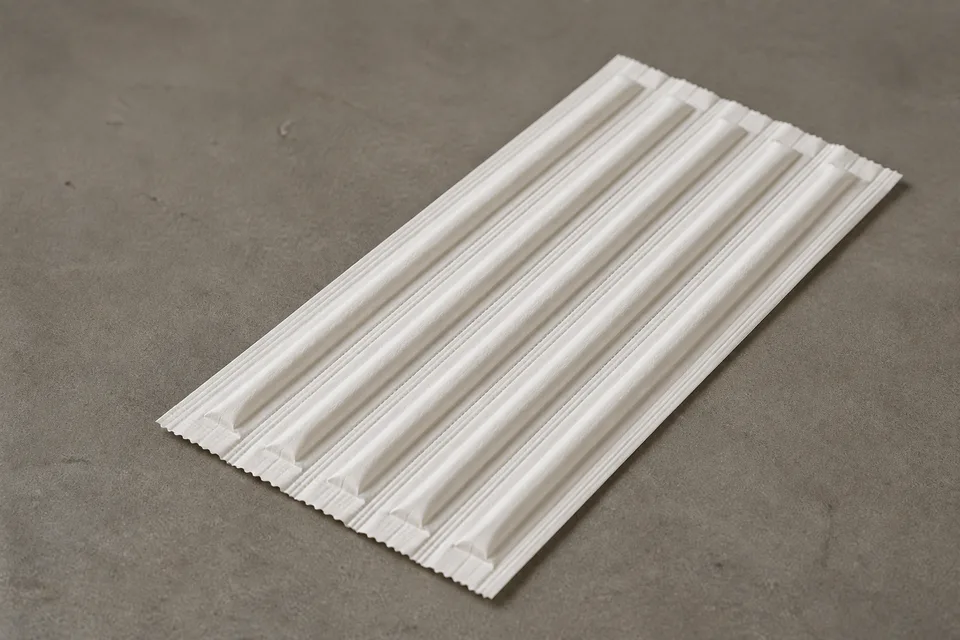
Connected continuous strip for high-speed automatic carton applicators.
View Product Specs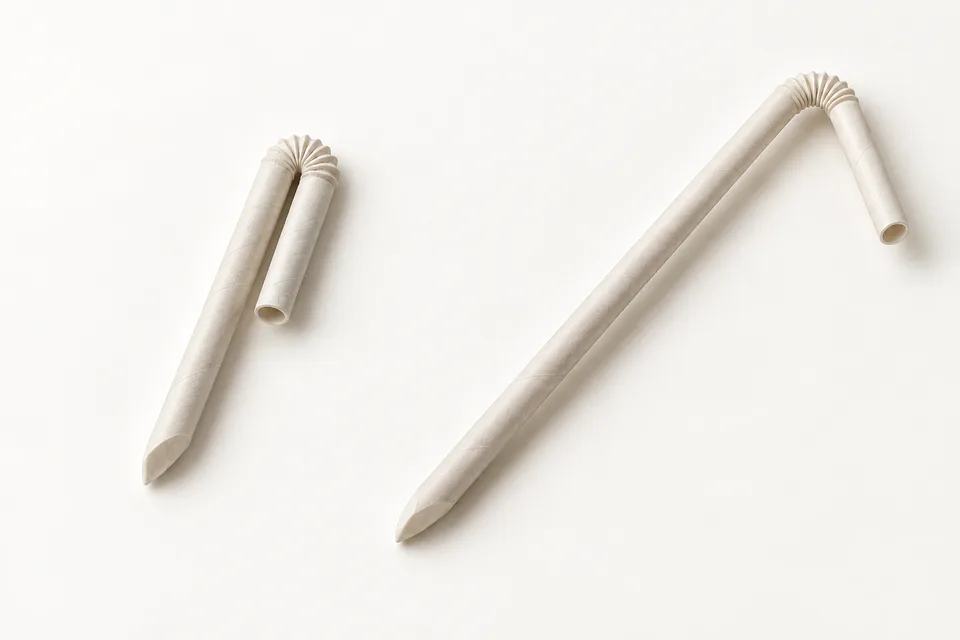
U-Shaped Paper Straws
Folded 180° format maximizing drinking reach on compact beverage cartons.
View Product Specs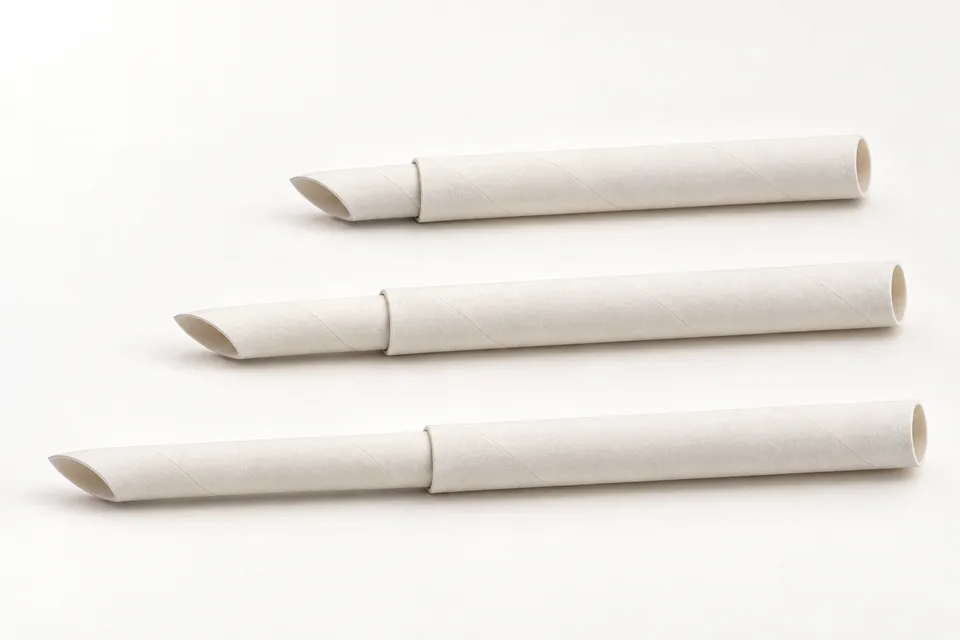
Telescopic Paper Straws
Two-section extendable design offering maximum reach from minimum packed length.
View Product Specs