In This Guide
Struggling to understand why the paper straw MOQ from a supplier is so high? It’s a common frustration for buyers when a minimum order quantity seems like an arbitrary barrier, forcing you to either over-commit your budget or abandon your perfect custom design. The good news is that this number isn't pulled out of thin air; it’s based on real-world manufacturing costs, and understanding them is the key to smarter sourcing.
The minimum order quantity (MOQ) for paper straws is determined by the most economical production run possible for a specific design. It's not a negotiable sales tactic but a calculation based on the minimum batch sizes for raw materials (like custom paper or ink), the time and cost of setting up machinery for a specific straw, and the minimums required for custom packaging. Essentially, the MOQ represents the smallest order a factory can produce without losing money.
So, the MOQ isn’t just a number to haggle over. It’s a window into the manufacturing process. Once you understand the variables that build up to that final quantity, you can have a much more productive conversation with your supplier about finding a solution that works for everyone. Let's peel back the layers.
Do Custom Designs Always Mean a Higher Paper Straw MOQ?
You’ve got a brilliant design in mind, complete with your brand's unique Pantone color and logo. But when you get quotes, the MOQ for your custom straw is ten times higher than for a supplier's standard white or kraft paper straw. It’s frustrating and can feel like a penalty for creativity. So, why the huge jump?
Yes, custom designs almost always lead to a higher paper straw MOQ. The reason is simple: customization introduces new minimums at every stage of the supply chain. From the paper mill that makes your colored paper to the printing press that applies your logo, each specialized component has its own minimum production requirement that we, the straw manufacturer, have to meet.
The Raw Material Hurdle
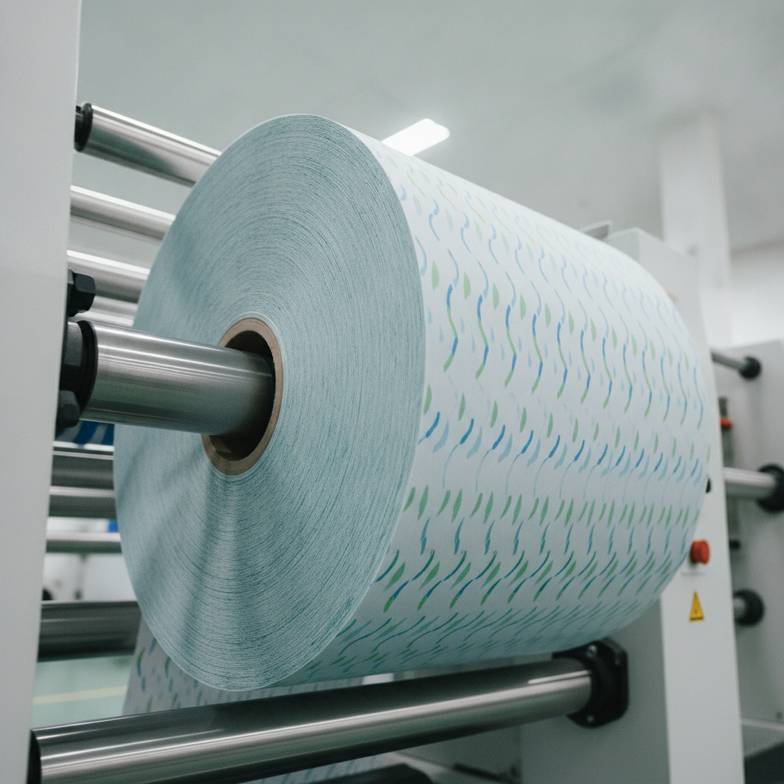
The single biggest driver of a high MOQ for custom straws is the paper itself.
A paper mill doesn't just produce one small roll of paper in a custom color. They produce it in massive jumbo rolls. For us to order paper printed with your specific logo or dyed to match your brand's Pantone color, we have to purchase a minimum amount from our supplier—often a full master roll.
To put it in perspective, one of these master rolls of custom-printed food-grade paper might be enough to produce 500,000 or even 1,000,000 paper straws. If your order is only for 50,000 straws, we're left with 95% of a very specific, custom-branded material that we can't use for any other customer. This is the primary reason why the material itself sets a high baseline for the paper straw MOQ.
The same logic applies to other custom components:
- Ink: Mixing a custom Pantone-matched ink requires a minimum batch size from the ink supplier.
- Adhesive: While the glue is usually a standard item, specialized adhesives for unique performance requirements could also have their own sourcing minimums.
The Cost of Machine Setup
Let's say you want a straw with a non-standard diameter or length. Even if it uses plain white paper, the MOQ will be higher than for our stock sizes. Why? Because of setup time.
Before we can run your order, our technicians need to:
- Stop the production line.
- Remove the tooling (like cutters and mandrels) for the previous size.
- Install and precisely calibrate the new tooling for your custom dimensions.
- Run test batches to ensure the straws meet quality standards, which creates some initial waste.
This changeover process can take a few hours. During that time, the machine isn't producing anything, but we're still paying for labor and overhead. To make this downtime economically viable, we need to run a sufficiently large volume of straws. Running just 10,000 straws after a two-hour setup would make the setup cost per straw ridiculously high. Running 200,000 straws, however, spreads that fixed cost out, making the per-unit price reasonable for both you and us.
The Hidden MOQ of Packaging
Finally, don't forget the packaging. If you need individually wrapped straws with your logo on the wrapper, or custom-printed dispenser boxes, those components have their own MOQs.
| Component | Standard Order (Low MOQ) | Custom Order (High MOQ) |
|---|---|---|
| Straw Paper | Stock white or kraft paper | Custom color or printed paper (high min. roll size) |
| Machine Setup | Runs continuously with other orders | Requires hours of downtime and recalibration |
| Wrapper Paper | Plain white or stock design | Custom-printed wrapper (high min. print run) |
| Outer Box | Standard, unprinted cartons | Custom-sized and printed boxes (high min. print run) |
Your final product MOQ is a combination of all these factors. The "weakest link" in the chain—usually the custom-printed base paper—sets the floor for the entire order.
Does Your Supplier's Business Model Affect the Paper Straw MOQ?
Have you ever gotten two wildly different MOQ quotes for what seems like the exact same paper straw? It's a common scenario, and it can leave you wondering which supplier is giving you the real story. The difference often comes down to who you're speaking with: a direct manufacturer or a trading company.
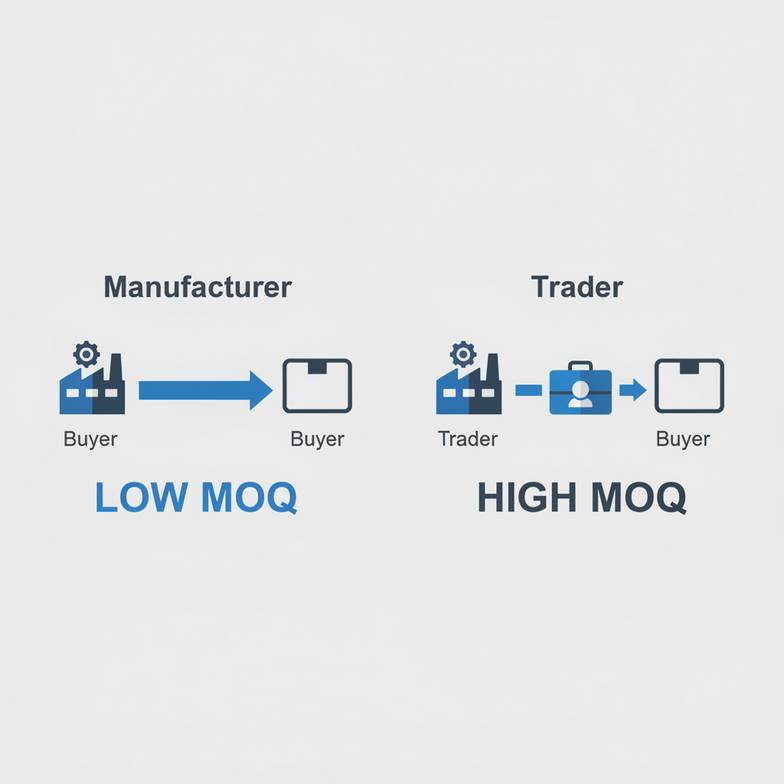
Absolutely. A direct manufacturer's paper straw MOQ is a direct reflection of their factory's operational efficiency and raw material costs. In contrast, a trading company's MOQ is an entirely different calculation, which could be higher, lower, or simply less flexible depending on their business model and relationship with the factory.
The Manufacturer's Perspective
Speaking as a manufacturer, our MOQ is a straightforward calculation. We are the ones running the machines. We know precisely how much it costs to source a master roll of custom paper, how long it takes our team to switch a production line over to a new specification, and what our breakeven point is for any given production run.
I often explain to clients that our MOQ is not a sales target; it’s an efficiency threshold. If we run an order below this quantity, the setup cost per straw becomes so high that the product is no longer commercially viable. Our goal is to give you the best possible price, and that can only be achieved with an efficient production run. This is why we are transparent about the factors driving the MOQ. At PaperStrawTech, because we handle everything from machine configuration to finished straw production, we have a clear view of these real-world constraints.
The Trading Company's Model
A trading company operates as an intermediary. They don't own the factory or the machines. When they give you an MOQ, it's typically based on the MOQ they receive from their manufacturing partner.
However, their model can affect the number in a few ways:
- They might inflate the MOQ: A trader might round up the factory's MOQ to meet their own revenue targets or to simplify logistics.
- They might aggregate orders: For standard, non-custom items, a large trading company might be able to collect smaller orders from multiple customers and bundle them together to meet the factory's larger MOQ. In this specific scenario, they could potentially offer you a lower MOQ than the factory would offer for a direct order. However, this is almost never possible for custom-printed or custom-sized products.
- Less flexibility: Because they don't control production, a trader has little to no room to negotiate the technical constraints. They can only pass messages back and forth, whereas a manufacturer can directly discuss alternative solutions with you.
How to Tell the Difference
Knowing who you're talking to is crucial. Here are some questions to ask:
- "Can you walk me through the production process for my specific straw at your facility?"
- "If we adjust the diameter by 0.5mm, how does that impact the run efficiency and MOQ?"
- "Do you manufacture your own straws, or do you work with partner factories?"
A direct manufacturer will be able to answer technical questions with confidence and detail. They can have an engineering-level conversation with you. As an integrated manufacturer and solution provider, we can discuss not just the finished straw but also the machinery and raw materials involved, giving you a complete picture.
How Can You Lower Your Order Quantity Without Just Haggling?
You're facing a high MOQ that's a dealbreaker for your new product launch or your small business's budget. Your first instinct might be to just ask for a lower number. But this approach rarely works and can start the relationship off on the wrong foot. So what's a better strategy?
You can effectively lower your required order quantity by shifting the conversation from haggling over a number to collaborating on a solution. By being flexible with certain specifications—like color, dimensions, or packaging—you can help the manufacturer use more efficient processes and materials, which naturally leads to a lower minimum run size.
Be Flexible on Specifications
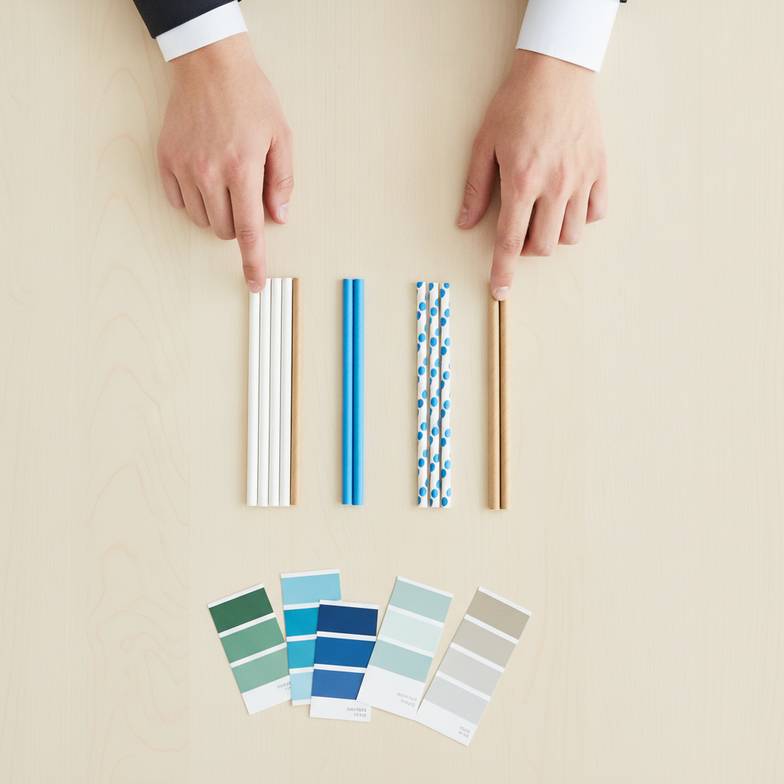
The most powerful tool you have for reducing MOQ is flexibility. Instead of being locked into every single detail, explore alternatives with your supplier.
- Color: Instead of insisting on "Pantone 2935 C," ask, "What stock blue colors do you have that are close to my brand's shade?" Using a color that the manufacturer already has in stock, or one that is standard for the paper mill, can instantly eliminate the huge MOQ associated with custom-dyed paper.
- Dimensions: Your design might call for a 7.3mm diameter straw. Ask your supplier, "What are your most common and efficiently-run dimensions?" Shifting to a standard 7.0mm or 7.5mm diameter could mean your order can be run on a machine that's already set up, slashing the setup cost and the need for a high MOQ.
- Printing: A complex, multi-color, full-bleed design requires a lot more setup and a more expensive printing process. Consider simplifying. A one-color repeating logo often has a much lower print setup cost and material minimum than a photorealistic image.
Ask Smarter Questions
Show your supplier you understand their world by asking insightful questions. This positions you as a partner, not just a customer to be managed.
Instead of: "Your MOQ is 300,000. Can you do 50,000?"
Try this: "I understand the 300,000 MOQ. Can you help me understand what's the main driver? Is it the custom paper, the print setup, or the individual wrappers?"
Once you identify the bottleneck, you can work on it together. If the issue is the minimum order for a custom paper roll, you could ask, "Would it be possible for us to purchase the entire roll of paper, and you can store it for us to use across three separate production runs over the next year?" From our experience, this is a fantastic solution that many of our long-term partners use. It gives them the custom straw they want, a great per-unit price, and manageable inventory flow.
Plan for the Long Term
If you anticipate a steady need for the straws, discuss a blanket order with scheduled releases.
You could commit to purchasing 500,000 straws over a 12-month period, with shipments of 125,000 delivered each quarter. This gives the manufacturer the volume they need to do one large, highly efficient production run. In return, you get the price benefit of a large order but only have to accept and pay for the inventory as you need it. This solves the manufacturer's efficiency problem and your cash flow and warehousing problem simultaneously.
Frequently Asked Questions
Why can't I just order 1,000 custom paper straws?
For a run of just 1,000 custom straws, the cost of machine setup and the waste from calibration would be far greater than the cost of the materials themselves. This would make the price per straw prohibitively expensive for both the buyer and the manufacturer. It's simply not economically feasible.
Is the MOQ for the straw the same as the MOQ for the wrapper?
Not always. The straw body, the printed wrapper, and the outer carton are all separate components, each with its own production process and potential MOQ. The final MOQ for the finished product is typically determined by the component with the highest minimum requirement, which is often the custom-printed paper for the straw or wrapper.
Does a U-shaped or telescopic straw have a higher MOQ than a straight straw?
It often can. U-shaped and telescopic straws require additional manufacturing steps, like bending and forming, which use specialized machinery. These extra processes have their own setup times and efficiency thresholds, which can increase the minimum viable production quantity compared to a simple straight straw.
If I accept a higher paper straw MOQ, will the price per straw be lower?
Yes, almost always. This is the core principle of economies of scale. Larger production runs allow the manufacturer to spread the fixed setup costs (labor, machine downtime, initial waste) over a much larger number of units. This significantly reduces the cost per straw, a saving which is passed on to you.
Conclusion
Ultimately, the paper straw MOQ is not a sales tactic or an arbitrary roadblock. It’s a number rooted in the physical and financial realities of manufacturing: raw material sourcing, machine efficiency, and labor costs. Viewing the MOQ through this lens transforms the conversation from a negotiation into a collaborative problem-solving session. By understanding the key drivers—especially the massive impact of customization—and being willing to explore flexible solutions, you can work with your manufacturing partner to find a path forward. The goal isn't just to get the lowest possible number, but to develop the most cost-effective, high-quality, and sustainable supply chain for your business.
Ready to find a practical solution for your paper straw needs? Contact our team today. Let's review your specifications and work together to configure a production plan that balances your unique design with manufacturing efficiency.
Matched Formats for Beverage Cartons
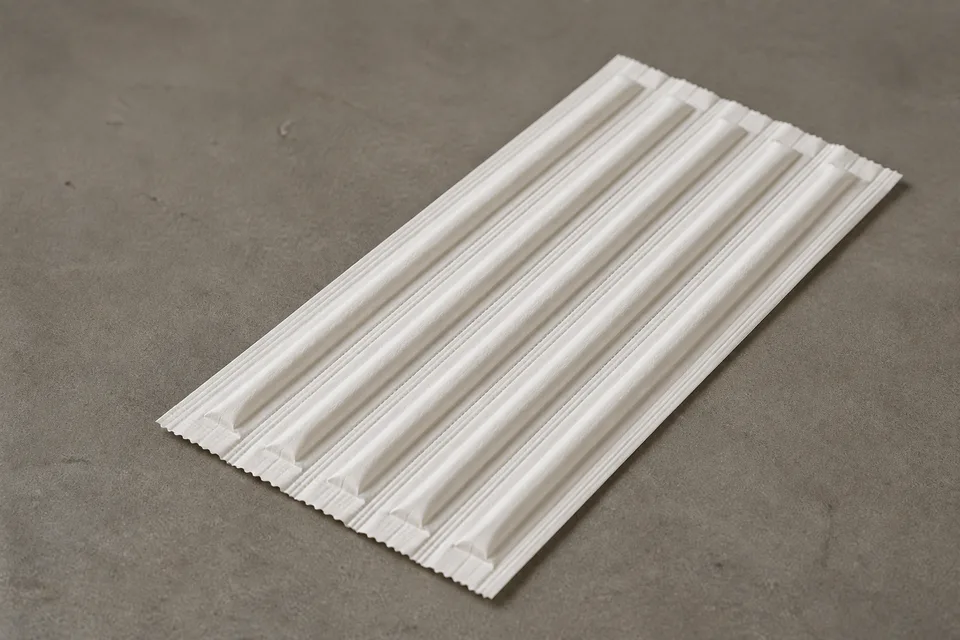
Attached Paper Straws
Connected continuous strip for high-speed automatic carton applicators.
View Product Specs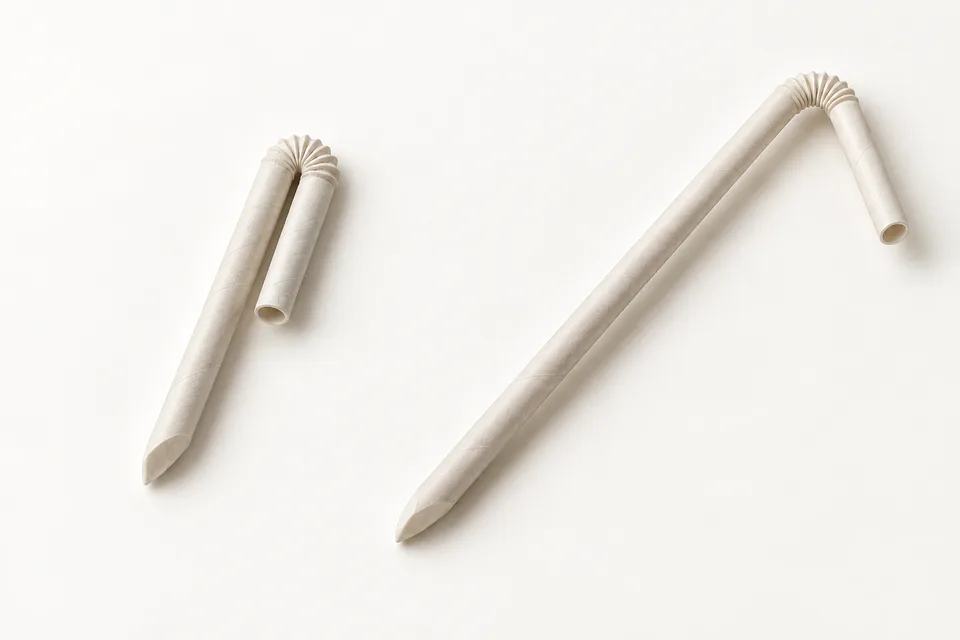
U-Shaped Paper Straws
Folded 180° format maximizing drinking reach on compact beverage cartons.
View Product Specs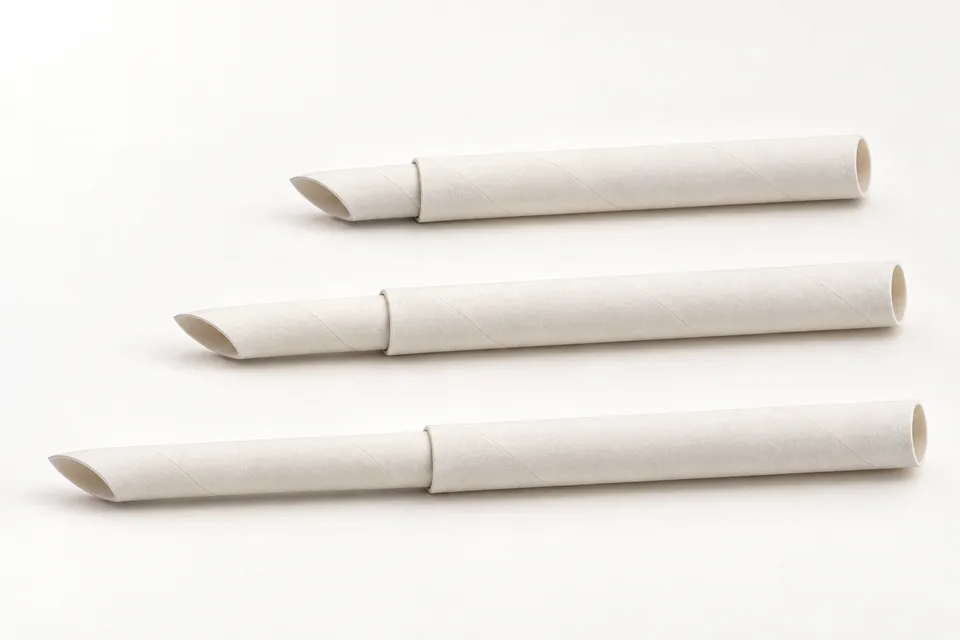
Telescopic Paper Straws
Two-section extendable design offering maximum reach from minimum packed length.
View Product Specs