In This Guide
- Beyond the Basics: Are Your U-Shaped Paper Straw Sample Dimensions Truly a Fit?
- Material & Construction: Is Your U-Shaped Paper Straw Sample Built to Last?
- The Wrap & Attachment: How Will the U-Shaped Paper Straw Sample Integrate with Your Line?
- Supplier Verification: Does the U-Shaped Paper Straw Sample Represent Production Reality?
- Frequently Asked Questions
- Conclusion
Struggling to find a reliable U-shaped paper straw for your beverage cartons? You've requested samples, and a promising batch has just arrived, but approving them feels like a gamble. A simple visual check isn't enough; a poor choice could lead to production line jams, faulty attachments, and unhappy customers. A detailed U-shaped paper straw sample approval process is the only way to turn this guess into a confident, data-backed decision that protects your operations and brand reputation.
A comprehensive U-shaped paper straw sample approval checklist goes far beyond basic dimensions. It should systematically evaluate the straw's physical geometry (including bend radius and leg length), material construction (paper layers, adhesive), individual wrap performance (seal strength, perforation), and compatibility with your specific beverage carton and automated applicator. This turns the approval process from a simple check into a critical risk-management step to prevent costly production and in-market failures.
Approving a sample is about more than just saying "this looks good." It's about confirming that the supplier can consistently produce millions of units that will perform flawlessly from your factory to your customer's hands. Let's break down the critical questions you need to ask.
Beyond the Basics: Are Your U-Shaped Paper Straw Sample Dimensions Truly a Fit?
You’ve checked the overall length and diameter, and they match the spec sheet. But what about the bend? A common mistake I see is overlooking the geometry of the "U" itself. A slight mismatch in the bend radius or position can jam your entire applicator line, causing expensive downtime.
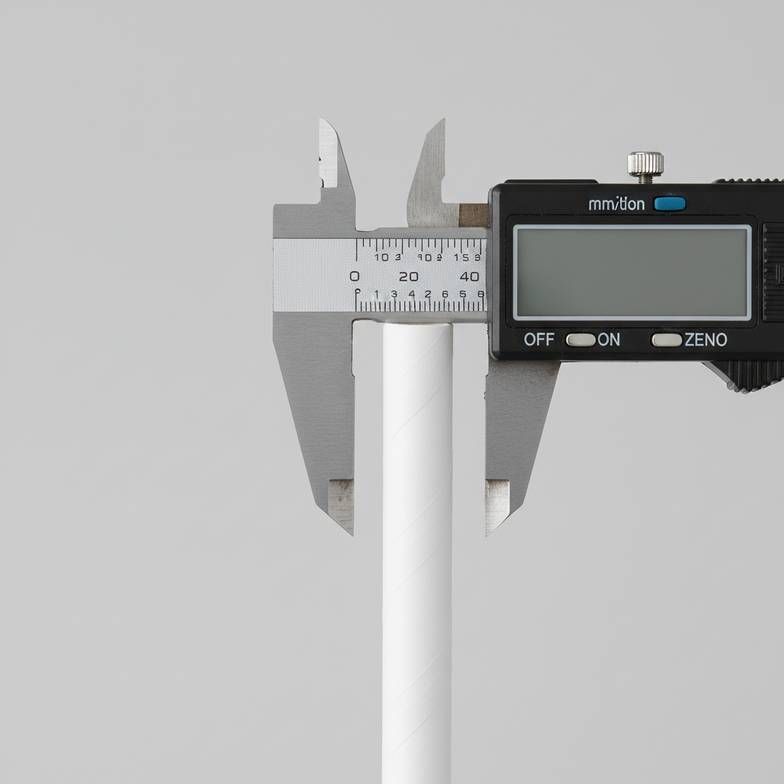
The dimensional check for a U-shaped paper straw sample must be rigorous. You need to validate not just the overall length and diameter, but also the bend angle, the inner radius, and the lengths of the two legs. These details determine if the straw will fit your applicator's holding mechanism perfectly.
Dive Deeper
When we work with clients on a new project, we spend a lot of time on these initial geometric details. A few millimeters can make all the difference.
Length, Diameter, and Wall Thickness
These are the fundamentals, but they require precision.
- Overall Length: Is it correct for your carton height? A straw that's too short is frustrating for customers. One that's too long might not fit in secondary packaging.
- Diameter (Outer and Inner): The outer diameter must fit your applicator. The inner diameter impacts the drinking experience. For thicker drinks like milkshakes or juices with pulp, a wider inner diameter is crucial.
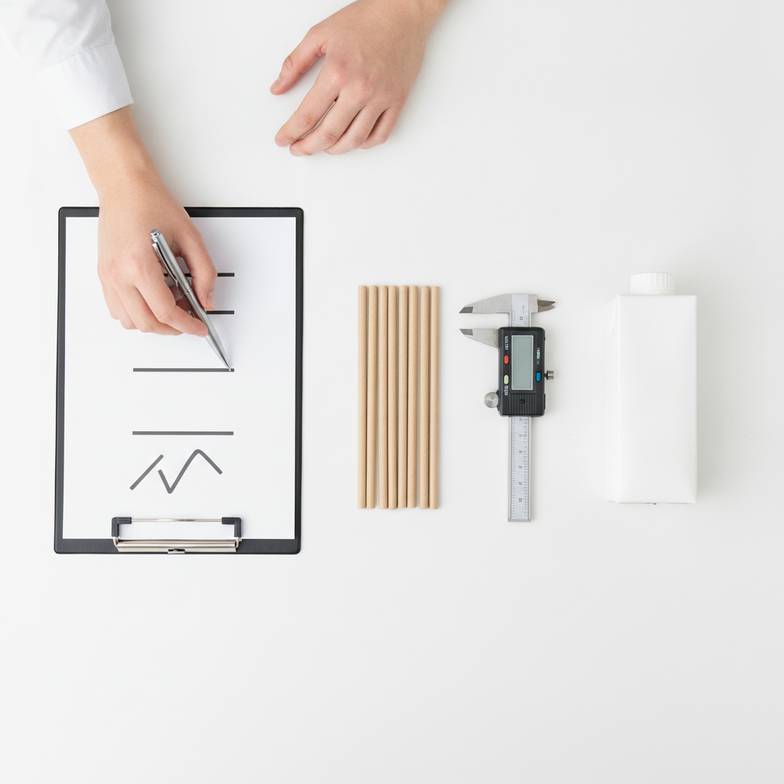
- Wall Thickness: This is a function of the paper layers and weight. It affects rigidity. Check this with calipers on a few samples to ensure consistency.
The key here is tolerance. Ask your potential supplier: "What are your production tolerances for length and diameter?" A tolerance of +/- 0.5mm is very different from +/- 2mm. This isn't a "gotcha" question; it's a practical one that any experienced manufacturer should be able to answer clearly.
The Critical U-Bend Geometry
This is where many projects run into trouble. Automated applicators are designed for an exact shape.
- Bend Position: The distance from the end of the straw to the start of the bend. If this is off, the straw may be applied too high or too low on the carton.
- Bend Radius: A sharp, tight bend might be weaker or more prone to cracking. A wide, gentle bend might not fit the applicator's tooling. You need to match this to your machinery.
- Leg Lengths: The two straight sections of the "U" might need to be different lengths depending on the application. Verify both are correct.
Here’s a quick table showing the risks:
| Specification | Risk of Mismatch |
|---|---|
| Bend Position | Straw applied incorrectly, covering branding or instructions. |
| Bend Radius | Applicator machine jams; straw weakness at the bend. |
| Leg Lengths | Poor fit in the applicator; inconsistent application. |
Consistency Across the Batch
Don't just check one "hero" sample. Pull at least 10-20 samples randomly from the bag and measure them all. Are the dimensions consistent? If you see significant variation within a small sample batch, it's a major red flag for what you can expect from a mass-production run of millions.
Material & Construction: Is Your U-Shaped Paper Straw Sample Built to Last?
The sample feels sturdy and holds up in a glass of water for a few minutes. Good enough, right? This is another common pitfall. The real test is whether the straw can withstand your specific beverage, under real-world conditions, for its entire shelf life.
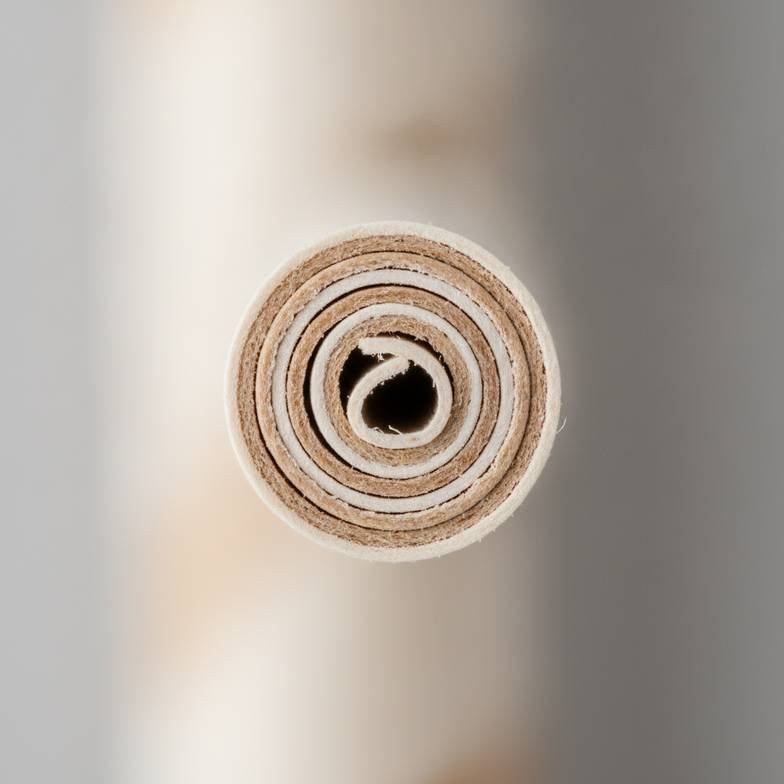
When we evaluate the construction of a U-shaped paper straw sample, we’re really asking if it’s built for purpose. This means verifying the paper type, the number of paper layers, and the food-grade compliance of the adhesive used. These factors determine if the straw will get soggy in acidic juice or delaminate after weeks attached to a carton.
Dive Deeper
The material science of a simple paper straw is surprisingly complex. It’s a constant balance between strength, flexibility, safety, and cost.
Paper Layers and Kraft Weight (GSM)
Most paper straws are made from 3 or 4 layers of paper.
- Paper Type: It must be food-contact grade kraft paper. Ask for the specifications. Is it virgin pulp? What is the base weight (measured in grams per square meter, or GSM)? A higher GSM generally means stronger, more water-resistant paper.
- Number of Layers: A 3-ply straw is standard for many drinks like white milk or water. For more acidic beverages like orange juice or for products with a long shelf life, a 4-ply straw provides extra rigidity and durability. There’s a trade-off, of course. More layers mean higher cost and a stiffer straw, which could affect the "mouthfeel."
A question experienced buyers often ask is, "What paper and ply combination do you recommend for a beverage with a pH of 3.5 and a 6-month shelf life?" This moves the conversation from a generic product to a specific application.
The Unsung Hero: Adhesive
The glue holding the paper layers together is just as important as the paper itself.
- Food-Contact Compliance: This is non-negotiable. The adhesive must comply with regulations for your target market (e.g., FDA in the US, LFGB in Germany). Don't just take a supplier's word for it. Request the compliance documentation for the specific adhesive they use.
- Water Resistance: The adhesive's job is to keep the paper layers from separating when exposed to liquid. Poor-quality glue can lead to straws delaminating and unwinding, which is a major quality failure.
Simulating Real-World Conditions
Lab tests are good, but real-world simulation is better.
- Use Your Actual Beverage: Don't just test with water. Submerge the sample straw in your actual product—be it juice, milk, or a dairy alternative. Acidity, sugars, and fats can affect the paper and glue differently than water.
- Test Over Time: See how the straw holds up after 1 hour, 4 hours, and 24 hours. Does it get soft? Does the tip collapse?
- Simulate Shelf Life: For a true test, attach the wrapped straw to your carton and let it sit for a few weeks. Check for any degradation in the straw or the wrap from environmental factors like humidity.
The Wrap & Attachment: How Will the U-Shaped Paper Straw Sample Integrate with Your Line?
The straw itself is perfect. But the individual wrapper tears unevenly, or the wrapped straw fails to adhere properly to the carton during a test run. This is a frustrating, costly, and surprisingly common oversight. A perfect straw is useless if you can't get it onto your package reliably.
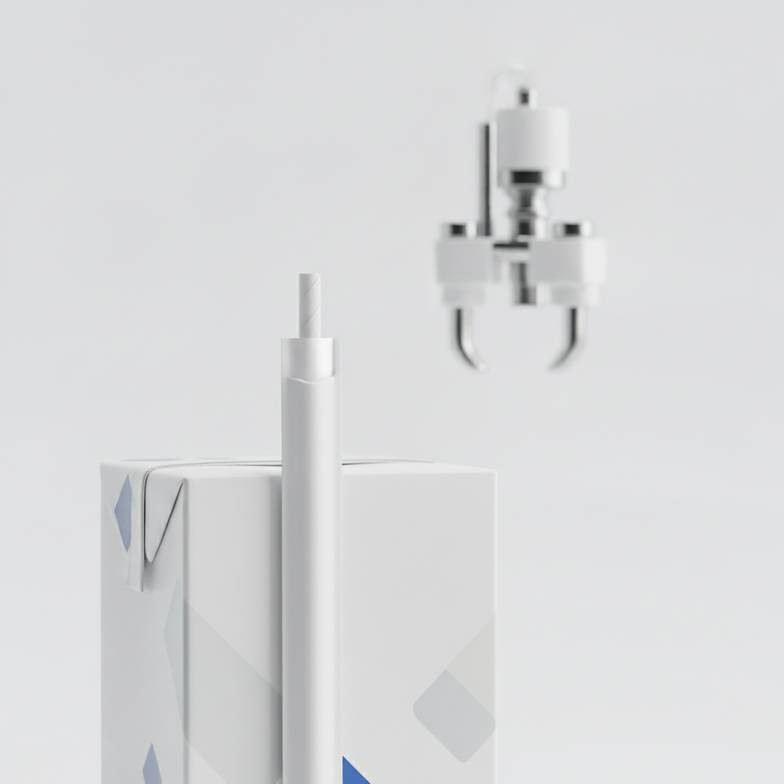
A complete U-shaped paper straw sample evaluation must include a thorough test of the individual wrap and its attachment compatibility. This means checking the wrap's material, its perforation for easy tearing, its seal strength, and, most importantly, how it interacts with your straw applicator machine and hot-melt adhesive.
Dive Deeper
The straw and its wrapper are a single system. They have to work together with your production line. From our experience helping customers troubleshoot their lines, the connection between the wrap, the straw, and the carton is where most integration problems happen.
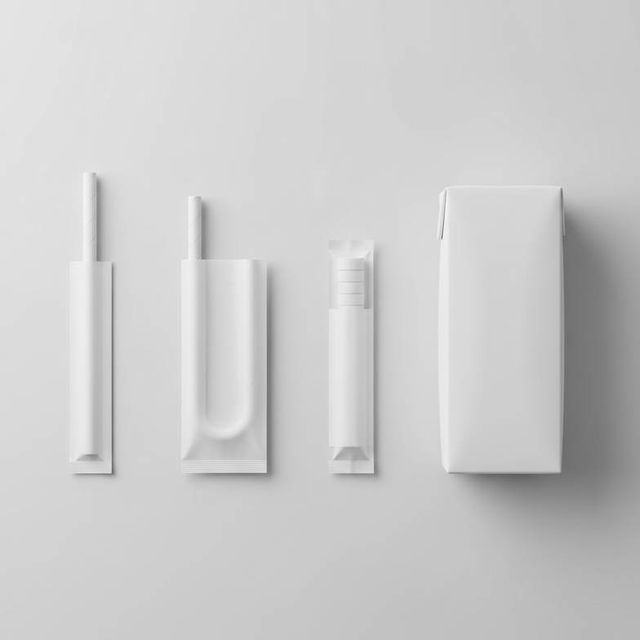
Individual Wrapping Checks
The wrap serves three functions: it keeps the straw clean, it allows for attachment, and it provides an opening experience for the end-user.
- Material: Is it paper or a plastic film like BOPP? Paper is often preferred for sustainability goals, but you need to ensure it's strong enough not to tear during application.
- Perforation/Tear-Line: Is there a clear, easy-to-use tear line for the customer? Test this yourself. It should be easy to open without Herculean strength, but not so weak that it opens during transit.
- Seal Strength: The wrap is typically sealed at both ends. These seals need to be strong enough to withstand the journey from factory to consumer but easy enough for a child to open.
- Print Quality: If you have branding on the wrapper, check the print quality, color accuracy, and alignment.
Attachment Point Simulation
This is the moment of truth. Can you stick it to the box?
- Adhesive Compatibility: Your straw applicator likely uses a specific type of hot-melt glue to attach the straw. The wrap material must be compatible with that glue. Some glossy wrap surfaces can resist adhesion.
- Adhesion Area: Look at the back of the wrapped straw. Is the surface flat and consistent? Wrinkles or uneven seams in the wrap can create gaps and prevent a strong bond with the carton. A common question we get is, "Can you ensure the wrap seam is positioned away from the glue application area?" This is a critical detail.
- Trial Run: The absolute best test is to run the samples on your actual production line at a slow speed. If that's not possible, perform a manual adhesion test using your hot-melt glue to see how well it bonds the sample wrap to your carton material.
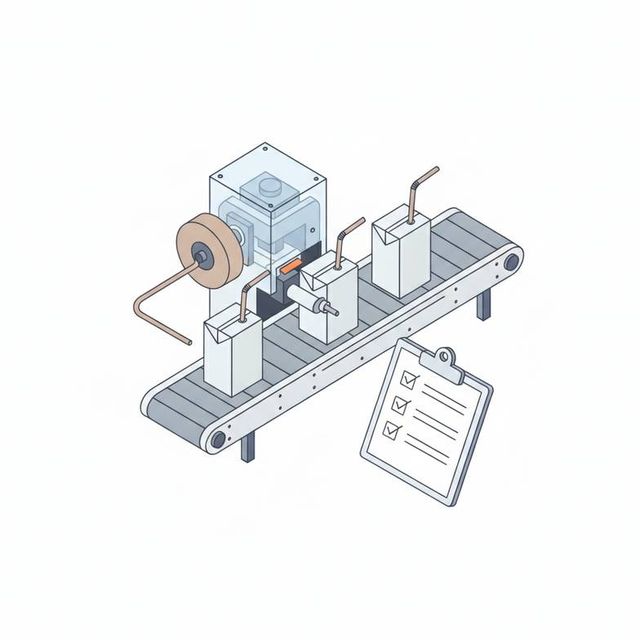
Automated Applicator Compatibility
Beyond adhesion, the wrapped straw's physical profile must match your machine's tooling. The overall stiffness, shape, and surface friction of the wrapped sample can affect how it feeds through the machine. Any inconsistency can lead to misfeeds and jams, which is the number one enemy of production efficiency.
Supplier Verification: Does the U-Shaped Paper Straw Sample Represent Production Reality?
The sample you have in your hand is perfect. It passed every test. But the crucial question remains: can the supplier produce 10 million more units exactly like it, month after month? A perfect sample from an inconsistent supplier is a trap.
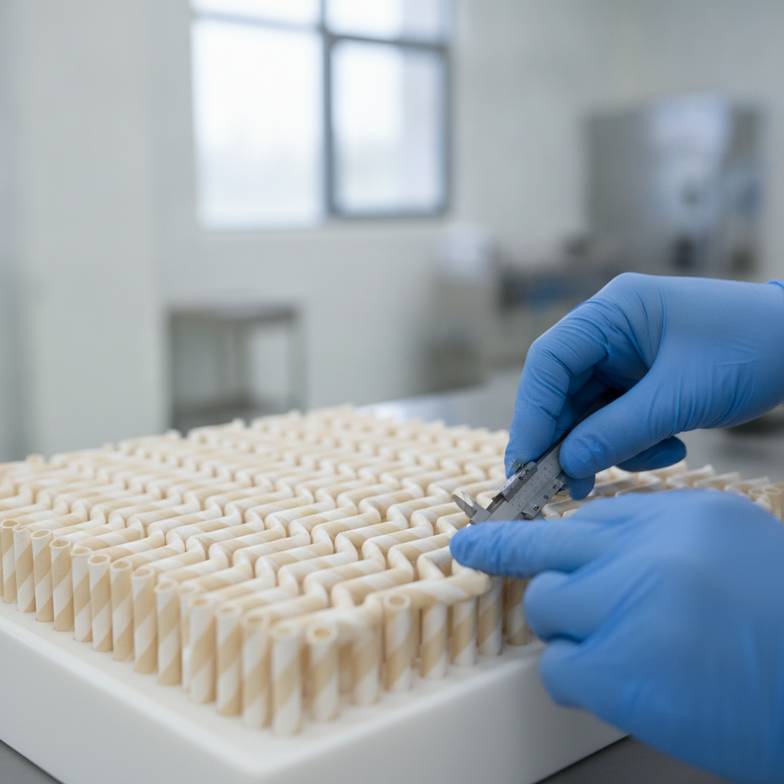
Verifying a U-shaped paper straw sample is ultimately about auditing the supplier’s capabilities. It involves checking their process for consistency, understanding their quality control measures, and confirming they can provide the documentation to back up their material and safety claims for every single batch.
Dive Deeper
This final stage moves beyond the product itself and into the partnership with your supplier. You're not just buying a straw; you're qualifying a manufacturing partner.
Requesting Batch-Specific Documentation
A generic, year-old compliance certificate is not enough. For the samples you are testing, ask for documentation that is directly relevant.
- Food-Contact Compliance: Request the Declaration of Compliance (DoC) for the specific kraft paper, adhesive, and any printing inks used in the sample batch. This document confirms the materials are safe for their intended use.
- Certificate of Analysis (CoA): For a full production order, you should expect a CoA with each shipment. This document details the results of quality control tests performed on that specific batch, verifying things like dimensions, material composition, and defect rates. Ask if they can provide a sample CoA.
Understanding Production Tolerances
This is where you can separate the amateurs from the professionals. An experienced manufacturer understands process variation and controls it. Ask direct questions:
- "What are your standard production tolerances for straw length, diameter, and bend position?"
- "What is your QC process for monitoring these dimensions during a production run?"
- "What is your acceptable quality limit (AQL) for cosmetic defects or dimensional variance?"
Their answers will tell you a lot about their operational maturity. A confident, transparent supplier will have this information ready.
From Sample to Mass Production
The sample was likely made in a small, carefully controlled batch, or even by hand. Mass production is a different beast. Discuss the transition with your supplier. How do they ensure the quality of the first sample is replicated on high-speed machinery? Look for a partner who can speak knowledgably about their process controls, operator training, and final inspection procedures. This conversation builds trust and sets clear expectations for a long-term relationship.
Frequently Asked Questions
How many samples should I test?
Don't rely on a single sample. We recommend testing a random selection of at least 20-30 units from the sample batch. This gives you a better sense of consistency in dimensions, wrap quality, and construction. For a production-line trial, you may need several hundred.
What's the most common failure point for U-shaped paper straws?
From what we see, the two most common failures are a poor fit with the automated applicator (causing jams) and the straw becoming too soft, too quickly in the beverage. Both issues can often be traced back to imprecise dimensions or incorrect material selection for the specific application.
Should I test the sample with my actual beverage?
Absolutely. Water is a poor substitute. The acidity, sugar content, and temperature of your actual product can significantly impact the straw's durability and performance. Always test under conditions that mimic the real end-user experience as closely as possible.
What documents should I ask for with my samples?
You should request food-contact compliance certificates for all materials: the paper, the adhesive, and any printing inks. Ask if these documents are specific to the materials used in your samples. This is a crucial step in your due diligence process to ensure consumer safety.
Can the U-bend position be customized?
Yes, for most manufacturers, the bend position, angle, and leg lengths can be customized to fit your specific beverage carton and applicator machine. This is a critical discussion to have early on. Provide your supplier with a carton sample or detailed mechanical drawings for the best results.
Conclusion
Approving a sample is one of the most critical steps in sourcing components for your beverage carton. A thorough U-shaped paper straw sample approval process protects you from costly line stoppages, product recalls, and damage to your brand's reputation. By moving beyond a simple visual check and using a detailed checklist that covers dimensions, materials, line integration, and supplier verification, you transform a simple step into a powerful risk-management tool. This ensures the straw you approve is not just a good sample, but the foundation for a reliable and successful product launch.
If you're looking for a partner to help navigate these complexities—from custom sample development to full-scale production of straws, machinery, and materials—we are here to help. Contact us to discuss your carton specifications and let us configure a solution for your project.
Matched Formats for Beverage Cartons
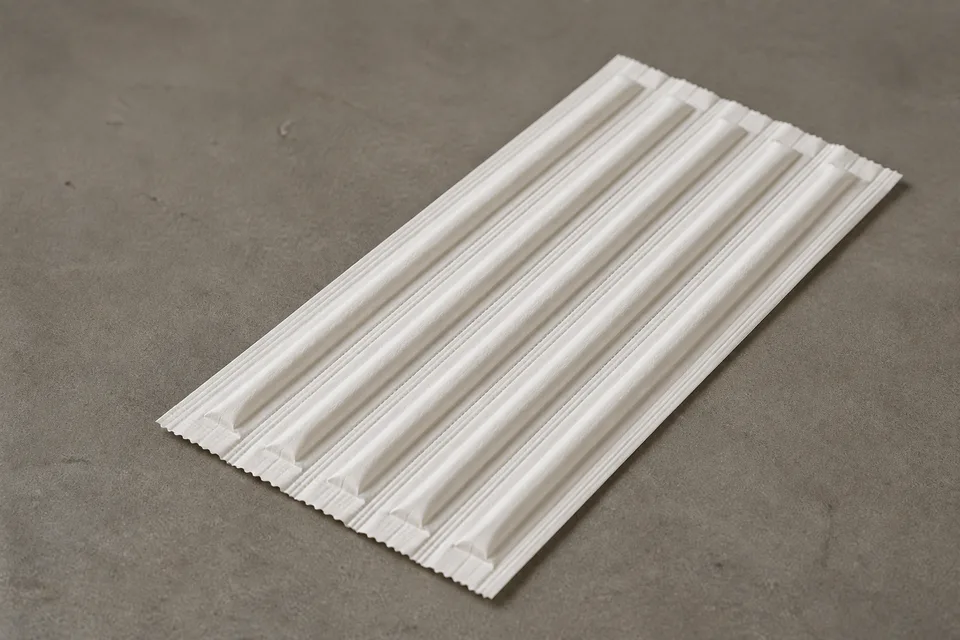
Attached Paper Straws
Connected continuous strip for high-speed automatic carton applicators.
View Product Specs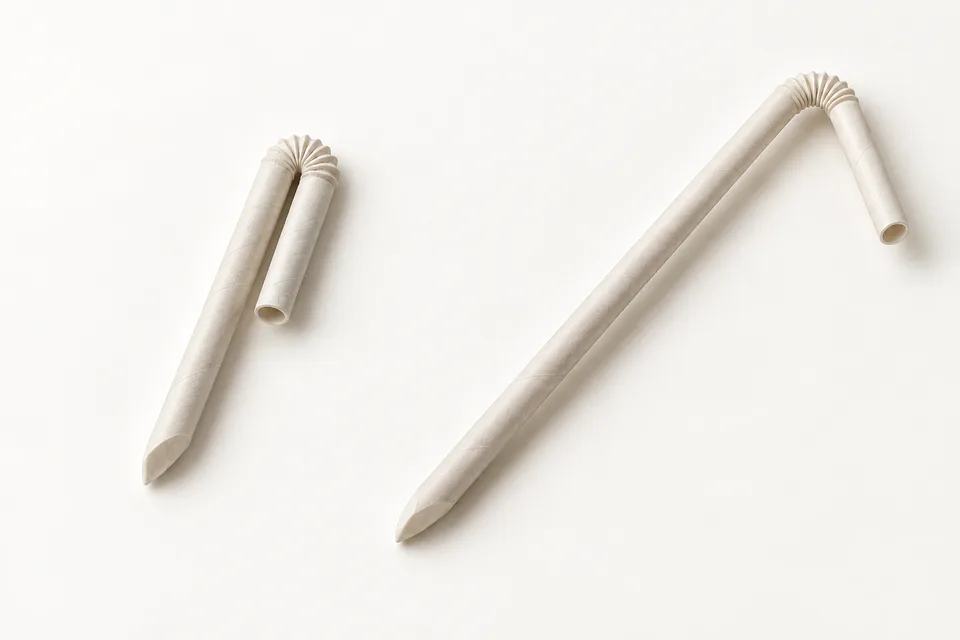
U-Shaped Paper Straws
Folded 180° format maximizing drinking reach on compact beverage cartons.
View Product Specs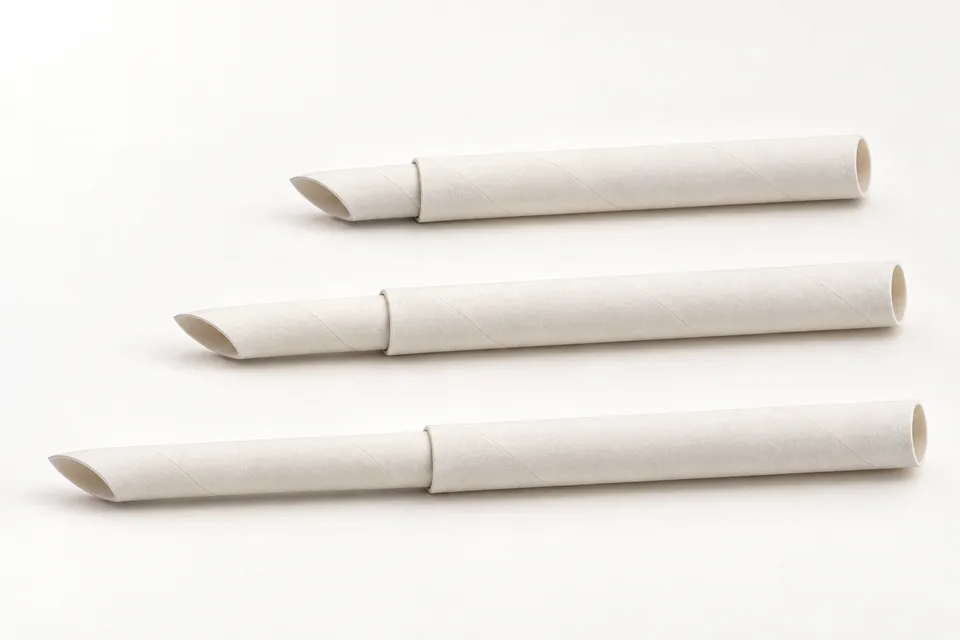
Telescopic Paper Straws
Two-section extendable design offering maximum reach from minimum packed length.
View Product Specs