
In This Guide
Are you trying to source paper straws and need a quote? You probably think sending the length and diameter is enough. But then the quotes come back all over the place, or you get a sample that just doesn't work with your beverage carton. It's frustrating, and it leaves you worried about committing to a large order. The key to getting a truly accurate quote from a paper straw manufacturer is to provide the right contextual information, turning a simple price request into a collaborative process that ensures a perfect, low-risk fit for your product.
To get an accurate quote, you must provide your paper straw manufacturer with more than just dimensions. The most critical information includes the application (e.g., Tetra Pak A3 carton), the straw format (U-shape, telescopic), and the destination market (for compliance). Follow this with technical details like precise dimensions, printing requirements, and material preferences, and finish with logistical needs like wrapping, packaging quantities, and order volume. This layered approach ensures the quote is for a viable, compliant, and functional product, not just a generic straw.
Shifting your mindset from simply getting a "price" to confirming "viability" is the most important step you can take. A good manufacturer doesn't just sell you straws; they help you engineer a solution. Let's dig into exactly what information helps us do that and protects you from making a costly mistake.
Why Is a Detailed Request So Important for Working with a Paper Straw Manufacturer?
You might be thinking, "I just want a quick price. Why do I need to do all this extra work?" It's a fair question. The problem is that a quote based only on dimensions treats a critical functional component like a simple commodity. This approach completely ignores fit, regulatory compliance, and the end-user's experience, which is a huge gamble. A detailed request, on the other hand, immediately filters out inexperienced suppliers and empowers a good paper straw manufacturer to become your partner in reducing risk.
A detailed request is so important because it changes the goal from getting a price to ensuring product viability. It allows a manufacturer to confirm, and even guarantee, that the straw will work perfectly with your specific carton, meet the legal standards in your sales market, and perform reliably for your customers.

Dive Deeper: From Commodity Price to a Functional Component
In my years of handling inquiries, the biggest disconnect happens right here. A buyer asks for a quote on a "150mm x 6mm paper straw." I can give them a price for that, of course. But that price is for a meaningless object. It doesn't account for anything that actually matters.
The real goal is to get a quote for something like this: "a 150mm U-shaped paper straw that fits a 200ml Tetra Pak Brik Aseptic carton, intended for thick smoothies, and sold in the European Union."
See the difference? The first is a commodity. The second is a functional component engineered for a specific purpose. Providing that context—the carton, the beverage, the market—is what allows us to move beyond a simple price list and into a proper risk assessment. We can check our database for that exact carton, recommend the right paper thickness for a thicker drink, and ensure all raw materials (paper, glue, and ink) are certified for LFGB standards required in the EU.
A Good Manufacturer Asks Questions
Here's an insider tip: if you send a vague request and a supplier sends back a price without asking a single question, that is a huge red flag. It tells you they are either inexperienced or they simply don't care about whether the product will actually work for you.
An experienced paper straw manufacturer has a diagnostic quoting process. When a buyer only sends us dimensions, our first step is always to ask about the application. Why? Because from our post-sales data, we know the biggest risks aren't about the straw breaking; they're about it not fitting the pre-punched hole, being bent at the wrong angle for the carton, or being stopped at customs for non-compliant materials.
Your detailed request proactively answers these questions. It shows you are a serious, professional buyer and helps you quickly identify which suppliers are equally serious about getting it right.
What Is Tier 1 Information Your Paper Straw Manufacturer Absolutely Needs?
Okay, you're convinced you need to provide more detail. But where do you start? Drowning a supplier in a 10-page document can be just as unhelpful as sending too little. It's best to focus on the core information that gives us 80% of what we need for a truly meaningful quote. These are the non-negotiables.
Tier 1 information includes your application (like the specific beverage carton model), the required straw format (U-shape, telescopic, straight), and your destination market (for critical compliance). This is the mandatory foundation. Without it, any quote you receive is just a guess.
Dive Deeper: The Three Pillars of a Viable Quote
Think of these three pieces of information as the pillars holding up your entire project. If one is weak, the whole thing is at risk of collapsing.
Application Context: More Than Just a "Juice Box"
Saying you need a straw for a "juice box" is a start, but the details are what matter. The best practice is to provide the exact carton manufacturer and model, for example:
- Tetra Pak A3/CompactFlex
- Combibloc
- SIG Combibloc
- Elopak
Why does this matter so much? Because instead of just giving you a straw with an "8mm diameter," we can engineer a straw specifically for a carton that we know has a 7.8mm pre-punched hole. This shifts the responsibility for a perfect fit from you to us, the manufacturer. We can also determine the exact bending position for a U-shaped straw so it aligns perfectly with your packaging graphics and attachment point.
If you don't know the exact model, send pictures of the carton from multiple angles, along with its height, width, and depth. A good partner can often identify it or work from the dimensions.
Straw Format: U-Shape, Telescopic, or Straight?
The format of the straw is fundamental to its function and cost.
- U-Shaped Straws: The most common for attached straws on juice and milk cartons. The key detail here is the bending position, which depends entirely on your carton's dimensions.
- Telescopic Straws: These offer a longer, more pleasant drinking experience from a small package. The engineering is more complex, involving two or more sections that must slide smoothly.
- Straight Straws: Often used for in-cup applications or as loose items in food service. The main variables are simply length and diameter.
Choosing the right format is a decision based on your packaging design, cost targets, and desired user experience.
Destination Market: The Compliance Gatekeeper
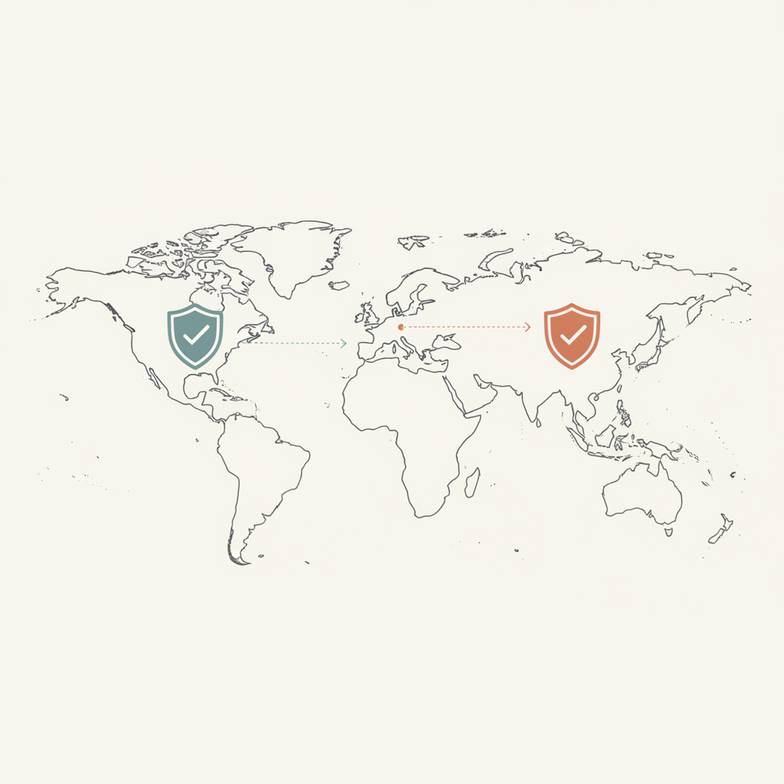
This is one of the most overlooked but most critical pieces of information. A paper straw is a food-contact item, and it is subject to strict regulations that vary dramatically by region.
- USA: Requires materials to be compliant with FDA (Food and Drug Administration) standards.
- European Union: Requires compliance with LFGB (German Food and Feed Act) or equivalent EU framework regulations. LFGB is generally considered stricter than FDA.
- Other Regions: Have their own specific requirements.
When you tell us your straw is for the German market, we know instantly that we must use specific LFGB-certified paper, glue, and printing inks. A manufacturer who doesn't ask this question might quote you for a cheaper, FDA-compliant straw that would be illegal to sell in the EU. This could lead to your entire shipment being rejected at the border—a catastrophic and entirely avoidable outcome.
What Tier 2 & 3 Details Help a Supplier Finalize Your Paper Straw Quote?
Once you've provided the core Tier 1 information, your paper straw manufacturer can give you a very solid preliminary quote. Now, it's time to refine it with production and logistical details. This is what turns a good estimate into a final, locked-in price, ensuring there are no surprises down the line related to customization or shipping.
Tier 2 details are your production blueprint, including specific dimensions, paper choices, and printing files. Tier 3 covers logistics like how the straws are individually wrapped, how they are boxed, and your total order volume, which has a direct impact on the final per-unit price and production schedule.
Dive Deeper: Refining the Blueprint for Production and Pricing
These details are where we dial in the final specifications and costs. Getting this right ensures the product you approve is the product you receive, down to the last detail.
Tier 2: The Production Blueprint
This is the technical data that guides our machines.
- Dimensions: While we can infer a lot from the application, providing exact final dimensions (length, inner/outer diameter) is always best.
- Paper & Layers: Most straws are 3-ply, but for thicker drinks or a more premium feel, a 4-ply straw might be better. You can also specify paper weight (GSM) if you have specific rigidity requirements.
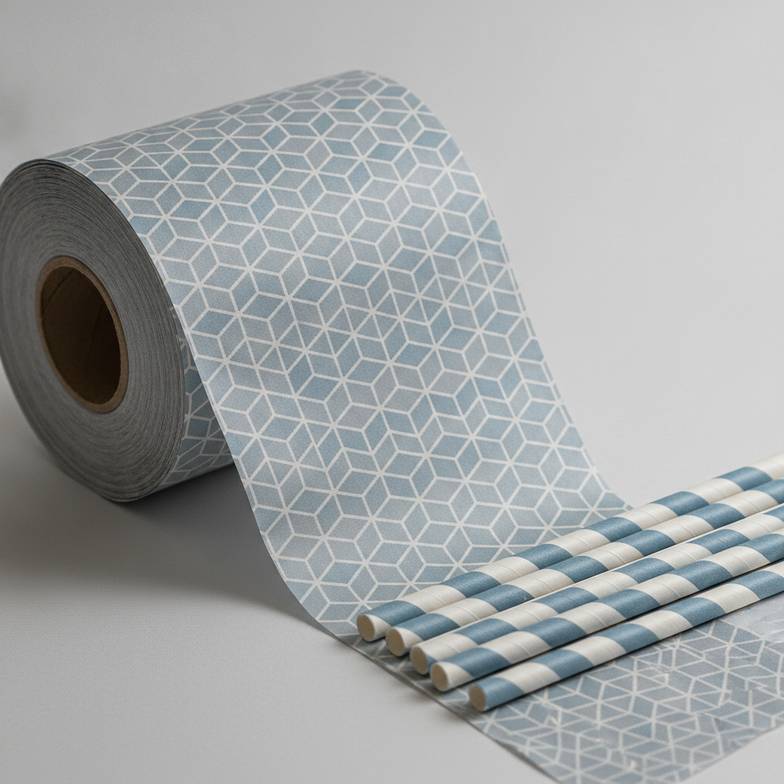
- Printing & Customization: If your straw or its wrapper needs branding, we need the details. Provide vector logo files (e.g.,.AI,.EPS) and specific Pantone color codes for accurate color matching.
Here's a simple table to guide you:
| Specification | What to Provide | Why It Matters |
|---|---|---|
| Dimensions | Exact length, inner/outer diameter in mm | Ensures perfect fit and function with your packaging. |
| Paper Layers | 3-ply, 4-ply, or specific paper weight (GSM) | Affects straw rigidity, durability in liquid, and cost. |
| Printing | Pantone colors, logo files (vector), design placement | Guarantees brand accuracy and requires specific compliant inks. |
Tier 3: Logistics and Commercials
This final layer of information is all about how the product gets to you and how the price scales.
- Individual Wrapping: Will the straws be wrapped? If so, in paper or a BOPP film? Will the wrapping itself be printed? This requires specific machinery and materials.
- Packaging: How many straws should be in each inner bag or small box? How many of those go into a master shipping carton? This affects labor costs, material costs, and shipping density, which influences freight charges.
- Order Volume & Frequency: Are you placing a one-time order for 100,000 straws, or do you anticipate ordering 1 million straws every quarter? Sharing your estimated annual volume helps us provide the best possible price and plan production capacity for you. All manufacturers have a Minimum Order Quantity (MOQ), and larger volumes almost always unlock better pricing.
Frequently Asked Questions
How do I find my beverage carton model number?
The best place to look is in the technical documentation provided by your packaging supplier, such as Tetra Pak, SIG, or Elopak. If you can't find it, just send several clear photos of your carton, along with its height, width, and depth, to your paper straw manufacturer. An experienced team can often identify it.
What's more important: straw diameter or carton hole size?
They are both equally critical and work as a pair. You should provide both measurements to your manufacturer. The straw's outer diameter needs to be slightly smaller than the carton's pre-punched hole for easy insertion but just large enough to create a snug, secure fit.
Can I get a sample before placing a large order?
Yes, and you absolutely should. Any reputable manufacturer will not only provide samples but encourage them. The goal is to use all the detailed information from your quote request to produce a pre-production sample that perfectly reflects the final product you'll receive in your bulk order.
What if I don't know all this information?
That's perfectly okay. Don't let a lack of information stop you from reaching out. The key is to start with what you do know—especially your product, your carton, and where you plan to sell it. A good manufacturing partner will act as a consultant, walking you through the remaining questions to define the perfect specification together. This collaborative process is the hallmark of a trustworthy supplier.
Conclusion
Getting an accurate quote from a paper straw manufacturer is about much more than just price; it's a critical step in managing your risk. By shifting your focus from "how much does it cost?" to "will this product work reliably and legally?", you set yourself up for success.
Start with the Tier 1 essentials: your application, required straw format, and destination market. Then, layer in the Tier 2 production details and Tier 3 logistics. This comprehensive approach filters out unqualified suppliers and empowers a true manufacturing partner to engineer a product that is viable, compliant, and perfectly suited to your needs. You're not just buying a straw; you're investing in a functional component of your final product, and it deserves this level of detail.
Ready to move from a simple price request to a fully engineered solution? Contact us with your project details. Our team is ready to review your carton specifications and help you configure the perfect paper straw for your needs.
Matched Formats for Beverage Cartons
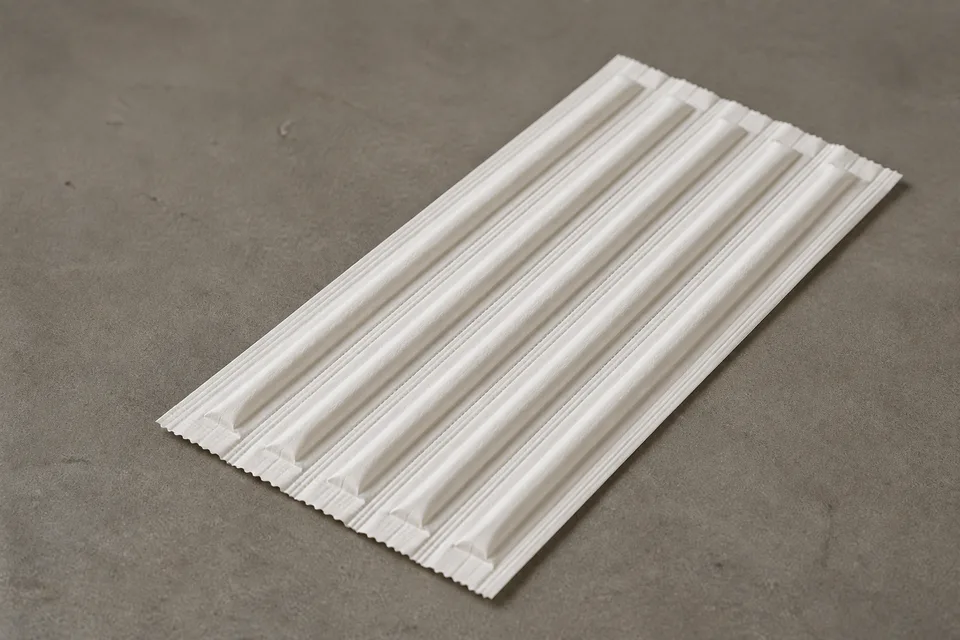
Attached Paper Straws
Connected continuous strip for high-speed automatic carton applicators.
View Product Specs
U-Shaped Paper Straws
Folded 180° format maximizing drinking reach on compact beverage cartons.
View Product Specs
Telescopic Paper Straws
Two-section extendable design offering maximum reach from minimum packed length.
View Product Specs