In This Guide
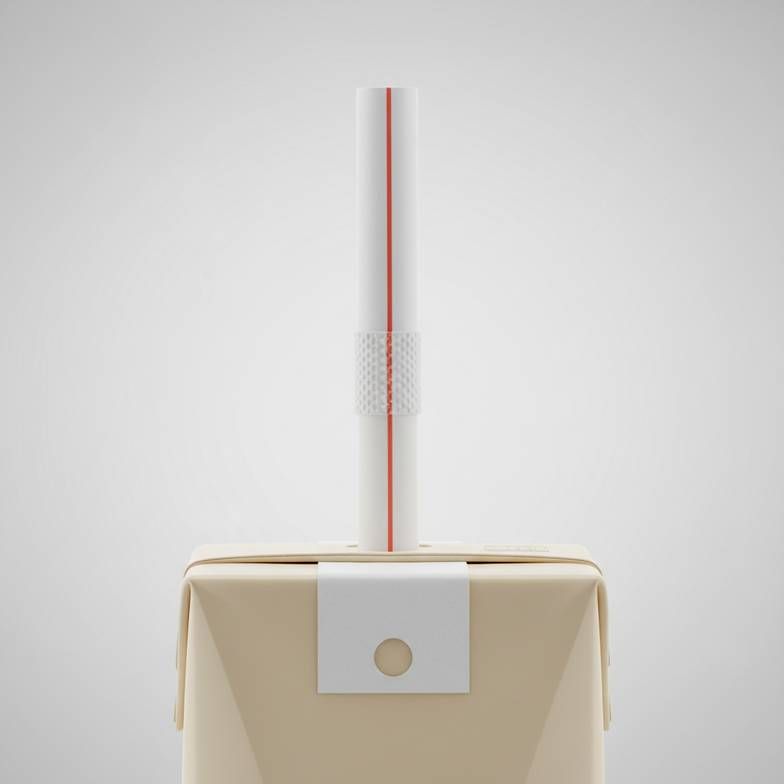
Sourcing attached straws for your beverage cartons feels like it should be simple, but the details can be surprisingly complex. You're worried about seals failing during transit, leading to contamination, or frustrated customers who can't even get the straw open. A weak seal can trigger a costly recall, while a seal that’s too strong can damage your brand's reputation with every sip. The key is to understand the critical balance required for successful attached paper straw strips.
Choosing the right wrapper seal and perforation for attached paper straw strips is not about finding one "best" option. Instead, it's about making a calculated, risk-based decision that balances seal integrity during shipping, ease of use for the consumer, and direct compatibility with your specific beverage carton and production line machinery.
Finding that perfect balance might seem daunting, but it's entirely achievable when you know what to look for. This guide will walk you through the critical trade-offs, technical details, and production realities so you can make an informed choice that protects both your product and your customers.
What is the core trade-off with attached paper straw strips?
You need a seal that can survive a bumpy ride in a humid container, but you also need a five-year-old to be able to open it without a fuss. How do you reconcile these competing needs? This is the central challenge every beverage manufacturer faces.
The decision boils down to a fundamental trade-off: seal integrity versus ease of perforation. Getting this wrong in either direction creates significant problems. A seal that is too weak fails, and a perforation that is too tough frustrates.

Dive Deeper: Defining Your Performance Envelope
The key is to stop asking for the "strongest seal" and start defining a "performance envelope." This means outlining the specific conditions your product must endure and the experience you want your customer to have.
Seal Integrity: This refers to the ability of the wrapper's seal to remain intact from the factory to the consumer. A high-integrity seal protects the straw from:
- Moisture: Prevents the paper straw from getting damp and weakening.
- Dust and Debris: Ensures the straw is clean and hygienic.
- Microbial Contamination: A fully sealed straw is a food-safe straw.
Your supply chain dictates the required level of integrity. Will your cartons be shipped across the ocean in humid containers? Will they be handled roughly in warehouses? I remember a client who insisted on the toughest seal possible. They achieved zero transit failures, but their social media channels were quickly filled with complaints from parents about "impossible-to-open" juice boxes. This brings us to the other side of the coin.
Ease of Use (Perforation): The perforation is the line of small cuts in the wrapper that allows it to tear open cleanly. If the perforation is too resistant:
- Consumers get frustrated. It's a small detail, but it creates a negative brand experience.
- The wrapper tears incorrectly. Instead of a clean break, the wrapper might shred, or the straw could be pulled off the carton entirely, leading to spills.
Instead of vague requests, provide your supplier with testable requirements. For example:
- Seal Requirement: "The seal must remain intact after 48 hours at 85% relative humidity and survive a standard vibration test simulating a 1,000 km journey."
- Perforation Requirement: "The perforation must break cleanly with less than 5 Newtons of pull force."
This turns a subjective preference into an objective, measurable specification that your supplier can work with.
How do seals and perforations actually work?
You see the wrapper and the dotted line, but what’s happening on a technical level? It's easy to focus only on the wrapper material, but the real performance comes from a system of interacting parts.
The final performance of attached paper straw strips is a result of the precise interaction between the sealing method (heat or ultrasonic), the adhesive used, the specific perforation pattern, and the surface material of your beverage carton. A mismatch in any one of these areas is a common cause of failure.
Dive Deeper: The Four Pillars of Wrapper Performance
Let's break down the components that must work together. We often see projects get delayed because a buyer focused only on one element, like the paper type, without considering how it interacts with the others.
Sealing Methods & Adhesives
The wrapper doesn't just stick by itself. It's bonded to the carton using a specific method and a specialized adhesive.
- Heat Sealing: This is a very common method where a heated jaw presses the wrapper onto the carton, activating a heat-sensitive adhesive. It's reliable, but requires precise control. Too hot, and you can damage the wrapper or carton; too cool, and you get a weak seal.
- Ultrasonic Sealing: This method uses high-frequency vibrations to generate localized heat, creating a molecular bond between the materials. It's often faster and uses less energy, but requires the wrapper and carton materials to be compatible with this technique.
- Adhesives: The glue is a critical, often overlooked component. It must be food-safe, designed for your specific carton coating (e.g., polyethylene, foil), and able to create a strong bond without interfering with the perforation.
Perforation Patterns & Design
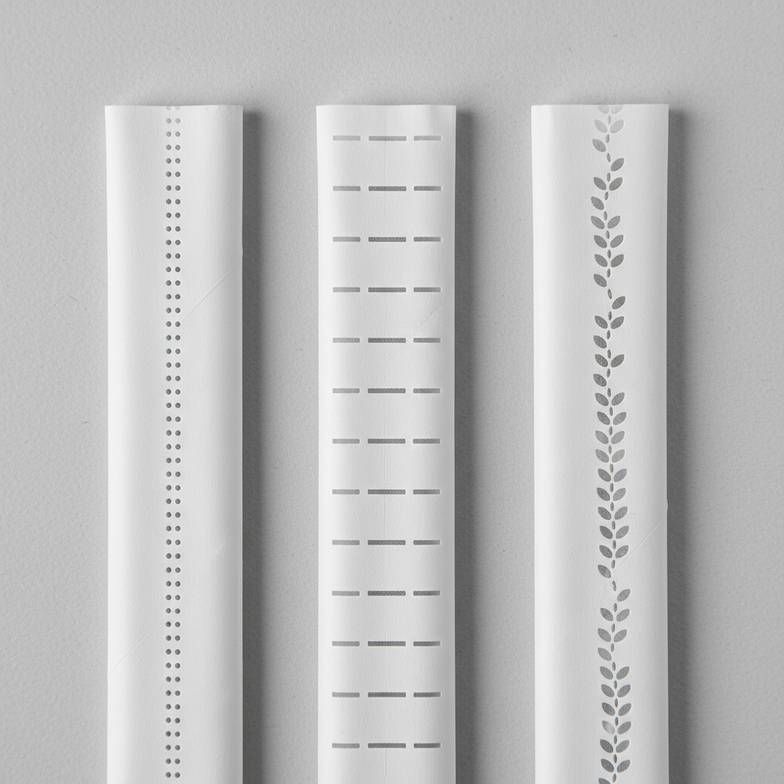
The "dotted line" is more scientific than it looks. The design of the perforation directly controls the force needed to open the straw.
- Perforation Pitch: This is the distance between each cut in the line. A smaller pitch (cuts closer together) makes the wrapper easier to tear but also reduces the overall strength of the seal line.
- Cut-to-Land Ratio: This describes the ratio of the length of the cut to the length of the uncut paper ("land") between cuts. A higher ratio makes for an easier tear.
- Pattern and Depth: The shape of the pattern (linear, curved) and the depth of the cuts are engineered to guide the tear and prevent it from deviating, ensuring a clean opening.
When you discuss options with a supplier, ask how these variables can be adjusted to meet your performance envelope.
| Sealing Method | Speed | Control Requirements | Material Compatibility |
|---|---|---|---|
| Heat Sealing | Good | High (precise temperature, pressure, dwell time) | Broad range of materials with heat-activated adhesives |
| Ultrasonic Sealing | Very High | High (precise amplitude, pressure, energy) | Best with specific thermoplastics or compatible layers |
Why is production line compatibility crucial for attached paper straw strips?
You’ve received a box of beautiful samples. The seal is strong, the perforation is perfect. You approve the order. Then, the strips arrive at your factory and bring your high-speed filling line to a grinding halt. What went wrong?
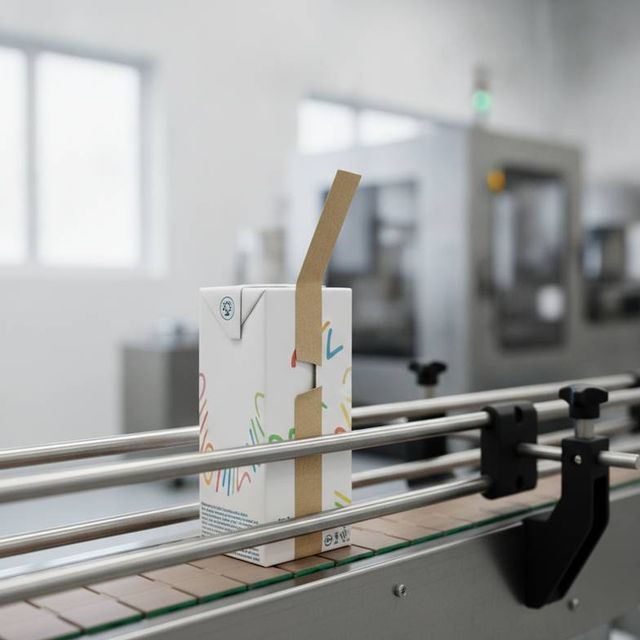
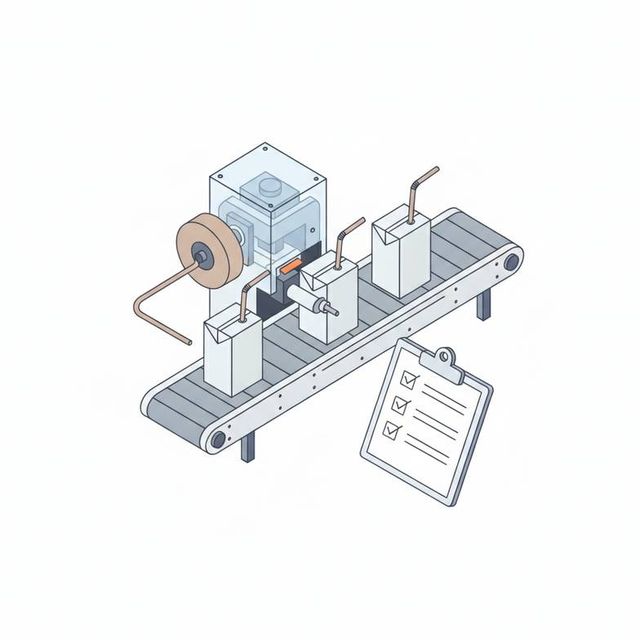
The physical properties of the attached paper straw strips, supplied in reels, must perfectly match the specifications of your straw application machinery. If they don't, you risk constant jams, misapplications, and costly downtime, regardless of how good the individual sample was.
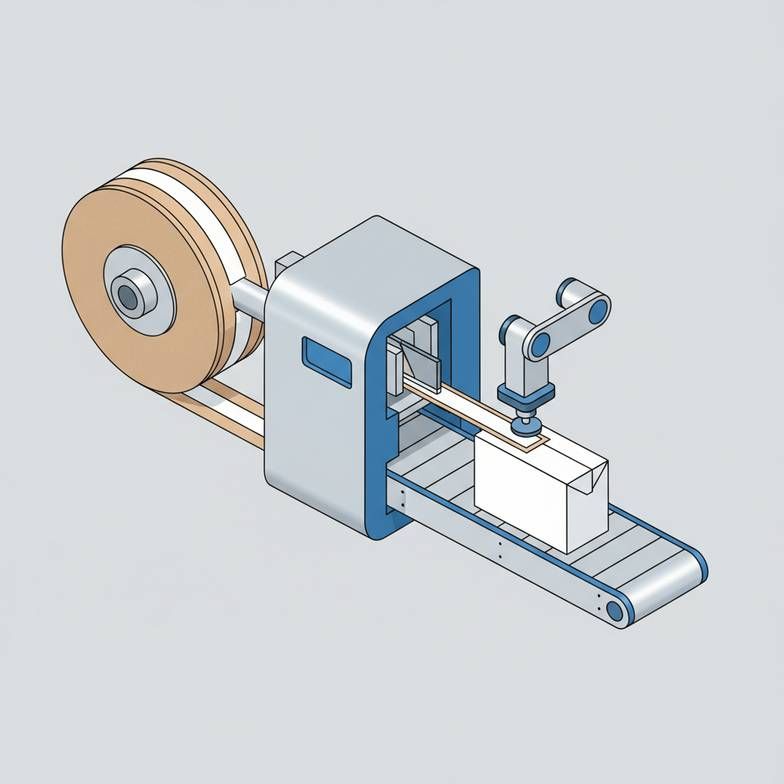
Dive Deeper: Matching the Strip to the Machine
The first question we ask a new client is not "what kind of straw do you want?" but "what kind of application machine are you running?" We have seen six-figure projects get delayed for months because the selected wrapper material wasn't rigid enough and kept jamming the applicator guides.
To avoid this, you must evaluate the straw strips within the context of your specific production environment.
Key Machine Factors to Consider
- Applicator Type and Speed: Different machine manufacturers (e.g., Tetra Pak, SIG Combibloc, IPI) have different systems. A wrapper that works perfectly on one may not work on another. Furthermore, a strip that runs smoothly at 8,000 packs per hour might stretch, tear, or jam at 24,000 packs per hour. The stiffness, tensile strength, and reel tension must be matched to your line's operational speed.
- Sealing Jaws/Heads: Your machine's sealing unit is calibrated for a specific temperature, pressure, and dwell time. Your supplier must provide a wrapper and adhesive combination that activates perfectly within those parameters. A mismatch can lead to weak seals (too little heat) or burnt wrappers (too much heat).
- Reel Specifications: The properties of the reel itself are critical. This includes the inner core diameter, the outer reel diameter, the reel width, and the winding tension. If these don't match your machine's unwinding station, the strips won't feed correctly.
- Sensors and Guides: Modern applicators use optical sensors to detect the position of each strip for precise application. The printing on your wrapper must have consistent registration marks that your sensors can read reliably. The material's static properties and smoothness also affect how it moves through the machine's guides.
Before placing a bulk order, you should always follow these steps:
- Provide your machine model and target speed to your straw supplier.
- Request trial reels—not just loose samples—for a live test on your production line.
- Conduct a trial run at full speed to confirm performance and identify any potential issues.
- Approve the specification only after a successful trial run. This is the single most important step in de-risking your purchase.
Frequently Asked Questions
How do I test the seal strength of an attached straw?
For quantitative data, you can use a pull-force gauge to measure the force (in Newtons) required to break the seal. However, you should combine this with real-world tests. Simulate your supply chain conditions (shipping and vibration tests) and perform manual peel tests to replicate the consumer experience.
What's the difference between BOPP and paper wrappers?
BOPP (Biaxially Oriented Polypropylene) is a plastic film often chosen for its excellent moisture barrier and strong heat-sealing properties. However, paper is the preferred choice for sustainability. Engineered paper wrappers, which we specialize in, use advanced adhesives and coatings to achieve high performance while remaining plastic-free.
Can the printing on the wrapper affect the seal?
Absolutely. Heavy ink coverage in the area where the seal is applied can interfere with the adhesive's ability to bond to the carton. It's critical to design the artwork so the seal area is free of ink, or to use a specialized adhesive formulated to bond effectively even with ink present.
What information should I provide a supplier for a quote on attached paper straw strips?
To get an accurate quote and a viable product, provide your carton material and dimensions, straw specifications (length, diameter), your straw applicator machine model and speed, the desired user experience (e.g., easy-tear for kids), and any known challenging logistics or storage conditions (e.g., high humidity).
Conclusion
Choosing the right seal and perforation is a critical step in any project involving aseptic or beverage cartons. The key is to move away from searching for a single "best" material and toward defining a clear performance envelope for your specific application. Remember the three core pillars: the integrity-usability trade-off, the integrated system of materials and methods, and production line compatibility. By focusing on these areas, you can ensure your choice of attached paper straw strips performs flawlessly from your factory to your customer's hands.
Working with an experienced production partner who understands this entire ecosystem—from raw materials to high-speed machinery—is the most effective way to de-risk your project. We've helped hundreds of clients navigate these complexities.
Submit your carton specifications and production line details today, and let our team help you configure the perfect attached straw solution for your needs.
Matched Formats for Beverage Cartons
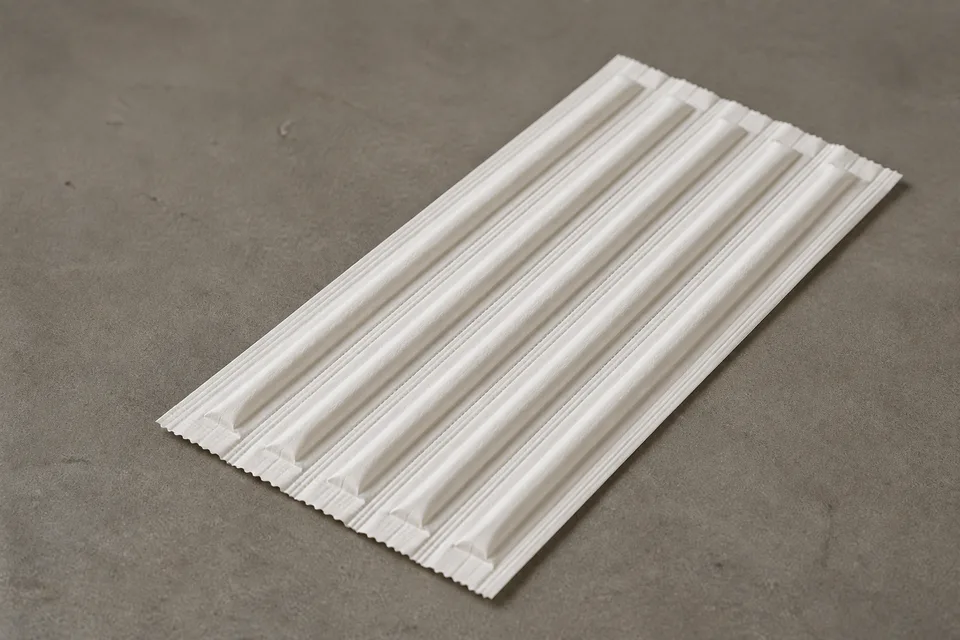
Attached Paper Straws
Connected continuous strip for high-speed automatic carton applicators.
View Product Specs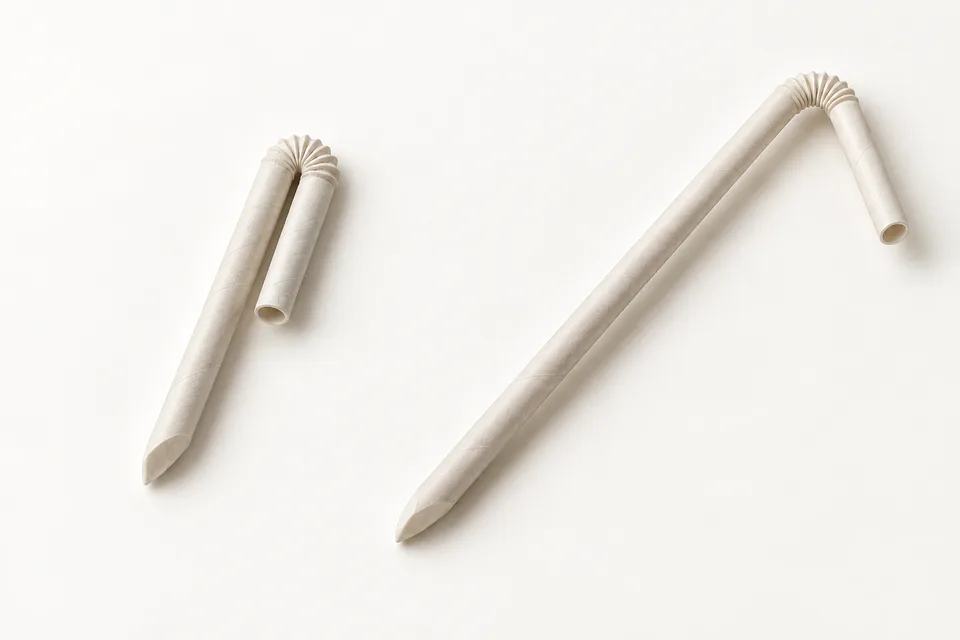
U-Shaped Paper Straws
Folded 180° format maximizing drinking reach on compact beverage cartons.
View Product Specs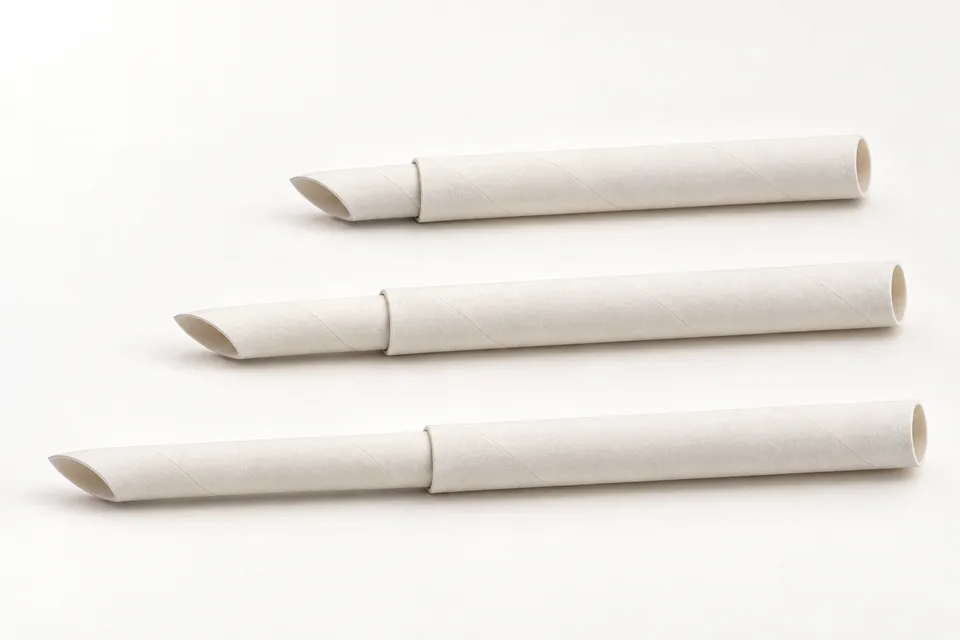
Telescopic Paper Straws
Two-section extendable design offering maximum reach from minimum packed length.
View Product Specs