In This Guide
Sourcing attached paper straws for your beverage cartons seems simple, until production suddenly grinds to a halt. A poorly defined carton attachment zone can cause a cascade of problems, from costly machinery jams and product waste to frustrated consumers finding loose straws rattling around in a multipack. The solution isn’t a magic number; it’s a systematic process for defining this critical area in collaboration with an experienced supplier.
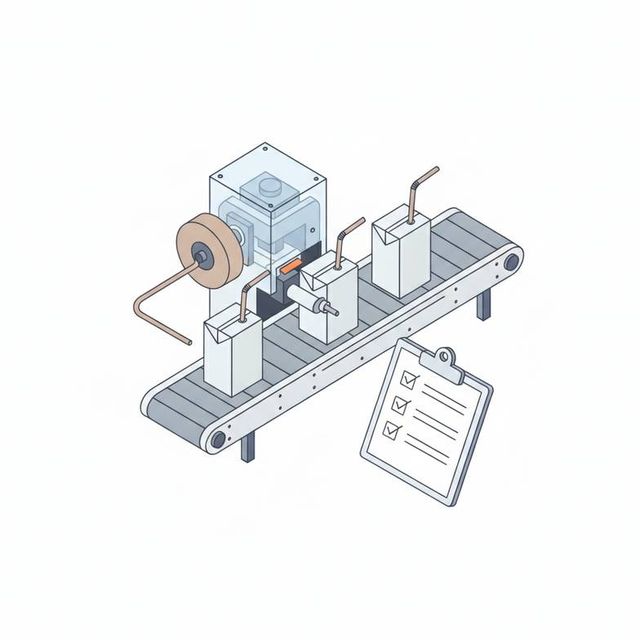
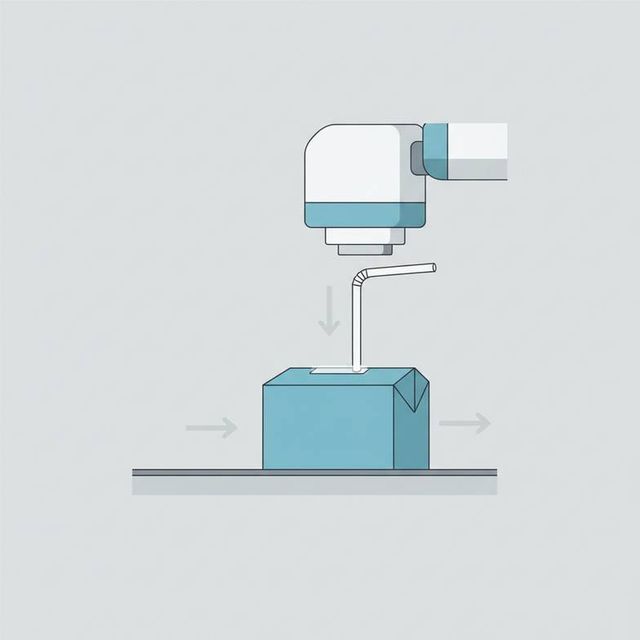
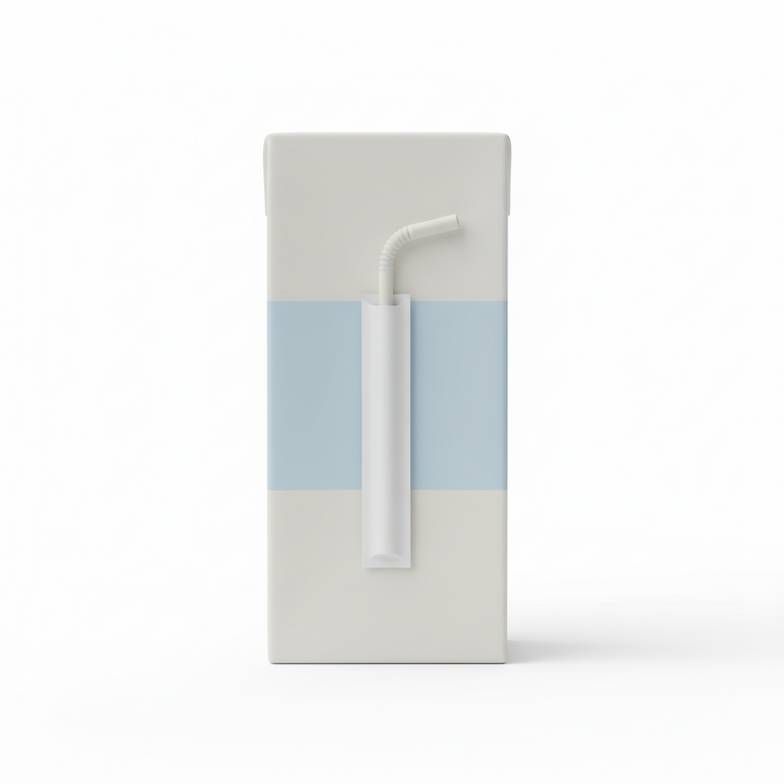
To define the carton attachment zone, you must treat it as a calculated target area on the beverage carton where the wrapped straw is applied. This zone is determined by the interplay of four key factors: the carton's physical dimensions, the straw's final specifications (like length and bend position), the properties of the wrapping film and adhesive, and the tolerances of your production line machinery.
Defining this zone correctly is one of the most important steps in successfully moving from plastic to paper straws. It's about much more than just sticking a straw onto a box. Let's dive deeper into the variables you need to manage to get it right and avoid expensive production headaches.
Why Is the Carton Attachment Zone More Than Just a Measurement?
You have your carton dimensions and you know the straw length you want, so pinpointing the placement should be straightforward, right? This is a common assumption we see from buyers. But if you only focus on these two numbers, you risk overlooking the dynamic factors that cause attachment failures in a real-world, high-speed production environment. Viewing the carton attachment zone as a system, not a static coordinate, is the key.
This zone is more than a measurement because it represents the successful interaction of multiple moving parts. It’s the meeting point of the carton's available surface, the straw's final form factor, the specific location of adhesive on the wrapping film, and the operational tolerances of your straw application machinery.
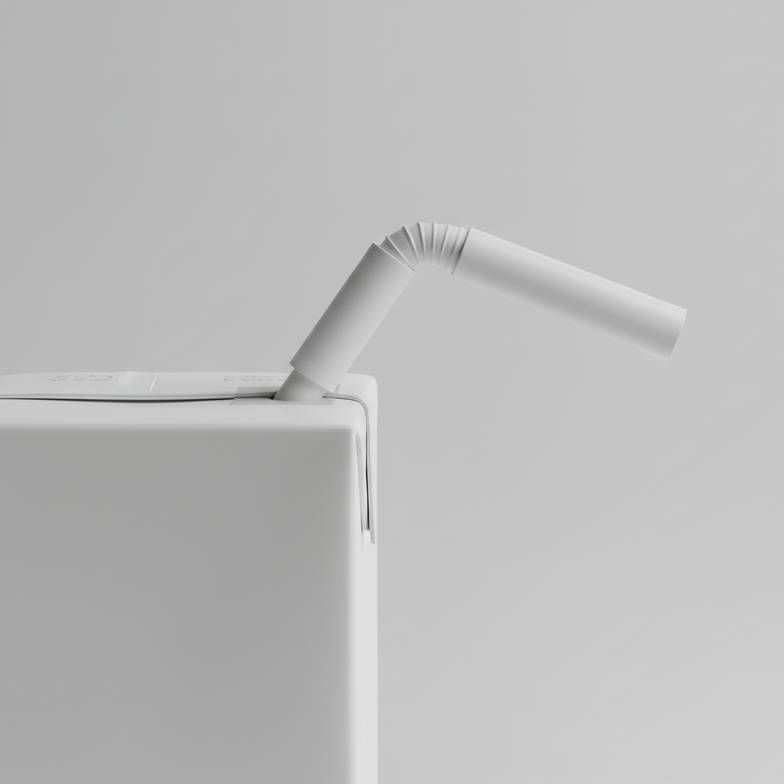
Dive Deeper: It’s a System, Not a Specification
A question we often receive from procurement managers is, "What are the standard coordinates for the attachment zone?" The honest answer is: there are no universal standards. The ideal zone is unique to your specific product and production line.
Think of it as a complete system with four interconnected parts:
- The Carton: The physical space you have to work with.
- The Straw: The object being attached, including its wrapping.
- The Consumables: The wrapping film and hot-melt adhesive that create the bond.
- The Machinery: The applicator that brings everything together at high speed.
A failure in any one of these areas can cause the entire system to fail. For example, you could have the perfect straw and the perfect placement, but if the hot-melt adhesive isn't compatible with the ink on your carton's surface, you'll experience attachment failures.
Planning for Real-World Variation
In a perfect world, every single straw would be placed in the exact same spot on every single carton. But manufacturing lines have tolerances. Machinery applicators can have slight variations in placement, cartons can shift subtly on the conveyor, and the wrapping film can stretch or move.
The carton attachment zone must therefore be large enough to accommodate these micro-variations while ensuring two things:
- The straw adheres fully and securely.
- The straw does not hang off the edge or cover essential information like the punch hole or expiry date.
This is why a reliable supplier won't just give you a number. They will ask for your carton samples to analyze the available "real estate," taking into account graphics, folds, and seams that could interfere with adhesion. This turns a simple specification question into a collaborative process of risk management.
What Carton and Straw Specs Influence the Carton Attachment Zone?
You're getting ready to send a request for quotation (RFQ) to a potential paper straw supplier. You know you need to provide specifications. But providing only the length and diameter is a common pitfall that can lead to a cycle of incorrect samples, wasting both time and money. To get it right the first time, let's review the critical carton and straw details that directly define the ideal carton attachment zone.
The most critical specifications are the carton's height and width, the straw's total length and bend position (for U-shapes), and the available "flat" surface area on the carton that is free from seams, complex graphics, or varnishes that might resist adhesive.
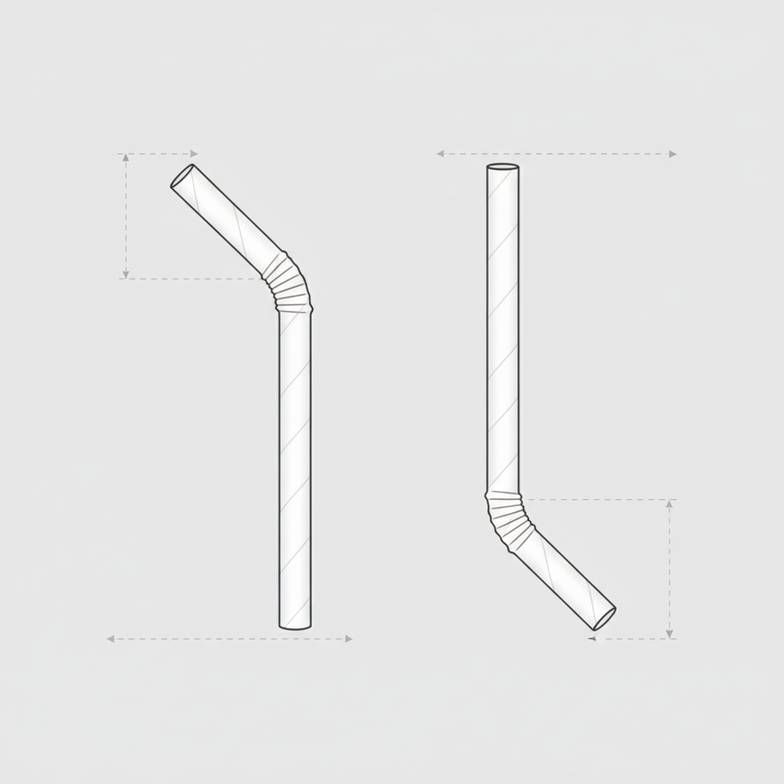
Dive Deeper: Deconstructing Your Packaging and Straw
To de-risk the procurement process, we guide our clients through a detailed analysis of both their carton and the straw they need. It’s a methodical process that leaves little to chance.
Analyzing Your Beverage Carton
Before we even discuss the straw, we need to understand the carton. We typically request physical samples from customers to evaluate:
- Carton Shape and Size: A tall, slim 200ml carton has a very different attachment surface than a short, square 125ml carton. The zone must be adapted accordingly.
- Punch Hole Location: The attached straw absolutely cannot obscure the area where the end-user will pierce the carton. We measure this precisely.
- Panel Graphics and Finish: Is the attachment area printed with heavy ink coverage? Does it have a special matte or glossy varnish? These surface treatments can significantly impact adhesive performance, and the adhesive formula may need to be adjusted for a secure bond.
- Seams and Folds: The attachment zone must be on a consistently flat panel, away from any structural seams or folds in the carton material.
Specifying the Paper Straw Correctly
With a clear understanding of the carton, we can now define the straw. For attached straws, especially U-shaped ones, the details are crucial.
| Specification | Why It Matters for the Carton Attachment Zone | What to Provide Your Supplier |
|---|---|---|
| Carton Dimensions (H x W x D) | Defines the maximum available surface area for attachment. | Send 5-10 physical carton samples. |
| Straw Type (U-shape/Telescopic) | Determines the final folded shape and contact points with the carton. | Your required format (U-shape is most common). |
| Straw Total Length | Sets the overall footprint of the straw when folded and wrapped. | Your target length in millimeters (e.g., 145mm). |
| U-Shape Bend Position | This is the most critical factor for fit. A few millimeters of deviation can cause the straw to hang off the carton. | The measurement from the straw's end to the center of the bend. |
| Punch Hole Location | The final attached straw must not cover the entry point for the consumer. | A drawing or a carton with the punch hole clearly marked. |
In my experience, the U-shape bend position is the most frequently overlooked detail. Buyers will specify a length but forget the bend. We always co-define this with our customers using their carton samples to ensure a perfect fit.
How Do Wrapping Film and Adhesive Affect the Carton Attachment Zone?
So, you've meticulously defined the straw dimensions and the placement on the carton. Yet, during a trial run, straws are still not sticking properly. What gives? The problem often lies with the "invisible" components of the system: the wrapping film and the hot-melt adhesive. Failing to specify these correctly can undermine all the other work you've done.
The wrapping film material dictates how well the adhesive can bond to it, while the adhesive's properties—like its "open time" and viscosity—determine how quickly and securely it can attach the straw to the carton during a high-speed application process.
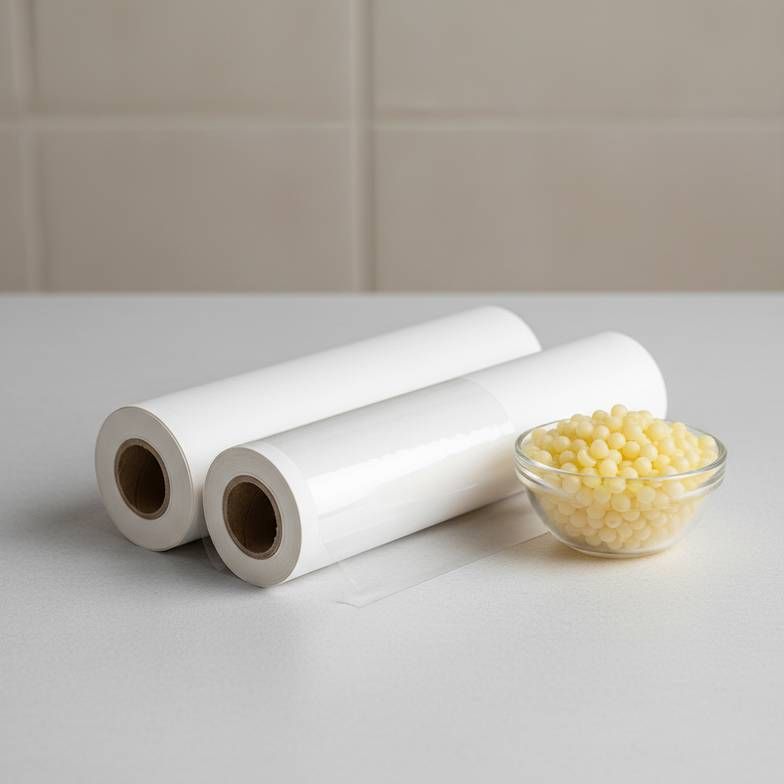
Dive Deeper: The Unseen Heroes of Attachment
What buyers often overlook is that you're not gluing the straw directly to the carton. You are gluing the wrapping film to the carton. This makes the film and the adhesive just as important as the straw itself.
The Critical Role of the Wrapping Film
The thin film around the straw serves two purposes: it keeps the straw clean, and it acts as the substrate for the adhesive.
- Material Compatibility: Common materials like biaxially-oriented polypropylene (BOPP) or specialized paper have different surface properties. The adhesive must be chemically compatible with the film to create a strong initial bond. A mismatch here means the glue will stick to the carton, but the film (with the straw inside) will peel right off.
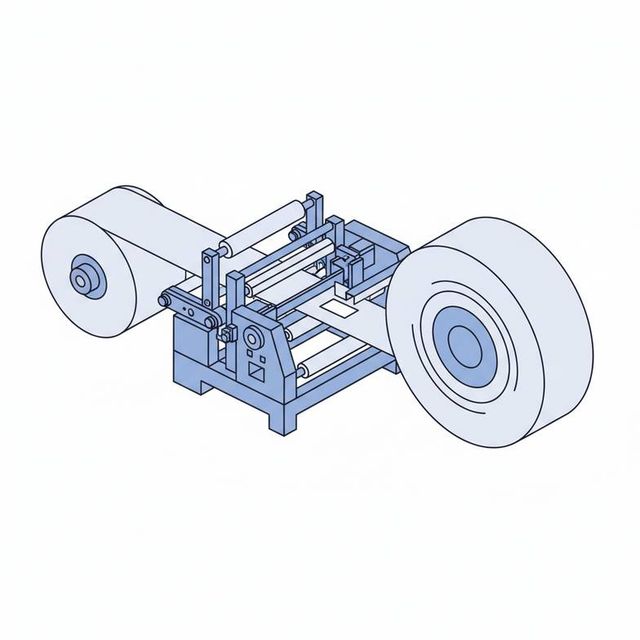
- Adhesive Application: The film is where the hot-melt adhesive is applied by the straw-wrapping machine, just before the straw is sealed. The supplier must ensure their equipment applies the glue cleanly and precisely onto the film in the exact spot needed for attachment.
When we develop a custom straw, we aren't just making a straw. We are developing a complete unit—straw, film, and adhesive—that is proven to work together.
Matching Hot-Melt Adhesive to Your Production Line
Hot-melt adhesive is not a one-size-fits-all commodity. The right formula depends almost entirely on your specific production machinery and line speed. Here are the key variables we discuss with every client:
- Open Time: This is the window of time after the glue is applied during which it remains hot and tacky enough to form a strong bond. If the open time is too short, the glue will solidify before the straw even meets the carton. If it's too long, the straw can shift or slide out of position after placement. The open time must be matched to the time it takes for the straw to travel from the applicator to the carton on your line.
- Viscosity: This refers to the thickness of the glue. It affects how the adhesive is pumped and applied by the machinery nozzles. The viscosity must be compatible with your equipment's specifications.
- Application Temperature: Hot-melts operate at specific temperatures. Your machinery must be able to maintain this temperature consistently for reliable performance.
This is why we always ask for details about a client's straw application machinery. It allows us to recommend and supply a straw-and-adhesive combination that is pre-validated for their specific setup, drastically reducing integration risks.
Frequently Asked Questions
Can I use the same carton attachment zone for different carton sizes?
No, this is generally not recommended. Each carton size and shape offers a unique surface area and geometry. The attachment zone must be recalculated and re-validated for each new carton format to ensure a secure fit and avoid interfering with punch holes or branding.
What's the most common mistake when defining the carton attachment zone?
The most common mistake is focusing only on the straw's total length while ignoring the U-shape bend position. A few millimeters of error in the bend can cause the straw to hang off the edge of the carton or sit awkwardly, even if the total length is technically correct.
How do I test if the attachment zone is correct?
The best way is through physical testing. Request pre-production samples of the fully wrapped and glued straw from your supplier. Then, run these samples on your actual production line at operational speed. This is the only way to truly validate the entire system: straw, carton, adhesive, and machinery.
Does the type of drink (e.g., milk vs. juice) affect the attachment zone?
The liquid inside doesn't directly affect the attachment zone. However, different products often use different types of beverage cartons (e.g., slim cartons for juices, square cartons for milk). The zone is defined by the physical packaging, so if your milk and juice products use different cartons, they will require different attachment zone considerations.
Conclusion
Defining the carton attachment zone is clearly much more than finding a point on a grid. It is a comprehensive risk management process. Success depends on viewing your attached paper straw as a complete system where the carton, the straw's dimensions, the wrapping materials, and your machinery must all work in harmony. The most common failures we see are not due to a bad straw, but to a mismatch between these interconnected elements.
By moving the conversation beyond a simple length measurement to a collaborative discussion about the entire packaging system, you can mitigate risks and ensure a smooth, efficient production run. Working with a production partner who understands this complexity is the surest way to get your carton attachment zone right from the start.
To ensure your attached paper straws fit perfectly and run smoothly on your line, it's best to work with a partner who understands the whole system. Submit your carton specifications for a free review, and let's work together to define the ideal attachment solution for your product.
Matched Formats for Beverage Cartons
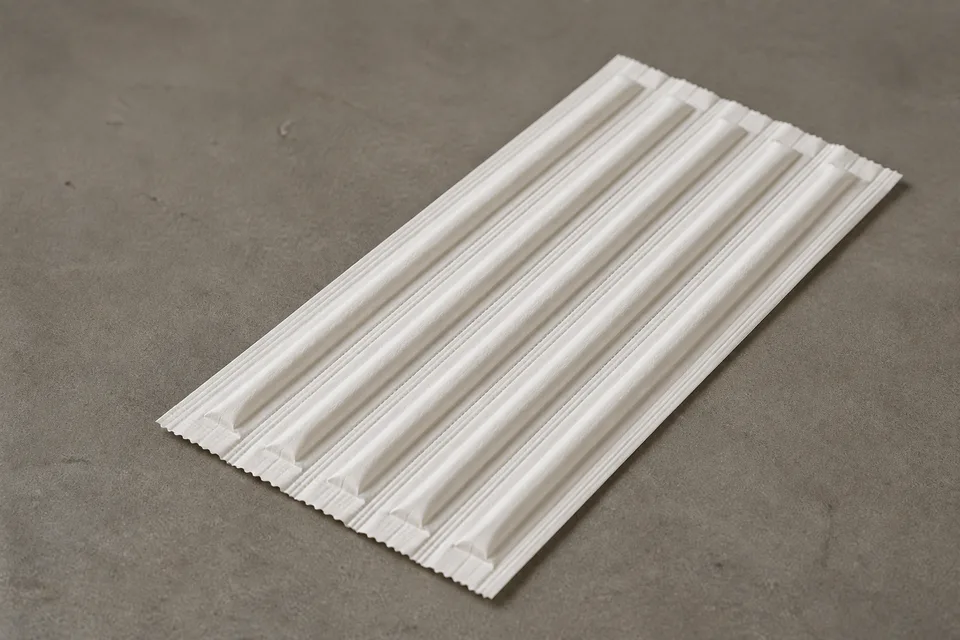
Attached Paper Straws
Connected continuous strip for high-speed automatic carton applicators.
View Product Specs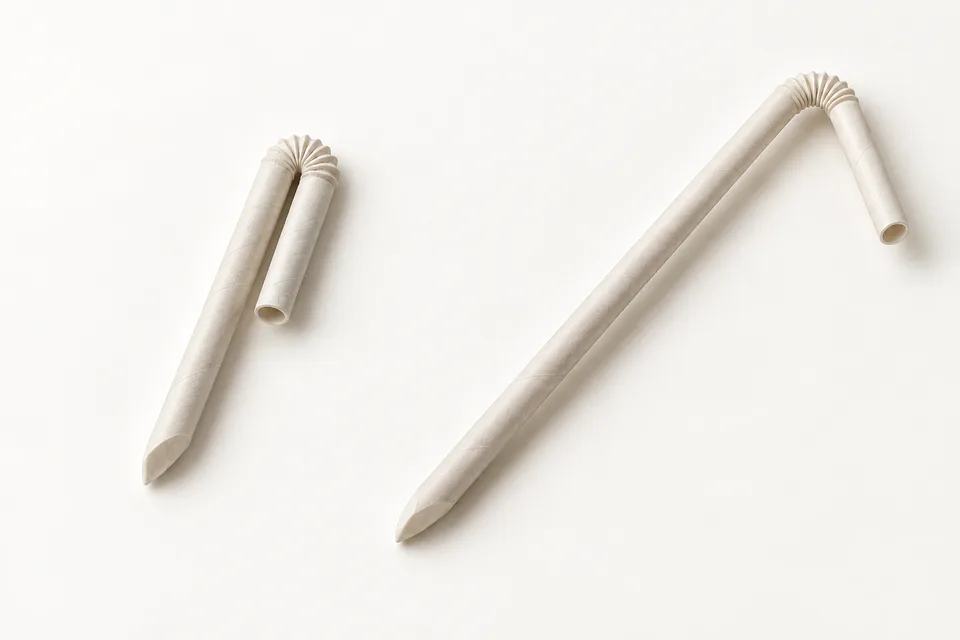
U-Shaped Paper Straws
Folded 180° format maximizing drinking reach on compact beverage cartons.
View Product Specs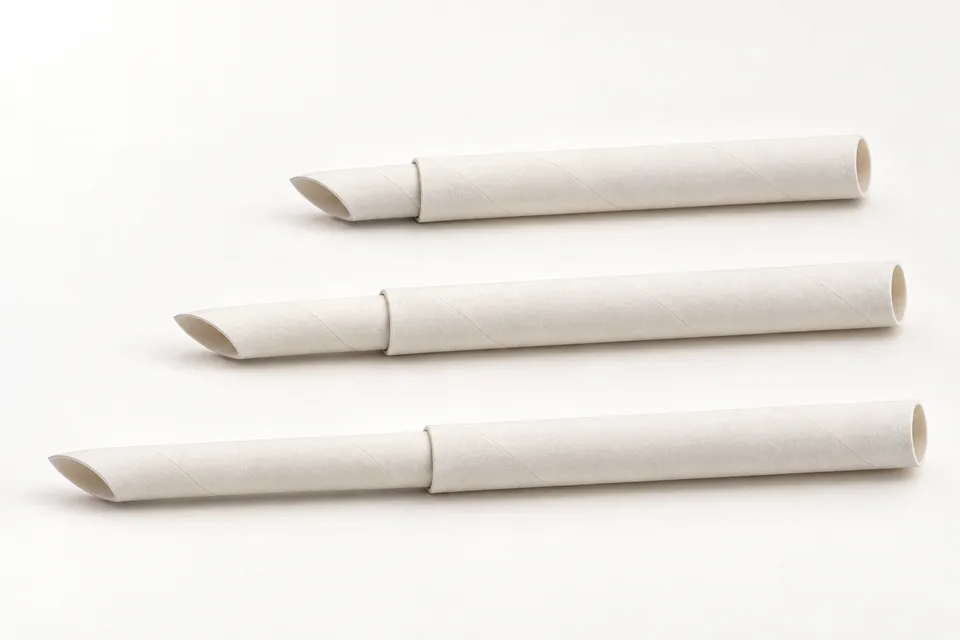
Telescopic Paper Straws
Two-section extendable design offering maximum reach from minimum packed length.
View Product Specs